

TL;DR: Summary
A valid manufacturer’s warranty claim must be centered on a material defect rather than an installation error. Because manufacturers only control the production of the shingles, they require strict adherence to installation by certified contractors, the use of a complete brand-name system, and proper attic ventilation to keep the coverage active.
While true defects like premature granule loss or delamination are rare, a valid claim can result in a full replacement if caught early, though most "lifetime" warranties become prorated after the first 10 years, significantly reducing the payout as the roof ages.
Are you unsure what your asphalt shingle warranty actually covers or if you’ve done everything required to qualify for a valid claim? Did your roof start showing signs of failure, only for the manufacturer to tell you your warranty doesn’t apply?
We know how frustrating it is to expect peace of mind from a 30- or 50-year shingle warranty, only to realize that the fine print can make or break your coverage. Most homeowners don’t find out their claim is invalid until it’s too late.
If you're filing a claim against the manufacturer, it has to be specifically about a material defect in the shingle, and you have to make sure that you're not excluded from coverage (even accidentally).
At RoofSmart, we believe it’s important for our customers to understand what they’re getting into when they choose a roof material and warranty. Each year, we help hundreds of homeowners decide which warranty is right for them by being honest about what kind of coverage each one offers.
In this article, you’ll learn exactly what requirements you must meet to keep your asphalt shingle warranty valid, what kinds of defects are typically covered, and what red flags could void your claim.
We’ll also walk through real-life examples of successful (and denied) warranty claims to help you avoid expensive surprises.
What requirements do you have to meet to get warranty coverage from your asphalt shingle manufacturer?
Manufacturer warranties are highly conditional. They want to make sure that they are only being held liable for the quality of the product they make (asphalt shingles).
They have little to no control over who installs the shingles or how they do it, so they don’t want to be held responsible for installation mistakes.
As a result, asphalt shingle manufacturers often have specific requirements that you have to meet, especially if you want their premium warranties. Here are some examples of key requirements for coverage:
- Installation by a certified contractor: Many shingle manufacturers provide certifications for roofing contractors who complete courses or other requirements to prove that they are qualified to install that manufacturer’s shingles. For example, Owens Corning has Owens Corning Platinum Preferred Contractors (each manufacturer has their own name for it). These are their top certified contractors. When you hire a certified contractor, you’re eligible for the manufacturer’s best warranties, and you’re more likely to get better quality workmanship.
- Use of a full system of the manufacturer's products: Another requirement for accessing a premium warranty is using multiple products from your shingle manufacturer. So, in addition to the shingles, they’d ask you to buy hip and ridge shingles or other accessories made by them. This helps guarantee to them that you’re using all of the necessary products on your roof and that they’re of good quality.
- Proper attic ventilation: Although most roofers don’t really bother with updating your attic ventilation, good roofers know that having proper attic ventilation is crucial. Manufacturers know this as well, which is why they require that you have proper attic ventilation to get premium warranty coverage.
What are some examples of asphalt shingle defects that get covered by a manufacturer’s warranty?
Since manufacturers have strict requirements about how to qualify for warranty coverage and what’s included or excluded from coverage, it can be difficult to know if your roof issue qualifies.
So, here are some examples of asphalt shingle defects covered under a manufacturer’s warranty:
- Premature granule loss
- Delamination (shingle layers separating)
- Cracking from insufficient asphalt
All of these issues are considered a manufacturer’s defect (as long as other causes are ruled out).
We have seen these issues before with a few different customers and helped them reach out to the manufacturer to get coverage.
For example, while inspecting the house of a recent customer, we noticed that her asphalt shingle roof had premature granule loss and some spots where shingles were delaminating. We knew right away that this was a material defect because the roof was only 1 year old.
Some parts of the roof were fine, while others had lots of granule loss and delamination. You couldn’t tell there was a problem while looking at the roof from far away, but it was very obvious up close.
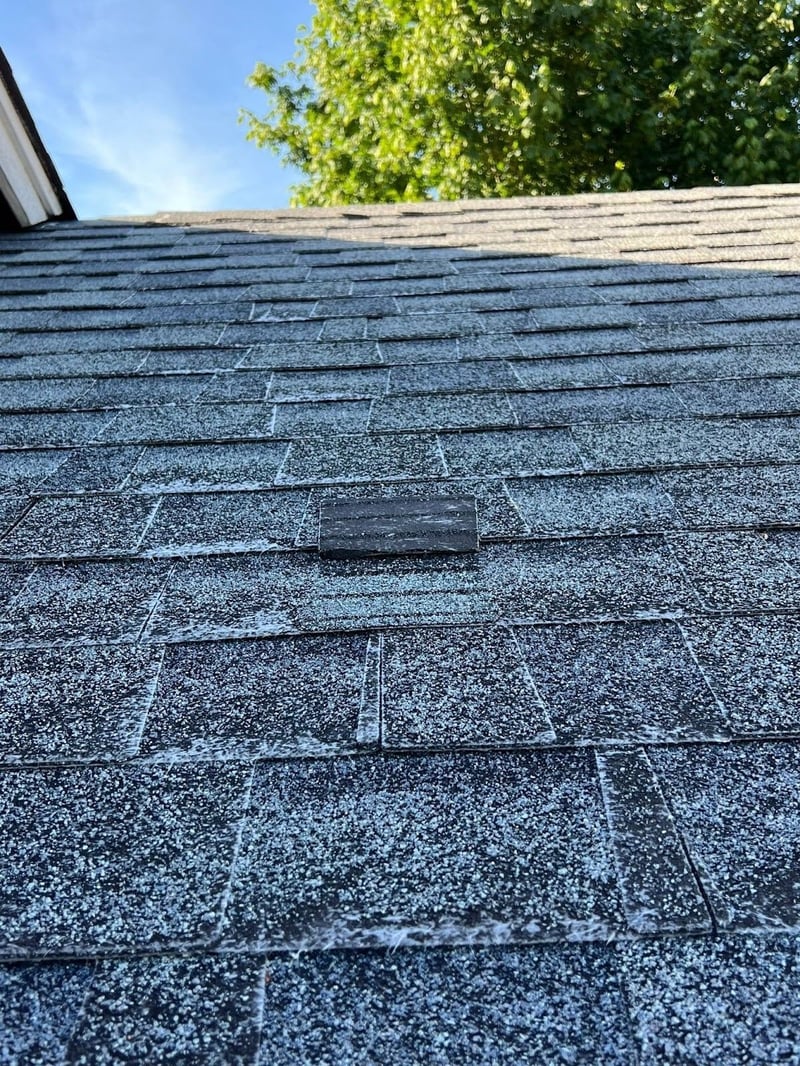
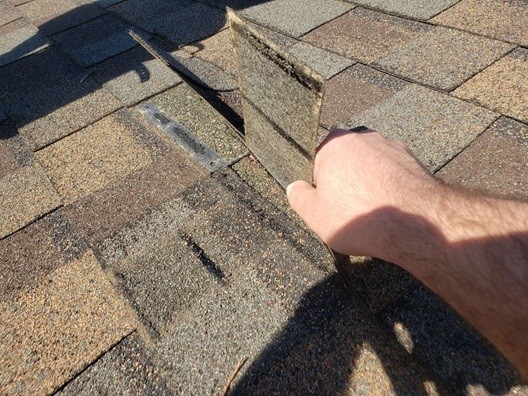
We took pictures of the granule loss and delamination to send to the manufacturer. We also had to provide evidence that the attic ventilation was working, so we sent pictures of that as well.
It’s important to note that most manufacturers will only provide coverage for a material defect that will result in a leak and worse damage. They don’t provide coverage for material defects that look bad but don’t impact the roof’s function (CertainTeed is the only exception to this. They provide coverage for fading).
In the customer example above, the manufacturer ended up covering the full replacement cost, including materials and labor. The roof wasn’t leaking yet, but it would’ve if the roof hadn’t been replaced.
Is it common to receive defective shingles on Seattle roofs?
Material defects on asphalt shingles are very rare. Manufacturers don’t want to have to pay to redo your roof, so they do a good job of producing a great product. But, just in case, that’s why you have protection with the manufacturer’s warranty.
You’re more likely to have an issue on your roof caused by a mistake during installation.
What roof issues would cause my manufacturer’s warranty claim to be voided?
It’s also important to consider examples of times when your roof damage doesn’t qualify under your manufacturer’s warranty. If these issues are present, it could potentially void your manufacturer’s warranty.
Here are some roof problems that aren’t covered:
- Cosmetic Issues: Color variation is not covered by most manufacturers (except CertainTeed) unless it affects performance. Most manufacturers will only cover your replacement if you have an issue that results in a leak. For them, cosmetic issues like uneven fading don’t need coverage because they don’t affect the roof's performance and are out of their control.
- Workmanship Errors: The warranty covers product defects, not installer mistakes. There are many different kinds of workmanship issues that can happen during installation, but the manufacturer won’t cover them because it’s out of their control.
Another thing to watch out for in your manufacturer’s warranty is how long your coverage lasts and when the prorated coverage starts. You might have a 50-year warranty, but only get full coverage for 10 years. After that, you might only have prorated coverage, so you’d only get a portion of the total cost you’d need to pay for repairs or replacements.
With a prorated system, you get less money as time passes. Depending on how strong your warranty is, you might have a longer or shorter non-prorated period. Make sure to double-check this before you make a claim because it might not be worth it.
For example, we had a customer file a claim on his 20-year-old CertainTeed roof, which resulted in a $540 voucher from the manufacturer for a replacement that would cost $30k+. That was all he was eligible for due to the prorated period.
Which Shingle Manufacturer Has the Strongest Warranty When You Actually File a Claim?
Now that you understand what makes a manufacturer’s warranty claim valid, one thing should be clear: not all shingle warranties are created equal, especially when it comes time to actually use them.
If you want to avoid finding out too late that your “50-year warranty” doesn’t mean what you thought it did, your next step is comparing the top manufacturers side by side.
Meeting the requirements, avoiding workmanship issues, and understanding prorated coverage all matter. But the manufacturer you choose plays a huge role in how much protection you’ll really have if something goes wrong. Some brands offer longer non-prorated periods, better labor coverage, and clearer claim processes than others.
Read our article “CertainTeed vs GAF vs Owens Corning: Premium Warranty Comparison” to help you understand which brand offers the strongest real-world protection (not just the best marketing language).
Frequently Asked Questions
1. What counts as a "Manufacturer Defect" for asphalt shingles?
A defect is a flaw in the product itself that affects its performance. Common examples include premature granule loss, delamination (where shingle layers separate), or cracking caused by insufficient asphalt during production.
2. Will the manufacturer cover my roof if it was installed incorrectly?
No. Manufacturers strictly cover product defects, not workmanship errors. If your roof leaks because of improper nailing or flashing, you must seek a remedy through your roofing contractor's labor warranty.
3. Does my warranty cover cosmetic issues like color fading?
Generally, no. Most manufacturers only cover defects that lead to a leak or functional failure. CertainTeed is a rare exception, as they do offer some coverage for significant fading or color variation.
4. Why is attic ventilation required for a valid warranty claim?
High heat and moisture can "cook" shingles from the inside out, causing them to fail prematurely. Manufacturers require proper ventilation to ensure the shingles aren't subjected to extreme conditions that the product wasn't designed to handle.
5. What is the difference between full coverage and prorated coverage?
During the initial "non-prorated" period (usually the first 10 years), the manufacturer may cover the full cost of materials and labor. Once the prorated period begins, the value of the warranty drops every year, often leaving homeowners with only a small voucher toward a replacement.
6. Can I file a claim if my roof isn’t leaking yet?
Yes, if there is clear evidence of a material defect that will eventually cause a leak. For example, if a 1-year-old roof is already losing significant granules, it is a valid claim because the protective layer of the shingle is failing.
7. Do I need to use the same brand for all my roof components?
To qualify for premium warranties, most manufacturers require you to use a "full system," which includes their specific brand of underlayment, starter shingles, and hip and ridge caps.
8. How do I prove my claim to the manufacturer?
You will need to provide detailed photos of the shingles (often up-close) and evidence that your attic ventilation is functioning correctly. A certified contractor can help gather this technical evidence.
9. Are material defects common in the Seattle area?
No, they are quite rare. Top brands like Owens Corning and GAF have very high quality-control standards. Most "premature" failures in Seattle are actually caused by the environment or installation mistakes.
10. Which manufacturer has the strongest warranty?
It depends on your priorities. Some brands offer better labor coverage, while others have longer non-prorated periods. You can find a head-to-head breakdown in our Premium Warranty Comparison.
Topics:
