

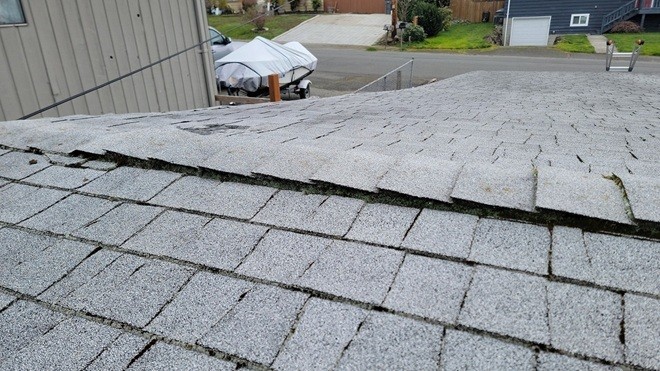
TL;DR: Summary
If your asphalt shingle roof failed early, it’s often due to installation mistakes, but not always.
Roof issues typically fall into two categories: workmanship errors (like improper flashing or nailing) and material defects (like faulty shingles). Roofers are only responsible for installation mistakes, while manufacturers cover defective materials.
You may have a valid claim if the problem came from poor installation and your workmanship warranty is still active. However, roofers are generally only responsible for the work outlined in their contract (not underlying issues like ventilation unless explicitly included).
The key takeaway: determining fault requires a professional inspection and careful review of your warranty and contract, but many premature roof failures can be traced back to avoidable installation errors.
Did your asphalt shingle roof fail sooner than expected, and now you’re left wondering if the roofer made a mistake or if it’s just bad luck? Are you frustrated trying to figure out who’s responsible for the damage, especially when repairs could cost thousands of dollars?
At RoofSmart, we repair and replace hundreds of roofs each year. Many of our customers call us because their roof has failed prematurely, and they cannot figure out why. We have seen all kinds of installation mistakes that could’ve easily been avoided.
In this article, we’ll break down how to tell if your roof damage was caused by a roofer’s installation mistake, what kinds of issues fall under a workmanship warranty versus a manufacturer’s warranty, and when a roofer may (or may not) be responsible for problems beyond the shingles themselves.
How do I know if my roof damage is my roofer’s fault?
There are lots of different ways that a roofer can mess up your roof during installation, from installing the wrong parts to using the wrong nail pattern. These mistakes can leave your roof vulnerable to leaks, especially in a rainy area like Seattle.
To know if your roofer made a mistake during installation, you can start by asking yourself these questions:
- Was it there already?
- Is this something that broke or wore out?
- Did my roofer follow the right instructions when installing everything?
- Did my roofer make any mistakes when they installed the roof?
Obviously, if a part of your roof was already damaged, that’s not your current roofer’s fault. But if they installed something new and they did a poor job or did it incorrectly, then they might be at fault.
If you have a skylight or a pipe boot (or anything else that can be installed on the roof) that was already there and it looks like it's just worn out or broken, odds are it's not the roofer's fault.
Sometimes it’s obvious that your roofer messed up, but other times it can be hard to tell. If you’re struggling to figure it out, you can hire another roofing company to come out for a roof inspection so they can tell you what they found.
Keep in mind that your roofing company is only responsible for workmanship errors that they made. They are not responsible for a material defect (this is an issue for the manufacturer’s warranty.
Here’s a quick overview of the two kinds of roof problems under warranty:
- Workmanship: An installation mistake (e.g., using exposed fasteners).
- Defect: A part that broke or wore out prematurely (e.g., a faulty shingle).
Is my roofer legally responsible for doing work beyond my roof to prevent damage?
We’ve established what kind of roof issues or damage your roofer might be responsible for. So, the question becomes, do they have a legal duty to inform you of something or to fix something as a good business practice?
For example, are they legally responsible for upgrading your attic ventilation to meet current code when they do your roof? Well, if you’ve only hired them to replace the roof covering, then that's all they're responsible for.
However, if they're promising you a fancy extended warranty that is contingent on having proper ventilation, they have an obligation to make sure that they don't void your warranty through negligence.
But do they have a legal responsibility? That would be tough to argue because they'll often have in their contract that they're only doing the roof and are not responsible for what's underneath. It’s important to check your contract to see what they agreed to do and what they’re liable for.
So, is it their fault if you have inadequate attic ventilation, and they may have known about it but did not fix it? In my opinion, it is. But if you're going to ask a judge to rule against them, that's going to be an expensive proposition. So, typically, they get away with it because of the clauses and scope of work laid out in the contract.
Sometimes the roofer promises that you're going to get this 50-year amazing warranty. But if they install it in such a way that it doesn't meet the conditions to qualify, they can just say, “Well, sorry, you didn't qualify”. Is it their fault? I think it is, but if it’s not in the contract, then you can’t legally hold them to it.
What kind of roof issues does my workmanship warranty cover?
Most of the time, if you've got a problem on your roof, it's because a mistake was made during installation, not because something wore out or broke.
So, if your workmanship warranty hasn’t expired, your roofing company is still in business, and they stand behind their workmanship warranty, then you can file a claim with them. They will come out and take a look at it to determine if it was an installation issue.
If something wore out or broke, it's really obvious because it looks like a broken part. For example, if a skylight has cracks, it's pretty obviously broken. The question is whether it happened during installation or later on.
Often, we at RoofSmart notice clear installation mistakes when we are inspecting the roofs of potential customers. One example of poor installation that caused damage is a metal roof with a chimney, where the installer did a poor job of installing the flashing around the chimney.
I stepped on the roof and pushed down near the flashing, which caused water to go in and out. That should not be happening! In addition, the flashing is held down with exposed fasteners. Here’s what the flashing looked like:
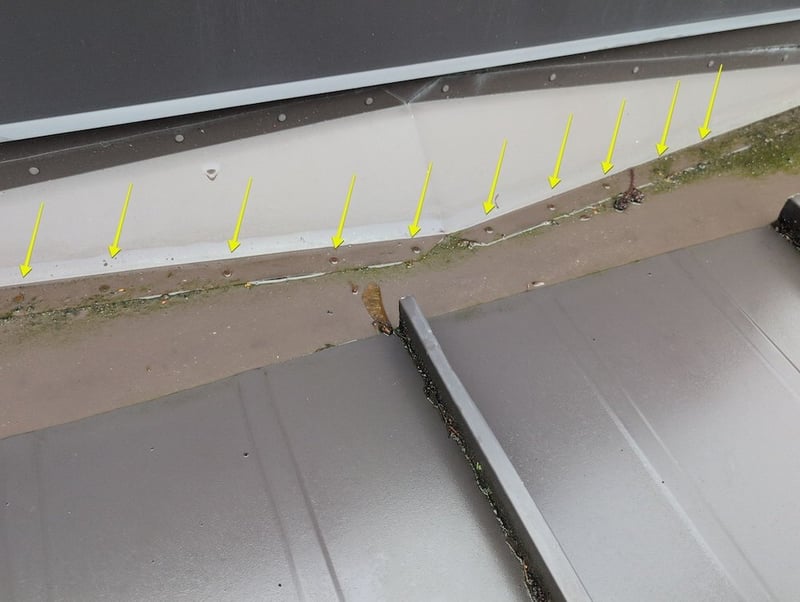
Those are all holes where water can potentially get in. And sure enough, the roof was leaking all around this chimney, causing rot and mold in the attic. This is a prime example of an installation mistake that you can file a warranty claim for because it is clear that the previous roofer completely messed up this flashing.
This is a mistake found on a metal roof, but the same thing applies to an asphalt shingle roof. If a
What can you do if your roofer messed up your roof installation?
By now, you know that most roofing problems, especially early failures, come from installation mistakes, not product defects. But even if you’re fairly certain your roofer caused the issue, that doesn’t always mean you’ll get an easy fix.
If your workmanship warranty is still active and the company is still in business, you may be able to file a claim. But if your roofer ghosted you, did sloppy work, or denied responsibility, you may be stuck figuring out what to do next on your own.
If you suspect your roof was installed incorrectly, the next step is knowing how to confirm it and what actions you can take to fix it (without paying for someone else’s mistake).
Read our article “What Should You Do If Your New Roof Was Installed Incorrectly?” to learn how to spot improper installation, gather evidence, and decide whether to pursue a warranty claim, hire a new contractor, or take legal action.

Frequently Asked Questions About A Roofer's Responsibility for Roof Failure
1. How do I know if my roofer installed my roof incorrectly?
You can look for signs like:
- Improper flashing around chimneys or skylights
- Exposed fasteners or poor sealing
- Shingles installed with the wrong nail pattern
If you’re unsure, the best step is to get a second opinion from another roofing contractor to confirm whether the issue is an installation mistake.
2. What roof problems are the roofer actually responsible for?
Roofers are typically responsible for workmanship errors, such as:
- Incorrect installation
- Missing or improperly installed components
- Failure to follow manufacturer guidelines
They are not responsible for material defects, which fall under the manufacturer’s warranty.
3. Can poor attic ventilation be my roofer’s fault?
It depends on what was included in the contract.
If your roofer:
- Promised a system that requires proper ventilation (like an extended warranty)
- Failed to install ventilation correctly
Then they may be at fault. Otherwise, they are usually only responsible for the scope of work outlined in the agreement.
4. What should I do if my roof failed soon after installation?
Start by:
- Reviewing your contract and warranty
- Contacting your original roofer
- Getting an independent inspection
If it’s a workmanship issue and your warranty is valid, you may be able to file a claim and have the issue repaired at no cost.
5. What if my roofer refuses to fix the problem?
If your roofer won’t take responsibility, you can:
- Gather documentation and inspection reports
- Hire another contractor to fix the issue
- Consider legal action if the damage is significant
Your options depend on your warranty, contract terms, and the severity of the problem.
Topics:
