

TL;DR: Summary
Roof redesign projects can be delayed or limited by structural, regulatory, and budget constraints, so flexibility is key.
Common roadblocks include structural limitations (like inadequate framing or foundation support), design challenges (such as stair placement and access), and hidden issues like asbestos or rot that add time and cost.
You’ll also need to navigate permits, inspections, zoning rules, and Seattle-specific requirements like tree ordinances, all of which can slow down timelines and increase expenses.
The key takeaway: successful roof redesigns require careful planning, realistic budgeting, and an experienced contractor who understands both construction and local regulations.
Are you worried that your roof redesign project could get delayed by issues you didn’t even know to look for? Do you feel concerned that your roofer is not equipped to handle unexpected problems like structural limitations, permits, or hidden hazards?
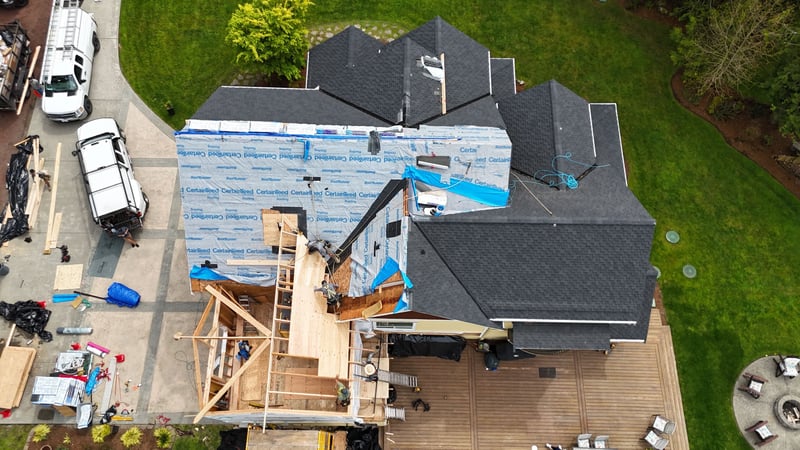
Roof redesign projects often seem straightforward at first, but once planning or construction begins, hidden roadblocks can quickly surface.
At RoofSmart, we do more than just roofing. We offer many additional services, including framing, siding, window installation, and pretty much anything else you might need done on your house. Our goal is to offer a variety of top-quality home improvement services so that homeowners all over the Seattle area have a trusted contractor to turn to.
In this article, we’ll walk you through the most common roadblocks that can impact your roof redesign project, what they mean for your timeline and budget, and how to plan ahead so your project stays on track.
What Can Slow Down or Change Your Roofing Project?
|
Roadblock Type |
Specific Issue |
What It Means |
Impact on Timeline |
Impact on Cost |
|
Structural Limits |
Weak or undersized framing |
Existing structure can’t support redesign |
Moderate–High delay |
High (reinforcement needed) |
|
Structural Limits |
Foundation limitations |
Foundation may not support added load |
High delay |
Very high (engineering + upgrades) |
|
Physical Constraints |
Stair placement |
Limited space for access to new level |
Moderate delay |
Moderate |
|
Hazardous Materials |
Asbestos or lead |
Requires professional abatement |
High delay |
High |
|
Permits & Inspections |
City approvals required |
Must pass inspections at each stage |
Moderate–High delay |
Moderate |
|
Building Codes |
Fire, energy, zoning restrictions |
Limits design options |
Moderate delay |
Moderate–High |
|
Tree Ordinances |
Arborist inspection required |
Trees must be mapped and evaluated |
Moderate delay |
Low–Moderate |
|
Budget Constraints |
Limited funds |
Scope must be reduced or phased |
Variable delay |
Controls overall cost |
|
Design Complexity |
Custom or unique roof design |
Requires more planning and engineering |
High delay |
High |
|
Contractor Limitations |
Inexperienced roofer |
May not handle framing or redesign |
High delay |
High (rework risk) |
What obstacles do roofers run into when planning your roof redesign project?
Roof redesign projects can add a lot of value to your home, but it’s important to keep in mind that your roofer (or engineer) is bound by physical, government, and budget limits.
This doesn’t mean that your new roof dreams cannot come true, but it does mean that you might have to rethink your plans, expect delays, or reconsider how much you’re willing to spend.
Here are some examples of roadblocks that your roofer might run into while redesigning your roof:
1. Physical Limits:
-
Structural Capacity: It’s possible that the existing framing you have in your home cannot safely support the weight of the new addition. And there's engineering for all of this. Ideally, we can use things that are already sort of prefigured out (according to the span tables) so that you don’t need to hire a separate engineer for the new roof or structure design. Adding new beams (like a steel beam) might require an engineer.
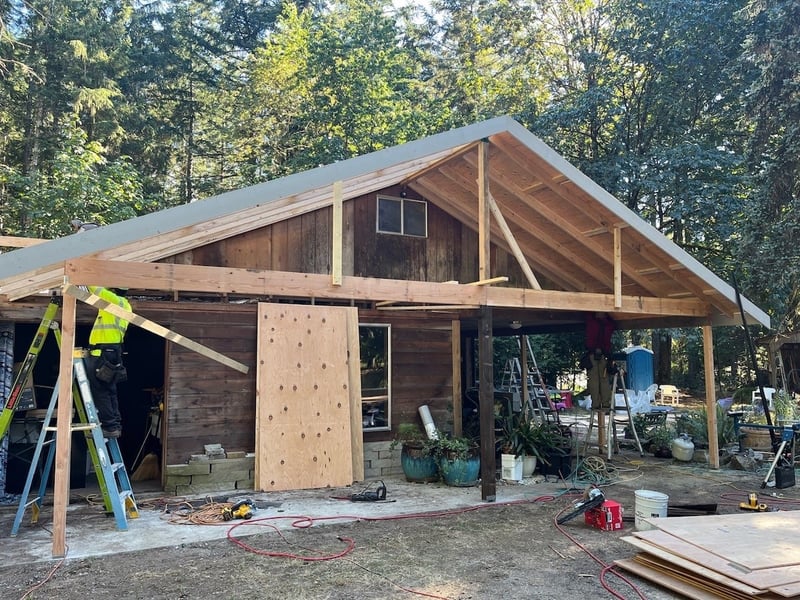
Beam installation
-
-
Example: Say you’re converting your attic from storage to a living space. This requires upgrading the current framing to meet floor-load requirements for a living space. It needs to be able to support people, furniture, and whatever else you want to put in that space. So if you've got a home that's built with 2x4s for the attic framing, which is typical, well, those are probably, those are not going to be enough. You’d need to add reinforcements to the framing to make it strong enough.
-
- Access: You’ll also need to access the new level using stairs. Figuring out where they’ll fit is part of the design process.
- Hazardous Materials: Older homes might have lead or asbestos. Removing these hazardous materials can add a lot to your total cost.
- Foundation check: You're going to be compressing the foundation even more when adding a new story, and so the footing needs to be able to hold it. You need to check if the foundation can handle it. If it can’t, then you can build discrete posts with their own footing that will hold the entire upper structure independent of the lower structure.
2. Government Limits:
- Permits & Inspections: Permits are required for jobs in Seattle or the surrounding areas that make changes to the framing or roof design. You’ll need to schedule appointments for inspectors to come out. They’re going to make sure that the structure meets minimum design specifications and energy codes. There are significantly fewer permit requirements if you're creating non-living space versus living space. Scheduling appointments for inspections and ordering permits can take a while sometimes. If you fail an inspection, then the problem will need to be fixed before you can continue working.
- Cost: Permit fees for this type of job typically cost between $3k–$6k. If you need professional design services (architect/engineer) to help create a safe structure that meets building code, that can add $5k–$20k to the total cost.
- Codes: Fire, energy, and zoning codes apply, especially for projects near property lines or greenbelts. Fire code is going to be jurisdiction-dependent. Even in Seattle, it can be different depending on the neighborhood. The higher the risk of fire spreading in your area, the more strict fire code will be for your home. Generally, if you're keeping the same basic footprint of the house, these things don't come into play. It's when you're expanding outwards towards something else that fire code can get in the way.
- Tree Ordinances: In Seattle, they passed a new rule recently (about two years ago) where if you're going to do any remodeling on the property, they want an arborist to come out and measure every single tree on the property, map out its location, and show how it will be impacted by the remodeling (even if they won't be impacted because you're not expanding).
3. Budget Limits:
Scope of Project: The budget you have in place for the roofing project determines how much can be done. The more elaborate or complex your final product is, the more it will cost. Some homeowners choose to have their contractor build their redesign project to the point where it meets building code requirements, and then they take over the rest, or wait until they have more money to continue the project.
How do you know if your roofer is qualified to help with an expansion project?
A lot of roofers only do basic roof replacements and repairs, so to find someone who can help you with a more complicated redesign project, you’ll need to find someone who does framing work.
Make sure you are thorough when you do your research. On the roofer’s website, look for:
- A list of services that includes framing and carpentry work
- See if they help with custom home design or new construction
- Evidence that they’ve done redesign projects
- Case studies
- Pictures or videos of these projects
These are all good signs that indicate your roofer has experience with roof redesign projects. Make sure you also do standard background research to confirm if they’re a quality, experienced roofing contractor.
What should you expect during a roof redesign project from start to finish?
As you’ve seen, roof redesign projects come with a wide range of potential roadblocks, from structural limitations and permitting delays to budget constraints and hidden hazards. These challenges can feel overwhelming, especially if you don’t know when or how they might show up during your project.
But the key takeaway is this: most of these issues are manageable when you’re working with the right team and have a clear process in place.
Understanding what could go wrong is important, but knowing what actually happens during a roof redesign project can give you the confidence to move forward.
Read next: What Happens During a Roof Redesign Project with RoofSmart?https://getroofsmart.com/blog/what-happens-duringroof-redesign-project-with-roofsmart
This article walks you step-by-step through the entire process so you know exactly what to expect and how your project will be handled along the way.
Frequently Asked Questions About Delays on Roof Redesign Projects
1. Why do roof redesign projects take longer than expected?
Roof redesigns are more complex than standard replacements.
They often involve:
- Structural changes
- Permits and inspections
- Custom design work
Each of these adds time and potential delays, especially if unexpected issues are discovered during construction.
2. What is the biggest cause of delays in roof redesign projects?
Structural limitations are one of the biggest causes.
If your existing framing or foundation cannot support the new design, engineers may need to redesign parts of the structure, which can significantly delay the project.
3. Do I need permits for a roof redesign in Seattle?
Yes, in most cases.
Any project involving:
- Structural changes
- New living space
- Roofline modifications
Will require permits and inspections, which can add both time and cost to your project.
4. How do building codes affect my roof redesign?
Building codes can limit what you’re allowed to build.
These may include:
- Fire safety requirements
- Energy efficiency standards
- Zoning restrictions
If your design doesn’t meet code, it will need to be revised before approval.
5. Can my home’s structure prevent me from redesigning my roof?
Yes.
If your home was built with:
- Undersized framing (like 2x4s)
- Weak support systems
You may need to reinforce the structure before moving forward, which adds cost and complexity.
6. How do hazardous materials impact a roof redesign?
If your home contains asbestos or lead, it must be safely removed before construction begins.
This process:
- Requires licensed professionals
- Must follow strict regulations
- Can significantly delay the project
7. Can my budget affect the scope of my roof redesign?
Absolutely.
Your budget determines:
- How much structural work can be done
- Whether upgrades (like ventilation or insulation) are included
- Whether the project is completed all at once or in phases
8. Why does ventilation matter in a roof redesign?
Updating ventilation is critical for long-term roof performance.
Without proper airflow, your roof can suffer from:
- Moisture buildup
- Mold growth
- Premature failure
9. What happens if I hire a roofer who isn’t experienced with redesign projects?
You may run into serious issues like:
- Improper framing
- Missed structural problems
- Code violations
- Project delays or rework
This is why it’s important to choose a contractor with experience in both roofing and carpentry.
10. Is a roof redesign worth the delays and extra cost?
In many cases, yes.
A successful redesign can:
- Add usable living space
- Increase home value
- Improve functionality
Topics:
