

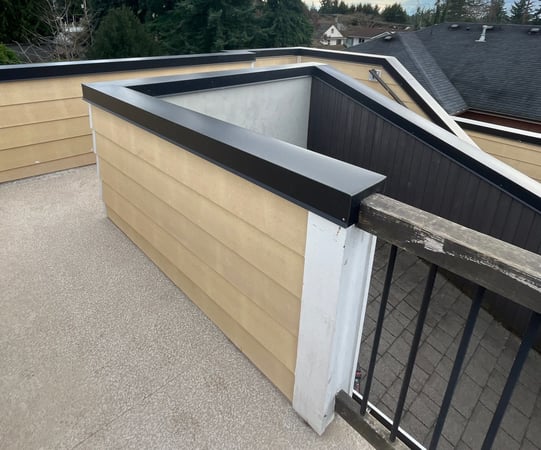
TL;DR: Summary
Yes, parapet walls are a common leak point on rooftop decks, especially in Seattle’s rainy climate. Usually, they’re not properly waterproofed.
Leaks typically occur at the top (missing or poorly installed caps) and bottom (improper flashing), where water can seep in through gaps, bad sealant, or exposed fasteners, often causing hidden rot before it’s noticed.
Proper waterproofing requires layered protection, including underlayment, flashing, and a well-installed cap that directs water away from the wall.
The key takeaway: if your parapet wall isn’t sealed correctly (or if railings are installed without proper waterproofing), you’re at high risk for leaks and costly structural damage.
Are you worried that your rooftop deck parapet wall could be leaking and slowly rotting out your roof and walls without you realizing it? Have you noticed cracked sealant, stains, soft wood, or water damage around your rooftop deck and wondered if the waterproofing was done incorrectly?
Rooftop deck parapet walls are one of the most common hidden leak points we see in the Seattle area. When the cap, flashing, or railing penetrations aren’t sealed properly, water can seep into the wall for years before the damage becomes obvious.
At RoofSmart, we’ve repaired and replaced hundreds of rooftop decks in the Seattle area. Hidden leaks that cause extensive damage are extremely common in this damp, rainy environment. It’s helped us learn how to properly waterproof all elements of a rooftop deck.
In this article, we’ll show you how to tell if your parapet wall is properly waterproofed, the warning signs of hidden leaks and rot, and the key installation details your roofer must get right to protect your rooftop deck from Seattle’s constant rain and moisture.
Signs Your Parapet Wall Is (or Isn’t) Properly Waterproofed
|
Area to Check |
Properly Waterproofed |
Warning Signs of a Problem |
Why It Matters |
|
Top of Wall (Cap) |
Sealed with metal or waterproof cap |
Exposed wood or simple board |
Top is the most vulnerable entry point for water |
|
Flashing at Base |
Continuous, layered flashing |
Gaps, exposed nails, or poor sealant |
Prevents water from entering wall-to-roof joint |
|
Wall Surface |
Clean, sealed siding |
Cracks, stains, or algae growth |
Indicates moisture penetration |
|
Interior Wood |
Dry, solid structure |
Dark, soft, or crumbling wood |
Sign of long-term hidden rot |
|
Sealant Quality |
Even, professional application |
Messy, cracked, or missing sealant |
Weak seals allow water intrusion |
|
Water Flow Design |
Water sheds away from wall |
Standing water or pooling areas |
Poor drainage leads to leaks |
|
Railing Installation |
Properly sealed penetrations |
Loose mounts or exposed fasteners |
Common hidden leak source |
Is the parapet wall a common leak point on a rooftop deck?
If the wall is installed poorly, then it can become a leak point. The vulnerable areas on the parapet wall are the top and the bottom, where the flashing gets installed.
If the wall isn’t sealed properly at the flashing or with a cap on top of the wall, water might be able to leak in without anyone noticing for a long time. Poorly sealed gaps or exposed nails are prime targets for leaks in Seattle’s consistently rainy climate.
For example, we were recently called in to do an inspection on a rooftop deck because the homeowner suspected that there might be some leaks. It turned out that all the walls surrounding the deck and the stairs leading up to it had been installed incorrectly, causing the walls to leak and rot all over.
Here’s what we found during the inspection:
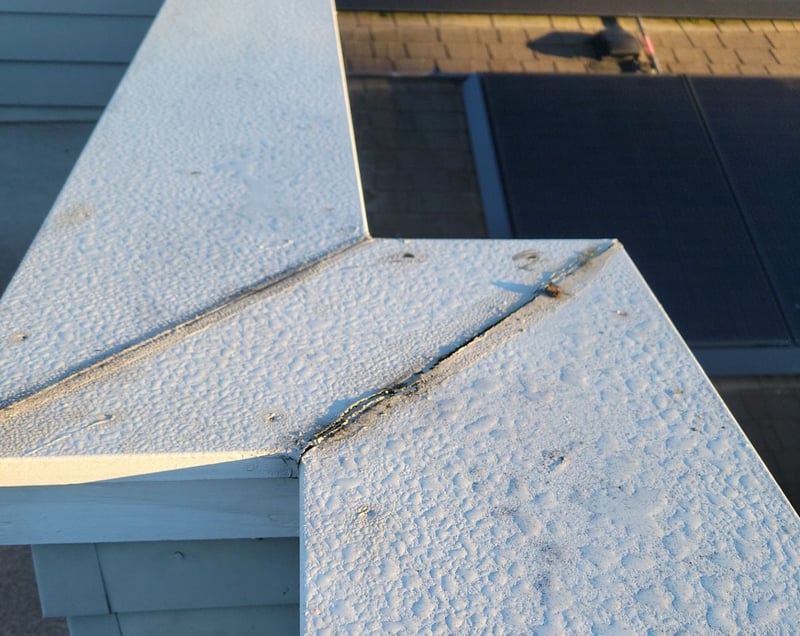
The wall did not have a cap, just a wooden board across the top. This is a risky move in a rainy environment like Seattle, especially when you have multiple pieces like this that need to be sealed in.
This image may seem fine, but the poor sealant job indicates to me that there is most likely a leak within the parapet wall.
What helped confirm my suspicions of a leak was this damaged part of the wall that revealed rotten wood underneath:
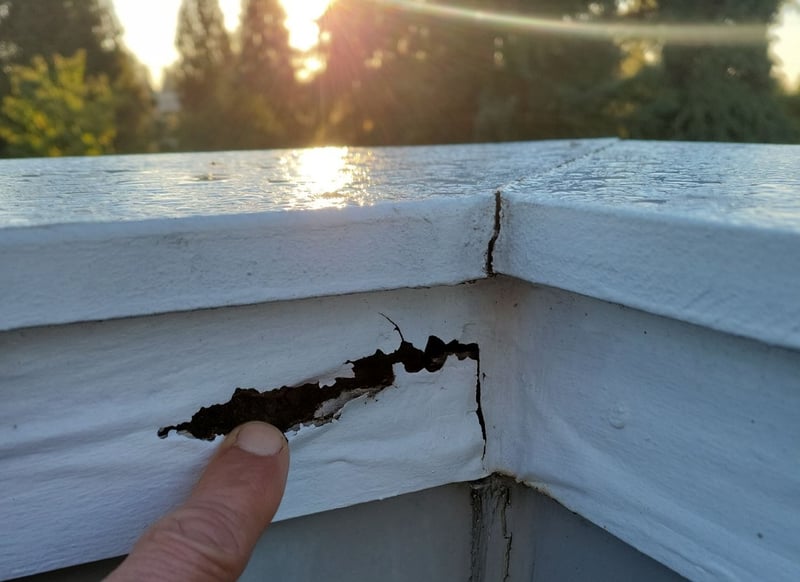
It can be difficult to tell, but the darkness of the wood shows me that it is saturated with water and rotting.
At that point, the only question was how extensive the damage was (spoiler: it was very extensive). I sent a crew out to get started tearing things off so that we could see how bad the leaks were.
Unfortunately, the leaking did not stop at the top of the wall. In many places, there were several spots where a board had rotted, while other parts of the wall were completely overwhelmed with rot:
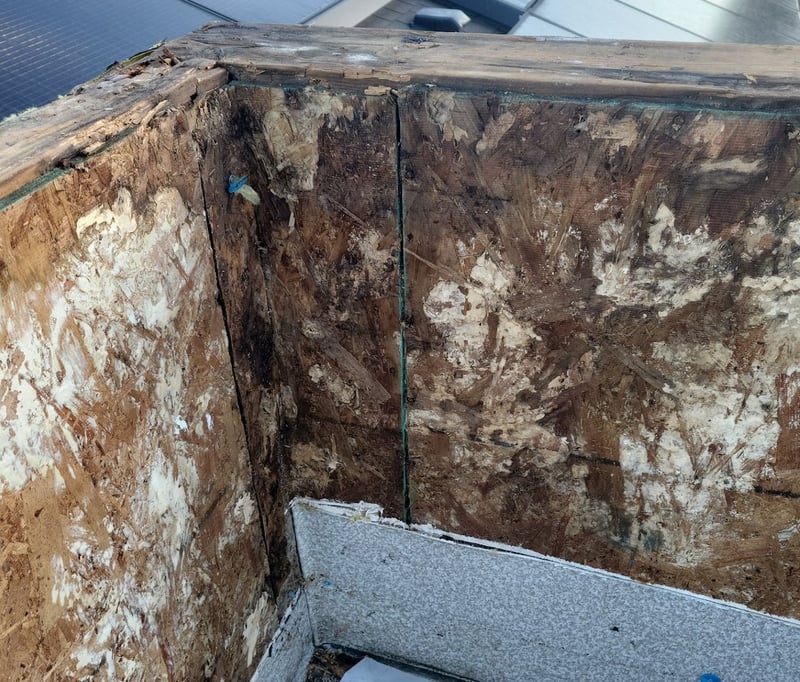
The crew ended up needing to replace pretty much all of the boards along the entire perimeter of the rooftop deck, including the walls around the stairs leading up to the deck.
What’s the process for installing and waterproofing a rooftop deck parapet wall?
In order to properly install and waterproof the parapet wall on your rooftop deck, you need to make sure that your roofer includes vapor barriers and waterproof barriers (insulation and roof caps) that overlap properly.
That way, your roof is protected from the inside out against leaks, condensation, and any other kind of moisture. For a more in-depth explanation, here’s how we repaired the parapet walls on this recent customer’s rooftop deck so that they would no longer leak:
1.) Tear off the old siding
2.) Replace rotting wood with new plywood
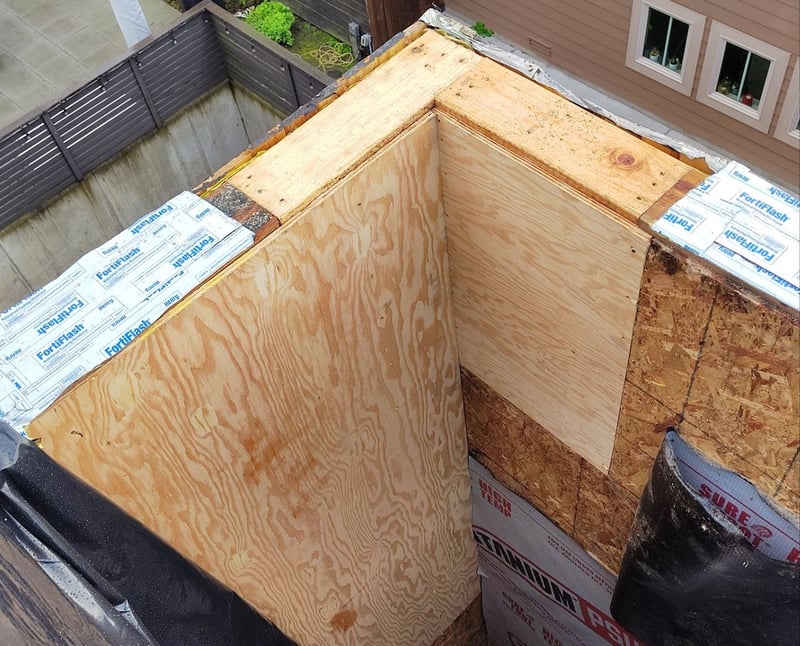
3.) Put a layer of underlayment over the entire wall
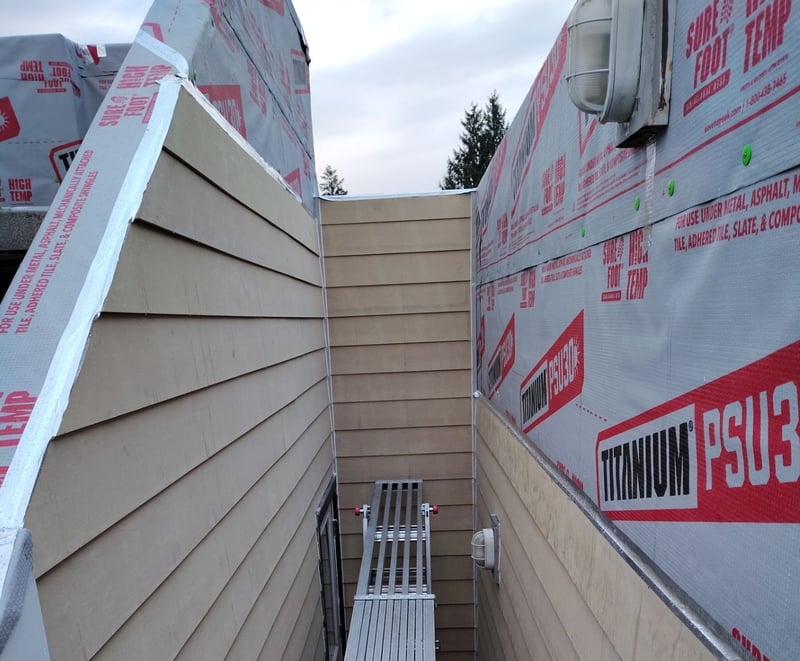
4.) Install new siding and flashing
5.) Install new roof cap
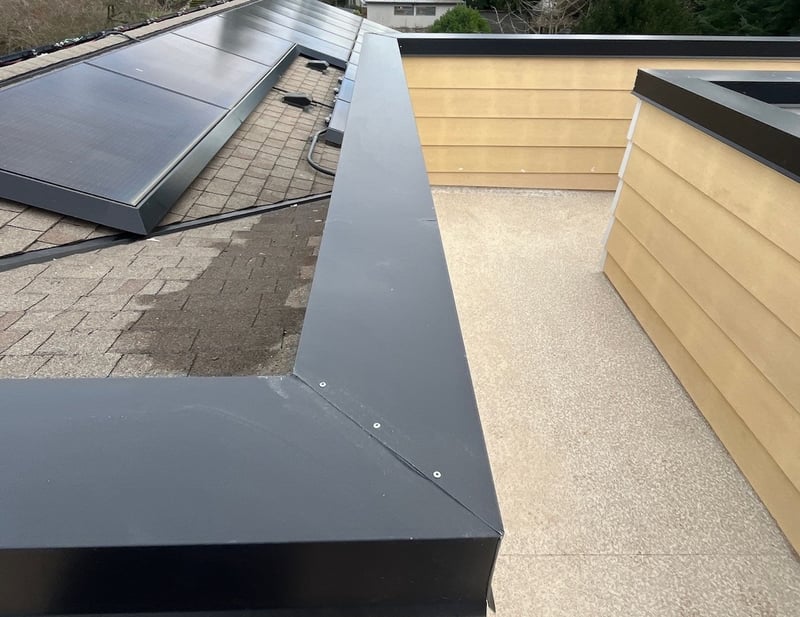
Being strategic about layering protective barriers and making sure that water is shedding away from the wall. Everything within the wall has been sealed and protected, and the cap is the final barrier installed to keep water out.
This cap may look like it has a leak hazard at the corner seam, but it’s actually still protecting the roof. There's a piece that goes underneath at the joint, and then it's got a double sealant on both sides.
So yes, the seam can let water in, but it can't go sideways and cause a leak. It ends up just dripping out. This type of protective measure ensures that the rooftop deck walls are safe from rotting again.
Does installing a railing on the wall of my rooftop deck ruin the waterproofing?
Installing railing on your rooftop deck, whether it goes on top of the wall or directly into the deck, must be done carefully so that it doesn’t cause a leak.
If the installation is poorly done, a leak will form. Here’s an example of a different rooftop deck with a railing installed directly into it that had been leaking the entire time since it was installed:
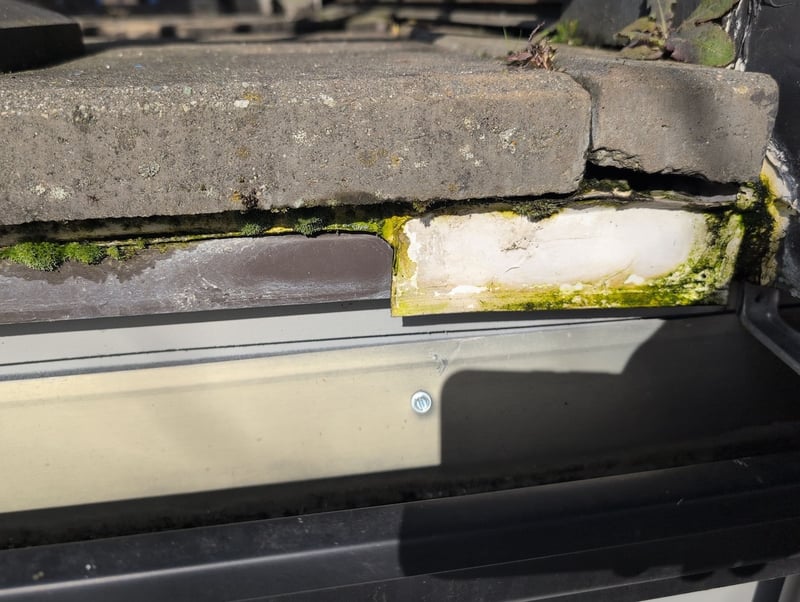
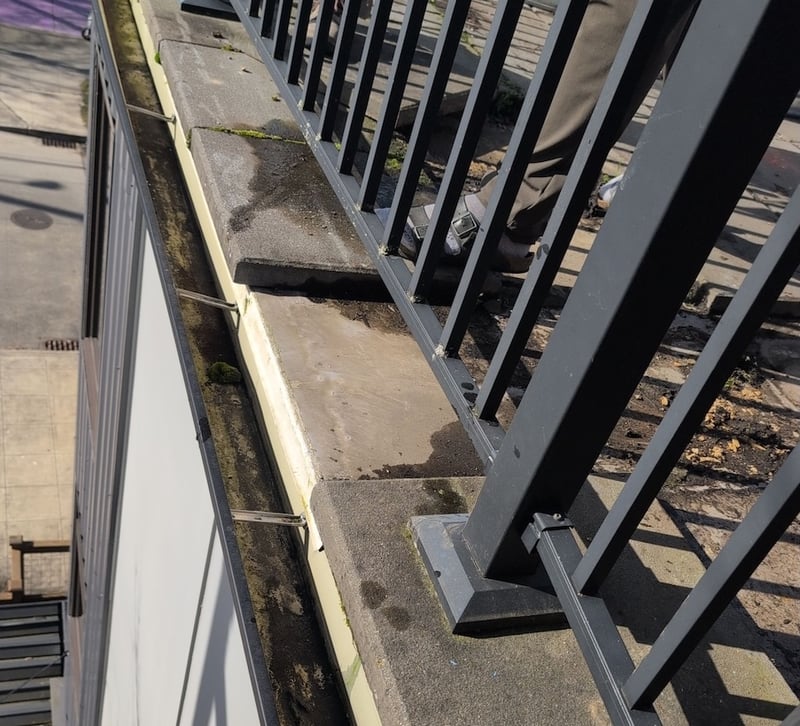
The algae and moss growth underneath the stone show that moisture has been sitting in those spaces for a long time due to a leak.
Drilling a bunch of holes into your rooftop deck or the parapet wall that you just spent a bunch of time sealing requires expert-level knowledge to prevent the potential leak points from remaining exposed and vulnerable.
How much does it cost to repair a leaking rooftop deck in Seattle?
As you’ve seen, a leaking parapet wall can cause far more damage than most homeowners expect. What starts as a small waterproofing failure around flashing, railing penetrations, or the wall cap can eventually lead to widespread rot hidden inside the walls and structure of your rooftop deck.
And unfortunately, by the time the damage becomes visible, the repairs are rarely minor.
The total cost depends on how long the leaks have been happening, how much rot has spread, and whether structural framing, siding, or waterproofing systems need to be rebuilt. That’s why catching these problems early is so important.
Read our article “How Much Does It Cost to Repair a Rooftop Deck in Seattle?” to learn the real costs of rooftop deck repairs, what impacts pricing the most, and how to plan for repairs before hidden leaks turn into a much bigger project.

Frequently Asked Questions About Waterproofing a Rooftop Deck Wall
1. How do I know if my parapet wall is leaking?
Common signs include:
- Rotting or darkened wood
- Water stains or damp areas
- Cracks in siding or sealant
- Mold or algae growth
Many leaks are hidden, so damage may already be extensive by the time you notice symptoms.
2. Where do parapet walls usually leak?
The most common leak points are:
- The top of the wall (if not capped properly)
- The base where flashing meets the roof
- Any seams, joints, or penetrations
These areas must be sealed and layered correctly to prevent water intrusion.
3. Is a parapet wall cap really necessary?
Yes. It’s critical.
A proper cap:
- Prevents water from soaking into the wall
- Directs water away from seams
- Protects the entire wall system
Without it, water can easily enter and cause rot.
4. Can installing a railing cause leaks in a rooftop deck?
Yes, if done incorrectly.
Drilling into a parapet wall or deck creates potential entry points for water. If those penetrations are not sealed properly, they can lead to long-term leaks and hidden damage.
5. What is the best way to waterproof a parapet wall?
The most effective method is a layered system, including:
- Underlayment or waterproof barrier
- Proper flashing installation
- Sealed siding
- A fully capped top
Each layer works together to keep water out and direct it away from the structure.
Topics:
