

TL;DR: Summary
Your roof design can cause your gutters to flood, even if the gutters and gutter guards are clean.
Roof features like converging valleys, multiple roof planes draining into one section, steep metal roofs, and upper-story downspouts can concentrate large volumes of water into a small area, overwhelming the gutter system during heavy rain.
The right solution depends on the roof layout and may include diverters, valley controllers, custom metal scoops, or redesigned downspout connections, not simply larger gutters or new gutter guards.
The key takeaway: if your gutters overflow despite being clean, the problem may be your roof's drainage design. A roofing contractor who understands the entire roof-and-gutter system can identify and correct the root cause.
Are your gutters overflowing every time it rains, even though you've cleaned them and replaced the gutter guards? Have you spent money trying to fix your gutters only to discover that the real problem might actually be the design of your roof?
At RoofSmart, we help hundreds of homeowners every year to improve their gutter systems. Our thorough inspection process includes assessing how well the gutters are draining. This allows us to pitch solutions that protect your roof from flooding and excessive moisture.
In this article, we'll explain the most common roof designs that cause gutter flooding, show you why some roofing materials make the problem even worse, and walk through the custom drainage solutions that can help protect your home from repeated overflow.
What are common roof designs that cause gutter flooding?
|
Roof Design or Feature |
How It Affects Gutters |
Potential Problems |
Possible Solution |
|
Multiple roof planes draining into one valley |
Concentrates a large volume of water into a small section of gutter |
Gutter overflow, splash-over |
Install diverters or valley controllers |
|
Open metal valleys |
Speeds up water flow |
Water overshoots the gutter |
Install custom valley scoops or larger gutters |
|
Standing seam metal roof |
Water sheds very quickly |
Overshoots gutters during heavy rain |
Add diverters or oversized gutters |
|
Upper-story downspout draining onto lower roof |
Concentrates water in one location |
Roof wear, leaks, gutter overflow |
Tie upper downspout directly into lower gutter |
|
Small gutter at the end of a large valley |
Cannot handle peak water flow |
Overflow and erosion |
Increase gutter size or redirect water |
|
Poor roof drainage design |
Uneven water distribution |
Localized flooding |
Redesign drainage path |
|
Heavy tree coverage |
Adds leaves and pine needles |
Clogged gutters and overflow |
Install quality gutter guards |
|
Low-capacity downspouts |
Water backs up in gutter |
Overflow during heavy rain |
Add additional or larger downspouts |
|
Complex roof layout |
Creates multiple concentrated drainage points |
Repeated flooding |
Custom drainage solutions |
|
Long roof slopes |
Water gains speed before reaching gutter |
Water shoots over gutter |
Install splash guards or diverters |
When can the layout of your roof cause flooding in the gutters?
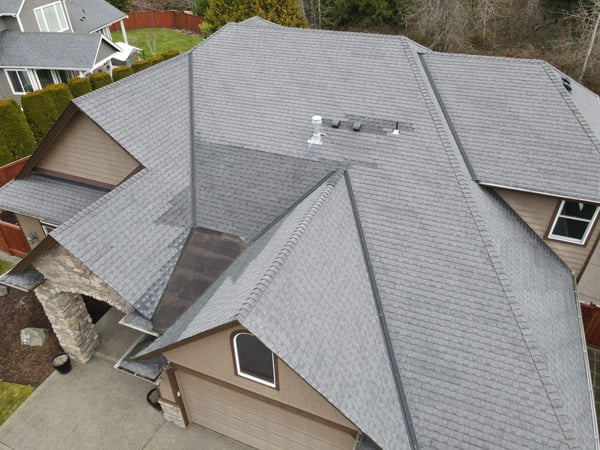
On some homes in the Seattle area, the drainage system somehow gets overlooked, resulting in a roof that feeds one massive area into a small part of the gutter, resulting in clogs and flooding.
For example, this large area on the roof with four different slopes all drains into the same valley that all ends up going to about 12 inches of gutter:
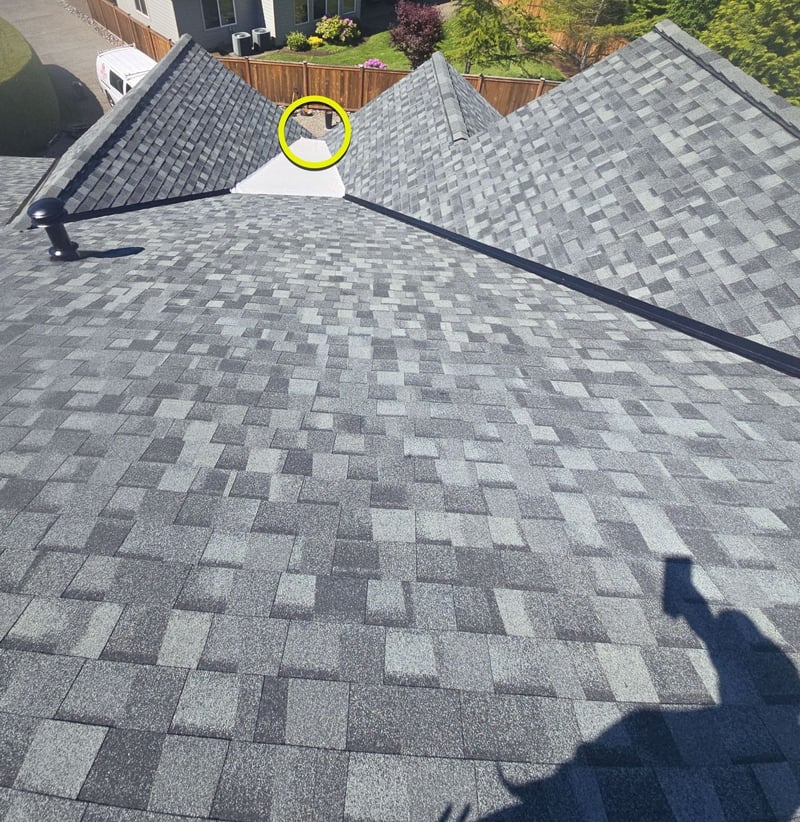
On a rainy day, this can result in a mini flash flood that completely overwhelms the gutter and gutter guards. The gutter overflow is often caused by a large amount of concentrated water flow, not just clogged gutters.
Here are some examples of roof layouts and areas that cause flooded gutters:
- Converging Roof Planes: Multiple roof planes that come together to form a valley (like in the picture above) will direct a large surface area of water into a small gutter section.
- Fast-Draining Materials: Metal roofs are notorious for being slippery. Water running down it can go really fast and overshoot the gutter. The same thing can happen in open metal valleys that accelerate water flow, overwhelming standard gutters. Metal roofing is the most slippery. Asphalt shingles are good at slowing down the flow of water.
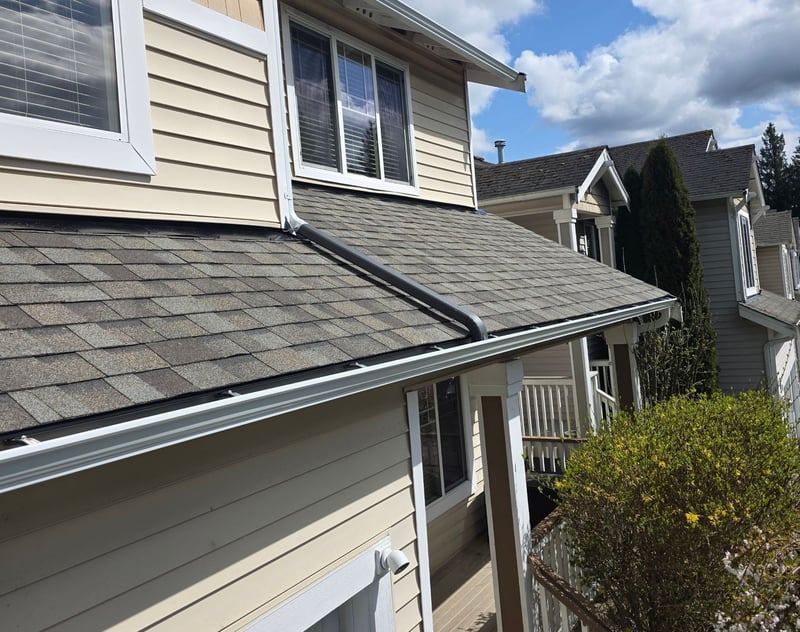
- Upper-Story Downspouts: Sometimes what will happen is you have an upper-story roof that drains onto the lower story with a downspout that's creating a bunch of extra flooding on the roof. This setup concentrates all the upper roof flow into one three-inch spot, and then it just shoots out onto the roof. If you have asphalt shingles, this is going to cause leaks and damage in that area.
The bottom line is that there are lots of ways that your roof layout can cause your gutters to get overwhelmed and flood. A lot of times, people are thinking about the surface area and the total footage of the gutter. But what really matters is how much water flow is concentrated in certain areas.
What kind of gutter solution do I need?
Every roof is unique, so each gutter flooding issue will require a custom solution. Here are some different options that might work for you depending on what’s causing the flooding problem on your roof.
- Diverters: Flashing dams installed near the edge of the roof that are used to redirect water to different parts of the gutter.
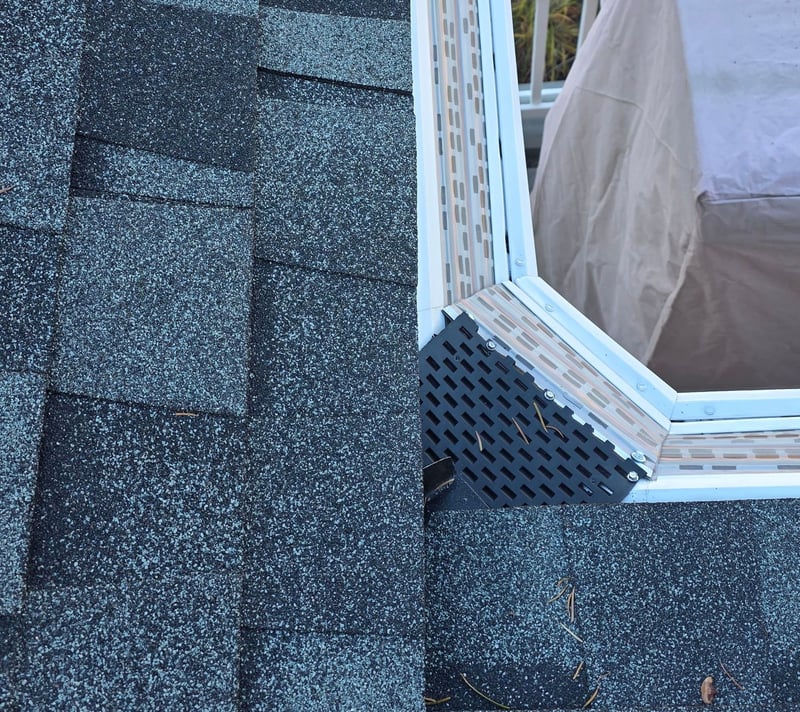
- Scoops: Custom-bent metal inserted near the gutter or valley as needed to capture concentrated flow.
- Valley Controllers: Devices installed where the valley hits the gutter used to slow water in valleys.
- Tie-ins: These connect downspouts coming from different roof levels directly to the gutters so that it’s not draining freely onto the roof.
We recommend that Seattle homeowners who are experiencing these types of flooding problems call a roofer who understands the roof-gutter system, not a single-product gutter company.
Gutter companies usually only install and clean their specific brand of gutters, so they most likely won’t be able to help find a good solution. On the other hand, a roofer who is experienced in gutters and gutter guards will be able to help make adjustments to the roof and gutters in the way you need.
Are gutter guards a good idea if my roof layout causes flooding in the gutters?
A lot of Seattle homeowners choose to install gutter guards on their roof because of all the debris that collects in their gutters without them. In some cases, gutter guards can worsen the problem by restricting flow, but quality gutter guards aren’t necessarily part of the problem.
If your gutter guards are working properly, they won’t make the flooding worse, but they’re also not a solution to your gutter flooding problem (if it’s caused by your roof layout). If your gutters keep flooding because they’re clogged with leaves, pine needles, and other debris, then gutter guards might be able to help in your situation.
When choosing a gutter guard, it’s important to consider which style and brand is best for your roof. For homes in the Seattle area that take on a lot of pine needles, a micromesh filter gutter guard is ideal because it completely blocks pine needles from entering your roof.
At RoofSmart, we sell MasterShield, which is a micromesh filter gutter guard that keeps pine needles out of the gutter and is installed at an angle so that they slide right off instead of piling up and clogging the gutter guard.
If you’re interested in learning more about gutter guards, check out our guide on choosing the best gutter guard for Seattle homes.
Can gutter guards solve gutter overflow issues, and what do they cost in Seattle?
As you've seen, overflowing gutters aren't always caused by clogged gutters or poor-quality gutter guards.
In many cases, the real culprit is the way your roof channels water. Valleys, long roof slopes, metal roofing, and complex roof layouts can concentrate thousands of gallons of rainwater into one small section of gutter, overwhelming even a well-maintained system.
That doesn't mean gutter guards don't have a place. If your gutters are also filling with leaves, pine needles, and other debris, which is a common problem throughout the Seattle area, a quality gutter guard can dramatically reduce maintenance and help your drainage system perform more efficiently.
Just remember that gutter guards prevent clogs; they don't fix poor roof drainage design.
Read our article “How Much Does It Cost to Install Gutter Guards in the Greater Seattle Area?” to learn how much gutter guards typically cost, which types perform best in Seattle's rainy, tree-filled environment, and whether they're a worthwhile investment for protecting your gutters and reducing maintenance.
Frequently Asked Questions About Gutter Flooding Issues
1. Can the design of my roof cause my gutters to overflow?
Yes.
Gutter flooding is not always caused by clogged gutters. Some roof designs naturally concentrate large amounts of rainwater into one small section of gutter, overwhelming even properly functioning gutters during heavy rainfall.
2. Why do my gutters overflow even after I clean them?
If your gutters are clean but still overflow, the issue may be your roof's drainage pattern rather than debris.
Features like roof valleys, multiple roof planes, and upper-story drainage can funnel more water into the gutter than it was designed to handle.
3. What roof designs create the biggest gutter flooding problems?
Some of the most common include:
- Multiple roof valleys
- Converging roof planes
- Long roof slopes
- Upper roofs draining onto lower roofs
- Open metal valleys
- Large roof sections feeding a single gutter
Each of these can create concentrated water flow that overwhelms standard gutter systems.
4. Can a metal roof make gutter overflow worse?
Sometimes.
Metal roofing sheds water much faster than asphalt shingles. During heavy rain, water can travel so quickly that it overshoots the gutter or overwhelms one section before it can drain away.
5. Will larger gutters solve my flooding problem?
Not always.
While larger gutters can increase capacity, they won't fix a poor roof drainage design by themselves. Sometimes the better solution is redirecting water before it reaches the gutter using diverters, valley controllers, or other drainage improvements.
6. What is a roof diverter?
A roof diverter is a small piece of flashing that redirects water away from areas where excessive runoff occurs.
By spreading water over a larger portion of the gutter system, diverters help reduce localized flooding.
7. What are valley controllers and valley scoops?
These are specialized components installed where roof valleys discharge into gutters.
They help slow, redirect, or capture concentrated water flow so it enters the gutter more evenly instead of shooting over the edge.
8. Do gutter guards stop gutters from overflowing?
Not necessarily.
Gutter guards help prevent leaves, pine needles, and other debris from clogging gutters. However, if flooding is caused by concentrated water flow from the roof design, gutter guards alone will not solve the problem.
9. Should I call a gutter company or a roofer for gutter flooding?
If the flooding is caused by the way water moves across the roof, a roofing contractor is often the better choice.
A roofer can evaluate both the roofing system and the gutter system to identify drainage issues that a gutter-only contractor may overlook.
10. How can I tell if my gutter overflow is caused by my roof design?
Common signs include:
- Overflow occurring in only one location
- Gutters overflowing only during heavy rain
- Clean gutters that still flood
- Water shooting over the front of the gutter
- Overflow occurring directly below a roof valley
A roof inspection can determine whether the issue is clogged gutters or a drainage design problem.
Topics:
