

TL;DR: Summary
A small roof leak can quickly turn into widespread damage because water often goes unnoticed as it seeps through the roof decking and spreads over time.
Leaks can remain hidden for months or years, allowing moisture to rot wood, weaken framing, and damage insulation before any visible signs appear inside your home.
High-risk areas like built-in gutters and rooftop decks can accelerate this damage, especially if they’re poorly installed or allow water to pool.
The key takeaway: even minor leaks can compromise your entire roof system, making proper installation, regular inspections, and early repairs critical in Seattle’s wet climate.
Are you worried that a small roof leak could already be causing serious damage behind the scenes without you even knowing it? Have you noticed minor signs (like a musty smell or a small stain) and wondered if it’s actually a much bigger problem waiting to surface?
Roof leaks rarely stay small. In Seattle’s wet climate, even a tiny opening can allow moisture to slowly spread through your roof system, soaking the decking, and eventually leading to rot, mold, and structural failure.
At RoofSmart, we repair and replace hundreds of leaking roofs every year. From one small nail hole letting water in to widespread leaks and rotting wood across the whole roof, we’ve seen all levels of roof leak damage.
In this article, we’ll break down how a small roof leak can escalate into major damage, where that moisture spreads over time, and the warning signs to look for so you can catch problems early and avoid costly repairs.
How a Small Roof Leak Turns Into Major Damage
|
Stage |
What’s Happening |
Where the Damage Spreads |
What You Might Notice |
Risk Level |
|
Early Leak |
Water enters through small gap |
Roof surface or flashing |
Usually nothing visible |
⚠️ Low (but hidden) |
|
Decking Saturation |
Water soaks into plywood/OSB |
Roof decking |
Slight discoloration (rarely seen) |
⚠️ Moderate |
|
Attic Moisture |
Dripping or humidity buildup |
Insulation and attic space |
Musty smell, damp insulation |
⚠️ High |
|
Structural Rot |
Wood begins to weaken and decay |
Rafters, framing |
Soft wood, dark staining |
❌ Very High |
|
Mold Growth |
Moisture creates ideal conditions |
Attic and enclosed spaces |
Mold, air quality issues |
❌ Very High |
|
Interior Damage |
Water reaches living space |
Ceilings and walls |
Water stains, bubbling paint |
❌ Critical |
|
System Failure |
Large sections compromised |
Entire roof system |
Sagging, major leaks |
❌ Critical |
How can a small roof leak spiral into a bigger mess?
Roof leaks can easily be hidden within the roof, meaning that a leak can happen for months or even years before you notice any evidence of it happening.
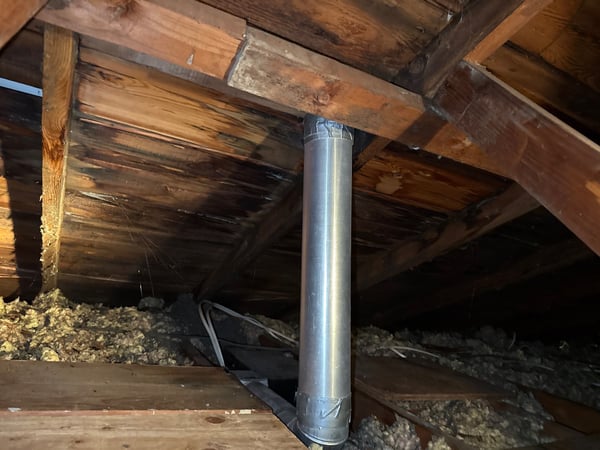
With a roof leak, water typically drips through the roof decking into the attic. You cannot see the roof decking clearly unless you tear off the roof, so this is not an easy place to check. You might see it if you check your attic, but it’s not guaranteed.
If the leaking is really bad, then you will definitely notice it in your attic. For example, here’s a roof that got completely ruined by built-in gutters:
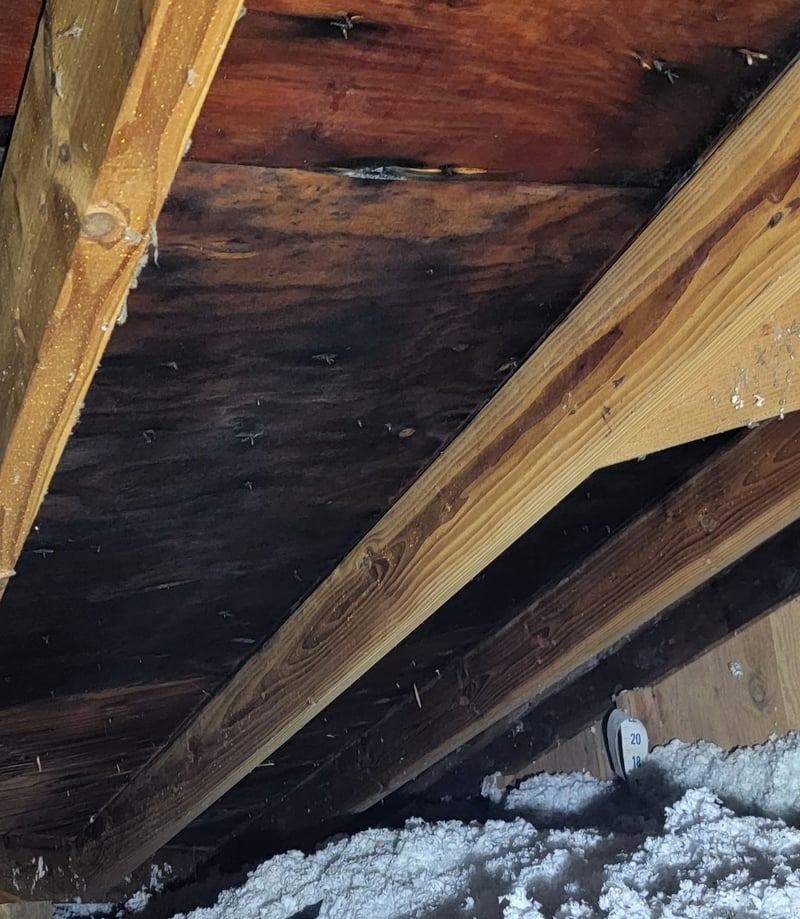
You can tell by how dark the wood is that it’s completely rotten. In less extreme cases, you might see a few splotches on the roof decking that get this dark, but not the whole thing. But the longer a leak has to spread, the more damage it will cause.
It can take a long time for enough water to drip onto the ceiling to cause a visible water stain in your living space. By that point, you can be pretty sure that the leak has been happening for a while.
- Built-in gutter with gutter guards: Built-in gutters on a roof are basically just a giant leak waiting to happen. It’s very difficult to seal them properly. Plus, they regularly have water pooling inside them, which deteriorates them over time and increases the likelihood of a leak. With so much water gathered in the gutter, once a leak starts, it will quickly and easily spread all over.
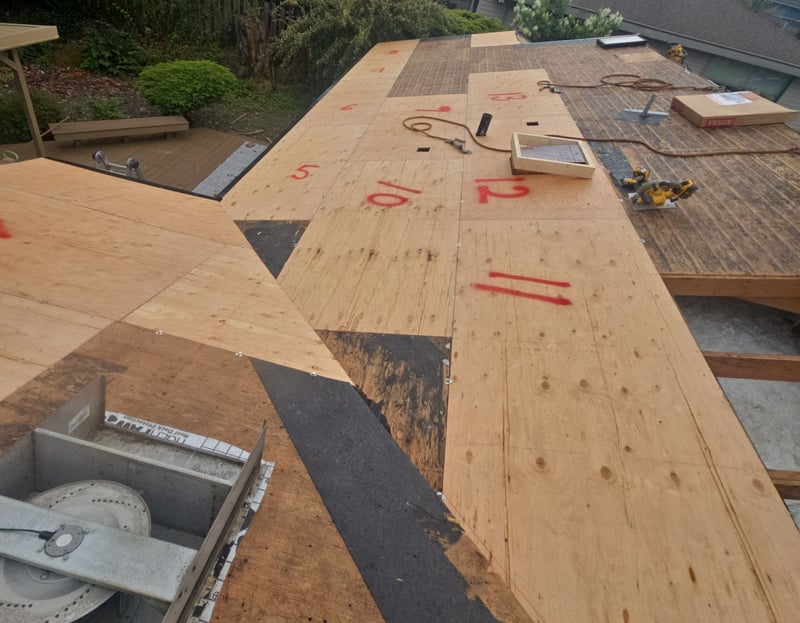
- Example: We recently had a customer whose built-in gutters were failing and saturating the roof. The built-in gutters also had gutter guards, which only caused more debris and water to collect in the gutter. The roof decking and a lot of the framing in the roof had to be replaced because they were so rotten. All of the boards in this picture that are a lighter color replaced boards that were too rotten to reuse:
- Poorly Installed Rooftop Deck: Rooftop decks have a lot of potential leak points. It’s important that flashing, sealing, and other waterproofing are done correctly so that water cannot get underneath the roof membrane. Rooftop decks can easily leak for a long time without anyone noticing because the leak and rotting wood are sealed within the roof. A lot of the time, when we get called out to repair a rooftop deck, it ends up costing tens of thousands of dollars because we end up having to replace the whole thing due to extensive rot caused by a hidden leak.
-
- Example: We recently inspected a customer’s deck that had multiple leak points (like a peeling membrane, cracks in the siding, and no flashing), which all caused severe damage. They asked us to seal the vulnerable areas as a temporary fix. The customer has been talking with an architect to redesign the whole deck, but it will be an expensive project, especially considering all the rotting wood that will need to be replaced first.
-
Basically, any part of your roof that was installed poorly or not properly sealed is at risk of leaking. That’s why it’s crucial to choose a roofing contractor that you trust to do a quality installation. Even premium materials cannot protect your roof when they’re installed incorrectly.
Why do so many roofs in the Seattle area leak?
Most of the time, when we get called out to repair a leak on someone’s roof, we find that it was caused by:
1.) Poor installation: There are countless ways that your roofer might mess up the installation on your roof, but two common issues are not following installation instructions and negligence.
2.) Old age: If your roof isn’t leaking due to poor installation, then it was probably caused by a roof that is too old and worn out to function properly.
3.) Impact damage: Another option is that your roof suffered impact damage (like a tree branch falling on it) that punctured it. This happens a lot in the Seattle area during windstorm season (fall and winter).
Leaks are so common in this area because Seattle’s humid, rainy climate means that there is almost always moisture on your roof. So, if there’s a way into the roof, the water will get in.
How much does it cost to repair a roof leak before it gets worse?
As you’ve seen, a small roof leak rarely stays small. What starts as a minor issue at the surface can quietly spread through your roof decking, attic, and framing, leading to rot, mold, and major structural damage over time. The longer a leak goes unnoticed, the more expensive it becomes to fix.
That’s why understanding the potential cost early on is so important. In some cases, a simple repair can solve the problem. In others, hidden damage can turn it into a much larger project involving decking replacement, insulation, or even structural repairs.
Read our article “Roof Leak in Seattle? Here’s What It Will Really Cost to Fix It” to learn the cost of different roof leak repairs in the Seattle area, what factors impact pricing the most, and how to budget before a small issue turns into a major expense.

Frequently Asked Questions About Widespread Damage from Leaks
1. Can a small roof leak really cause major damage?
Yes, this is very common.
Even a small leak can allow water to slowly soak into your roof system over time. Because the damage is hidden, it can spread for months or years before you notice it, often leading to major repairs.
2. Why are roof leaks so hard to detect early?
Roof leaks usually start in hidden areas like:
- Under shingles
- Inside the roof decking
- Within the attic
By the time water becomes visible inside your home, the leak has often been active for a long time.
3. How does water spread once it gets into the roof?
Water doesn’t just drip straight down, it spreads.
It can:
- Travel along roof decking
- Follow framing and rafters
- Soak into insulation
This allows a small entry point to cause widespread damage across your roof.
4. What parts of the roof are most vulnerable to hidden leaks?
Common weak points include:
- Built-in gutters
- Rooftop decks
- Flashing around walls and penetrations
These areas are harder to seal properly and more likely to allow water in.
5. Why are built-in gutters so risky?
Built-in gutters constantly hold water.
This creates:
- Continuous moisture exposure
- Higher chance of leaks forming
- Faster spread of water if a leak occurs
Once they fail, they can saturate large portions of the roof.
6. Can a rooftop deck cause hidden roof damage?
Yes, rooftop decks are one of the most common sources of hidden leaks.
They have multiple potential failure points, including:
- Poor sealing
- Missing or incorrect flashing
- Membrane damage
Leaks can stay hidden underneath the deck for a long time.
7. How long can a roof leak go unnoticed?
In many cases, leaks can go unnoticed for months or even years.
This is especially true if:
- The leak is small
- It’s contained within the roof structure
- It doesn’t reach the ceiling right away
8. Why does roof damage get worse over time?
Because moisture builds up and spreads.
As water continues to enter the roof, it:
- Weakens wood
- Promotes rot and mold
- Expands the affected area
The longer it goes untreated, the more expensive the repair becomes.
9. What are the first signs of serious roof leak damage?
Some early warning signs include:
- Musty smells in the attic
- Dark or stained wood
- Damp insulation
Visible ceiling stains usually appear much later in the process.
10. Why are roof leaks so common in Seattle?
Seattle’s climate creates the perfect conditions for leaks.
With frequent rain and high humidity:
- Roofs are almost always exposed to moisture
- Any weakness in the system will let water in
- Leaks can spread quickly once they start
This makes proper installation and maintenance especially important.
Topics:
