

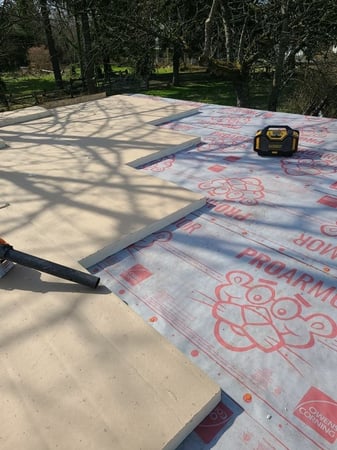
Are you worried that your flat roof could be rotting from the inside, even if you haven’t noticed any leaks yet? Did your roofer skip some steps during your flat roof installation after insisting that you don’t need any special insulation on top of your roof decking?
In Seattle’s damp climate, insulation does far more than improve energy efficiency on a flat roof. The right insulation acts as a thermal break that helps prevent condensation from forming inside your roof assembly.
At RoofSmart, we have repaired and replaced hundreds of flat roofs and roof decks that were completely rotten due to a lack of insulation. For some reason, roofers in the Seattle area almost always skip this step, even though it’s the most important one.
In this article, we’ll explain why insulation is critical for flat roofs in Seattle, what happens when it’s missing or installed incorrectly, and how the right insulation system helps protect your roof from the hidden damage caused by condensation.
What happens when a flat roof has poor insulation?
|
Issue |
What Causes It |
What Happens to the Roof |
Warning Signs |
Severity |
|
Condensation Build-Up |
Warm indoor vapor hits cold roof deck |
Moisture forms underneath decking |
Damp wood or frost |
⚠️ High |
|
Rotting Roof Deck |
Wood absorbs condensation repeatedly |
Decking weakens and decays |
Soft or dark wood |
❌ Very High |
|
Mold Growth |
Constant trapped moisture |
Mold spreads through roof assembly |
Musty smell, black spots |
❌ Very High |
|
Structural Damage |
Rot spreads into framing and trusses |
Roof structure weakens |
Sagging or cracking |
❌ Critical |
|
Insulation Failure |
Wrong or missing insulation |
Roof cannot maintain temperature |
Uneven temperatures |
⚠️ High |
|
Premature Roof Failure |
Long-term moisture exposure |
Roof system deteriorates early |
Leaks and decay |
❌ Critical |
|
Wall Damage |
Moisture spreads beyond roof |
Walls begin rotting internally |
Staining or mold |
❌ Critical |
|
Hidden Interior Damage |
Condensation trapped inside assembly |
Damage spreads unseen |
Problems appear suddenly |
❌ Critical |
Why do flat roofs in Seattle need insulation?
Flat roofs need a layer of insulation (aka a thermal break) that prevents condensation from building up on your roof decking and rotting it. You need insulation to protect your flat roof from condensation build-up. A great option is foam insulation (polyiso, XPS, or EPS) because they have great insulation value and moisture resistance.
Seattle and the surrounding cities have very high humidity levels, which means that the dew point is higher. The air holds a lot of moisture when it’s hot, but when it cools down, the air cannot hold it any longer.
You produce vapor in your house by cooking, showering, talking, and breathing. All of the vapor from your living space rises with the heat until it hits the wooden roof decking (either OSB or plywood).
And on a flat roof, right above the roof decking is the outside (there’s no space between the ceiling and the roof like there is in a regular attic). This means that the roof decking is usually cold, and all that moisture condenses and turns to water right there on the underside of the roof decking.
If you have the right insulation setup, then you don’t have to worry. But if your roof is exposed and vulnerable to moisture, then condensation is going to be a huge problem for you.
Condensation is a common issue in Seattle. We’ve seen it absolutely destroy countless flat and low-sloped roofs in the Greater Seattle area.
What happens to flat roofs that don’t have protection from condensation?
When condensation builds up on your roof deck, the moisture soaks into the wood. This causes the following issues:
- Rotting wood
- Structural damage
- Mildew
- Mold
Here are some examples of the rot and mold that happen when you have no insulation on your flat roof in Seattle:
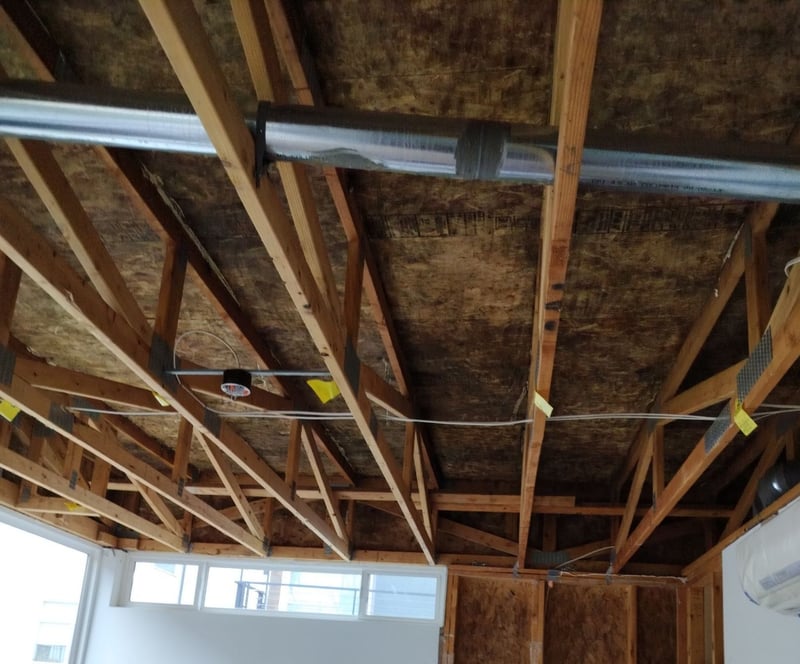
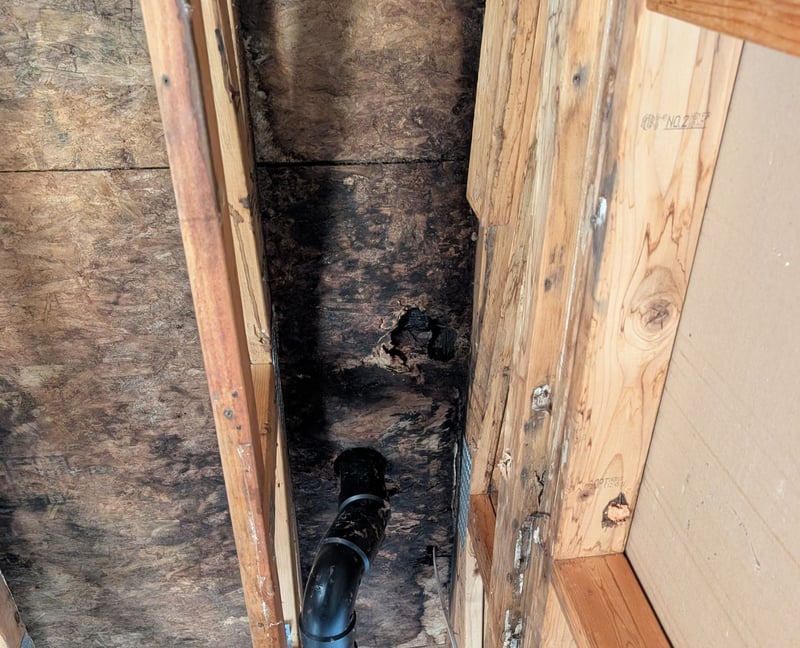
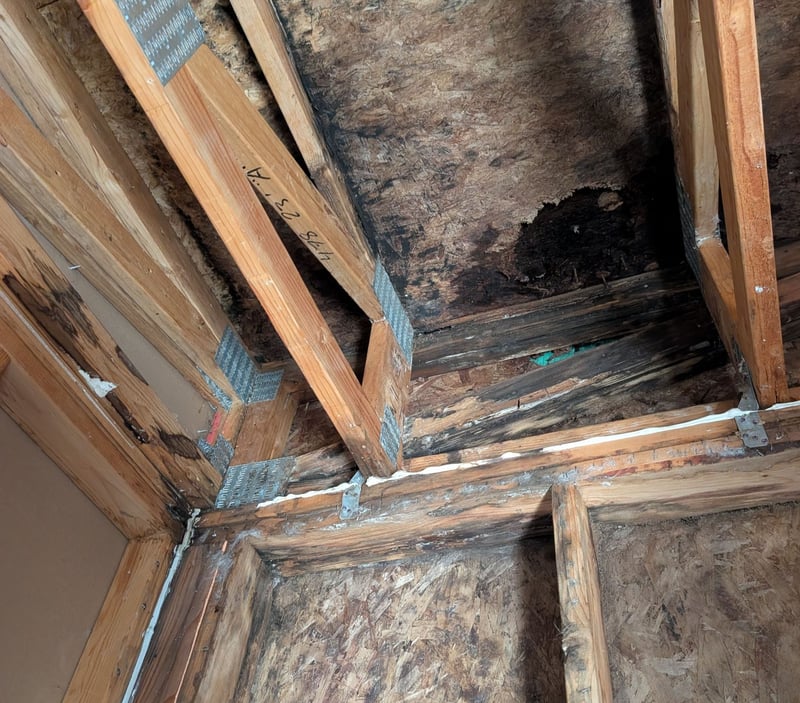
This roof is less than 10 years old, and it’s already ruined. The roof is rotten, and the trusses are starting to rot as well. Plus, everything is covered in mold, and the walls of this multi-story building are rotting.
In other words, the entire building is rotting on the inside due to a lack of proper condensation control in under 10 years. As a result, this customer has to pay a ton of money to fix a problem that could’ve been prevented.
We see this issue all the time. For some reason, a lot of roofers in the Seattle area do not pay attention to condensation prevention when building flat roofs and rooftop decks. They either use too little insulation, the wrong insulation, or no insulation at all.
Most of the time, the work we get called in to do is repairing or replacing rooftop decks that have completely rotted on the inside because they didn’t get properly insulated.
It’s a real shame because the homeowner has to spend a bunch of money to fix a problem that would not have happened if the roofer knew what they were doing.
Even if you have really good insulation up there, remember, the water vapor makes it past the insulation to the wood. If you're ever seeing frost on a roof or just morning dew, that is also occurring inside your roof. And as you can imagine, the wood doesn't like that.
You need the right kind of insulation (foam boards) to maintain the temperature of the roof and keep moisture from building up.
Are flat roofs the only roofs that need foam insulation?
Not every type of insulation is the best fit for every roof. However, on some low-sloped roofs that aren’t compatible with traditional ventilation or sloped roofs that have a complicated setup that makes ventilation difficult, sometimes we at RoofSmart recommend foam insulation to help protect the roof.
In most cases, foam insulation is the right type of insulation for a flat roof because it protects the roof from moisture buildup without the help of ventilation (flat roofs don’t have traditional ventilation).
Sloped roofs usually have an attic ventilation system and some other form of insulation (like fiberglass or spray foam). Foam insulation boards typically aren’t needed on a sloped roof because they prevent moisture accumulation with the combination of ventilation and other insulation.
The type of insulation your roof needs depends on the following factors:
- the slope of your roof
- the size and height of your attic
- if a classic ventilation system works in your attic
- how old your house is
There are some rare exceptions where foam insulation is right for a sloped roof, but there really aren’t any scenarios in the Seattle area where your flat roof will actually be protected from moisture damage without the right insulation setup (aka foam insulation).
What is the best insulation for a flat roof in Seattle?
As you've seen, insulation isn't just an energy-efficiency upgrade on a flat roof. It's one of the most important defenses against condensation, mold, rot, and structural damage. Without the right insulation setup, moisture can quietly accumulate inside the roof assembly and cause devastating damage long before you ever notice a leak.
But simply knowing that your flat roof needs insulation isn't enough. Different insulation products offer different levels of moisture resistance, thermal performance, and long-term durability.
Choosing the wrong product (or installing the right product incorrectly) can still leave your roof vulnerable to condensation problems.
Read our article “What Is the Best Insulation for Your Flat Roof in Seattle?” to compare the most common flat roof insulation options, explain the pros and cons of each, and help you understand which insulation systems perform best in Seattle's cool, damp climate.
Frequently Asked Questions About Flat Roof Insulation Needs
1. Does a flat roof really need insulation in Seattle?
Yes, flat roofs in Seattle absolutely need proper insulation.
Because Seattle has high humidity levels, flat roofs are extremely vulnerable to condensation buildup. Without insulation, moisture can form underneath the roof decking and cause severe rot and mold damage.
2. Why are flat roofs more vulnerable to condensation than sloped roofs?
Flat roofs usually do not have a ventilated attic space.
On a sloped roof, ventilation helps remove moisture before it condenses. On a flat roof, the roof decking sits much closer to the conditioned living space, making condensation much more likely.
3. What causes condensation inside a flat roof?
Warm, moist air from inside the home rises upward.
When that vapor reaches the cold roof decking, it cools and turns into water droplets. This process happens inside the roof assembly and can slowly destroy the structure over time.
4. What happens if a flat roof does not have proper insulation?
Without proper insulation, a flat roof can develop:
- Rotting wood
- Mold and mildew
- Structural damage
- Premature roof failure
In severe cases, entire roof systems and walls may need replacement.
5. What type of insulation works best for flat roofs?
Foam board insulation is usually the best option.
Common choices include:
- Polyiso
- XPS
- EPS
These materials resist moisture and help maintain the roof deck temperature to reduce condensation.
6. Can a flat roof fail from condensation even if it doesn’t leak?
Yes.
Condensation damage happens from the inside, not from rain entering through the roof surface. A roof can appear watertight while still rotting internally due to trapped moisture.
7. Why do so many flat roofs in Seattle develop mold and rot?
Many flat roofs are built with:
- Too little insulation
- The wrong insulation type
- No condensation protection at all
Combined with Seattle’s damp climate, this creates ideal conditions for mold and rot.
8. Do sloped roofs also need foam insulation?
Usually not.
Most sloped roofs rely on:
- Attic ventilation
- Fiberglass or spray foam insulation
Flat roofs are different because they typically cannot use traditional ventilation systems effectively.
9. How can I tell if my flat roof has condensation problems?
Common warning signs include:
- Musty smells
- Mold growth
- Soft or darkened wood
- Interior moisture issues
Unfortunately, much of the damage remains hidden until the roof is opened up.
10. Can proper insulation extend the life of a flat roof?
Absolutely.
A proper insulation system helps:
- Prevent condensation buildup
- Protect the roof deck from moisture
- Reduce structural deterioration
This can dramatically improve the lifespan and performance of the roof.
Topics:
