

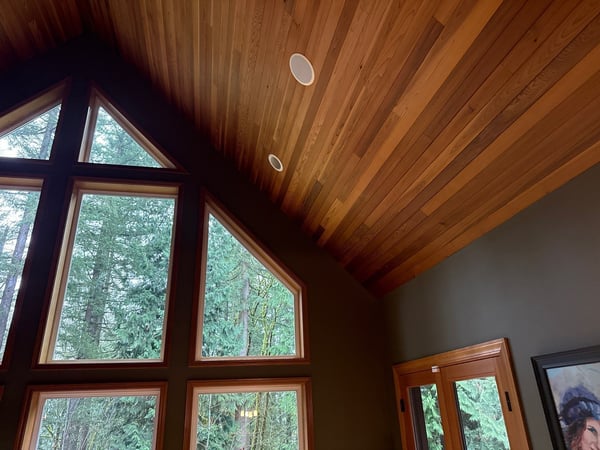
TL;DR: Summary
Venting a vaulted ceiling is challenging because the attic space is limited and airflow is often blocked by insulation and framing.
Unlike a traditional attic, vaulted ceilings restrict air movement, leading to issues like blocked intake vents, minimal air gaps, and no lateral airflow between rafter bays, making proper ventilation difficult.
These limitations can trap heat and moisture, increasing the risk of mold, rot, and premature roof failure, especially in Seattle’s damp climate.
The key takeaway: vaulted ceilings require specialized ventilation solutions (like adding air space with shims or redesigning airflow paths) to function properly and protect your roof long term.
Are you worried that your vaulted ceiling might be trapping moisture inside your roof without you realizing it? Have you noticed your upstairs stays hot at night or smells musty and wondered if poor ventilation inside your vaulted ceiling is causing hidden damage?
At RoofSmart, we replace hundreds of roofs every year. With each roof replacement, one of our top priorities is to make sure that every customer’s attic ventilation is up to code and working properly, including for more complex situations like vaulted ceilings.
In this article, we’ll explain why vaulted ceilings struggle with airflow, the most common ventilation problems roofers encounter, and the strategies that can help improve ventilation and protect your roof in Seattle’s damp climate.
Why do vaulted ceilings struggle with airflow?
|
Challenge |
What’s Happening |
Why It’s a Problem |
Common Symptoms |
Possible Solution |
|
Limited Attic Space |
Very small or no attic cavity |
Not enough room for airflow |
Hot upstairs, trapped air |
Add shims to create air gap |
|
Blocked Intake Vents |
Insulation blocks soffits |
Air cannot enter system |
Stale air, moisture buildup |
Install baffles to clear airflow |
|
Insufficient Air Gap |
Insulation fills rafter bays |
No room for air to move |
Overheating and condensation |
Increase cavity depth |
|
No Lateral Airflow |
Rafter bays are isolated |
Air cannot move sideways |
Uneven ventilation |
Vent each bay individually |
|
Hidden Issues |
No accessible attic space |
Problems go unnoticed |
Sudden major damage |
Tear-off inspection required |
|
Outdated Ventilation |
Older design standards |
Doesn’t meet current airflow needs |
Poor performance overall |
Redesign ventilation system |
|
Heat Buildup |
Trapped hot air |
Damages shingles over time |
Warm ceilings at night |
Improve ventilation |
|
Moisture Retention |
Trapped humidity |
Leads to mold and rot |
Musty smells |
Improve airflow |
How is the attic space different in a vaulted ceiling vs. a regular ceiling?
In a regular ceiling, there is an open attic that doesn’t have any walls obstructing the flow of air (usually an unfinished space). A vaulted ceiling happens when the attic is converted into an actual room, which significantly shrinks the size of the attic and blocks airflow.
Here’s a graphic that shows different types of regular attics:
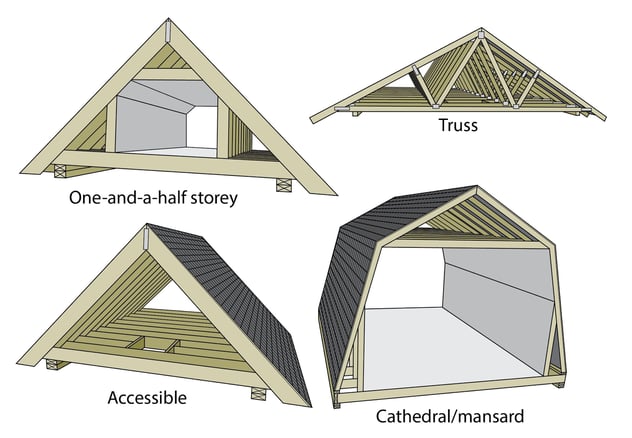
Image from natural-resources.canada.ca
On the other hand, here is a cathedral ceiling:
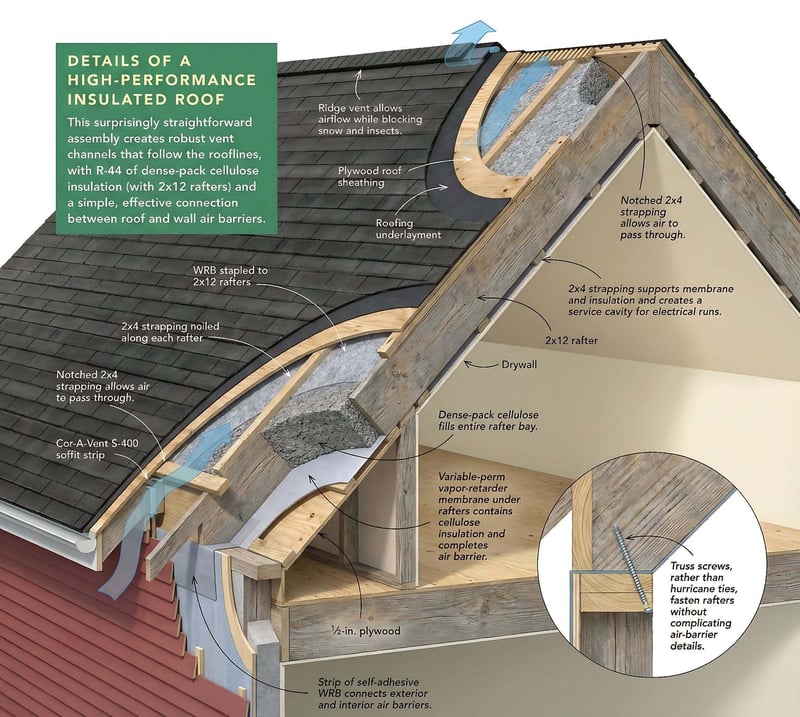
Notice how in the cathedral ceiling, air flow is blocked by the walls, whereas in the accessible and truss attic, air can flow freely.
What problems do you run into with traditional venting on a vaulted ceiling?
Vaulted ceilings may look nice, but they also introduce a lot of problems into your attic that prevent proper airflow and can potentially ruin your roof.
Common issues we run into when working on vaulted ceilings in the Seattle area include:
1.) Issues are hidden: Vaulted ceilings are hard to see because the attic is small and blocked off by walls. It makes it hard for us to inspect the attic and find issues ahead of time. Your roofer can guess at what problems your roof might have, but they won’t know or be able to give legitimate suggestions for what should be fixed until the roofing crew gets up there and starts tearing off the roof.
2.) Blocked Intake vents: Usually, what happens in a vaulted ceiling is that the insulation prevents air from entering the attic space because insulation gets installed right behind it and blocks it. You can install baffling to push the insulation down. This gives room for air to flow, but it also makes your insulation a lot less impactful.
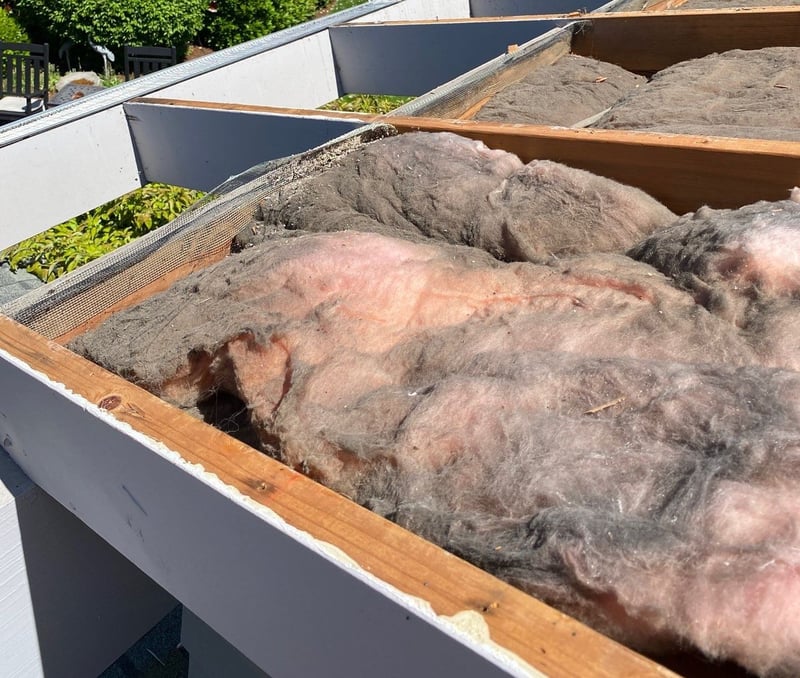
3.) Insufficient Air Gap: The standard 2x4 framing used to frame the attic leaves little room for air to pass through the attic. Most vaulted ceilings only have a few inches of space between the ceiling and the roof decking. This is filled with insulation, leaving no room for ventilation to flow. In addition to the intake vents being blocked, the entire ceiling is blocked by insulation. Most roofers don’t concern themselves with updating attic ventilation, so your roof ventilation is likely out of date, especially if you have a vaulted ceiling.
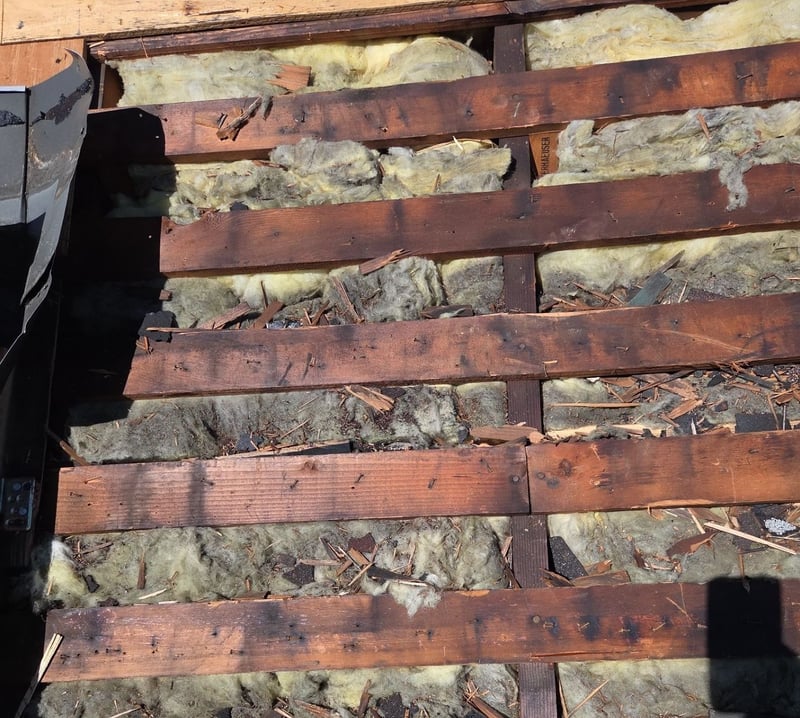
4.) No Lateral Movement: Each rafter bay is completely separate from the others, meaning that each one needs its own intake and exhaust ventilation. Air does not flow sideways between the rafter bays because there isn’t enough room above or below the rafters. This is another reason that your attic ventilation probably isn’t working correctly on your vaulted ceiling.
How do you vent a vaulted ceiling in Seattle?
Since vaulted ceilings have so many issues that prevent proper air flow through the attic, it takes a lot of work to revamp the attic and roof to make sure the ventilation is actually working.
Here are some tactics your roofer can use to vent the attic of your vaulted ceiling:
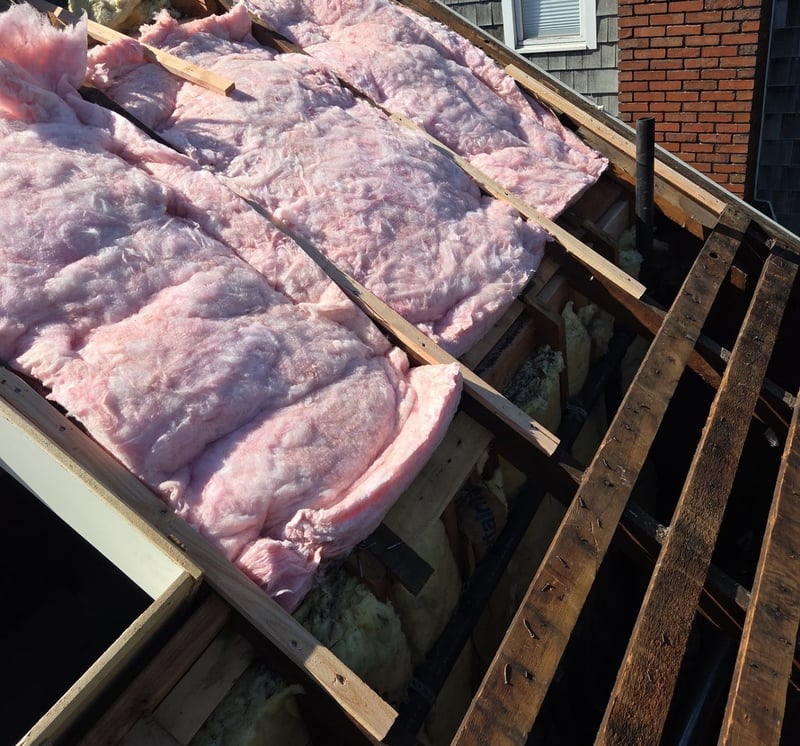
- Shimming: One option is to add shims all over underneath the roof deck to create a larger air cavity. This takes advantage of the existing room you have for insulation and opens up additional space on top for air to pass through. This makes your roof slightly taller, but only by a few inches. If you have skip sheathing on your roof and it's in good shape, your roofer can also take that and turn it 90 degrees so it stands up on the roof instead of lying flat. This adds height to your roof in the same way shims would, and essentially creates an overpass where air can flow through.
This image shows the shims installed on top of the rafters. Once the insulation is pressed down with baffling, there will be room for air to flow above it.
-
Drilling holes: Another potential option is to drill holes in the wood to give air room to flow through. This is not something that we encourage because it's very likely to weaken your roof framing, but it is a possibility. There are a fair number of roofers who do this. Sometimes it might be necessary in a tricky spot (like when you have a skylight), but overall, it's best not to drill a bunch of holes in your roof framing.
How can I tell if my vaulted ceiling is having ventilation issues?
Although it’s difficult to spot specific issues happening in your vaulted ceiling, there are still some ways that you can tell that your vaulted ceiling has poor airflow:
- Excessive heat: If the upstairs areas of your house stay hot after sunset, then you might have a ventilation issue in your attic. Too much heat, especially when your roof should be cooling down, is a key sign of trapped air and poor ventilation.
- Musty smell: If your roof does not let air flow properly, then it can easily trap moisture and allow mold to grow. If you notice a musty smell upstairs but don’t see any mold inside, then it’s probably in your roof.
Is your cathedral ceiling quietly trapping moisture and damaging your roof?
As you’ve seen, vaulted and cathedral ceilings create major ventilation challenges because there’s so little room for airflow inside the roof assembly. When insulation blocks intake vents or there isn’t enough air space above the insulation, heat and moisture can easily get trapped inside the roof.
And in Seattle’s damp climate, trapped moisture is a serious problem.
What starts as poor airflow can eventually lead to condensation, mold growth, rotting wood, and even premature roof failure, often without obvious warning signs until the damage becomes severe.
Read next: Is Your Cathedral Ceiling Trapping Moisture and Ruining Your Roof?
https://getroofsmart.com/blog/is-cathedral-ceiling-trapping-moisture-and-ruining-roof
This case study takes a deeper look at how moisture gets trapped inside cathedral ceilings, the damage it can cause over time, and what solutions actually work on real Seattle homes to protect your roof and attic space.

Frequently Asked Questions About Venting Vaulted Ceilings in Seattle
1. Why are vaulted ceilings harder to ventilate than regular attics?
Vaulted ceilings have very limited space between the roof and the ceiling.
Unlike a traditional attic, where air can flow freely, vaulted ceilings:
- Restrict airflow with insulation and framing
- Block natural ventilation pathways
- Require more precise design to function properly
2. What is the biggest problem with ventilating a vaulted ceiling?
The biggest issue is lack of space.
There is often only a few inches between the insulation and the roof decking, leaving no room for air to flow. Without that air gap, ventilation systems cannot function.
3. Can insulation block airflow in a vaulted ceiling?
Yes. This is one of the most common problems.
Insulation is often installed tightly against the roof deck, which:
- Blocks intake vents
- Prevents airflow from entering the system
- Traps moisture and heat
4. Why doesn’t air move between rafter bays in a vaulted ceiling?
Each rafter bay is separated by framing.
This means:
- Air cannot move sideways
- Each cavity must ventilate independently
- Poor design can leave some areas completely unventilated
5. What are signs my vaulted ceiling has poor ventilation?
Common signs include:
- Upstairs rooms staying hot after sunset
- Musty smells
- Uneven temperatures
- Moisture-related issues
These are indicators that air is not flowing properly.
6. Can poor ventilation in a vaulted ceiling damage my roof?
Yes. Significantly.
Poor ventilation can lead to:
- Mold and mildew
- Rotting wood
- Premature shingle failure
- Structural damage
7. What is the best way to create airflow in a vaulted ceiling?
One of the most effective methods is increasing the air cavity.
This can be done by:
- Adding shims to raise the roof deck slightly
- Creating space above insulation for airflow
- Ensuring intake and exhaust vents are connected
8. Is drilling holes in rafters a good way to improve airflow?
In most cases, no.
While it can allow air to pass through, it may:
- Weaken the structural integrity of the roof
- Create safety concerns
It’s generally better to use methods that preserve structural strength.
9. Why are ventilation problems harder to detect in vaulted ceilings?
Because there is little to no accessible attic space.
This makes it difficult to:
- Inspect airflow
- Spot moisture damage early
- Diagnose issues before they become severe
10. Do vaulted ceilings require a different ventilation strategy than standard roofs?
Yes. They require a customized approach.
Standard ventilation systems often don’t work because of limited space, so solutions must be tailored to:
- Roof structure
- Available cavity space
- Insulation layout
Topics:
