

TL;DR: Summary
Kick flashing is a small but essential roofing component that directs water away from your siding and into the gutter, helping prevent hidden leaks and costly structural damage.
Without properly installed kick flashing and kickout flashing where needed, rainwater can run behind the siding, causing rot, mold, and deterioration that may go unnoticed for years.
Signs of a siding leak include dark stains, peeling paint, mildew, drip marks, and soft or spongy wood, but by the time these appear, significant damage may have already occurred.
The key takeaway: properly installed kick flashing is one of the simplest and most effective ways to protect your Seattle home from water intrusion, making it a critical detail that should never be overlooked during a roof replacement.
Are you worried that a small flashing detail your roofer skipped could be allowing water to rot your walls without you even knowing it? Have you noticed stains, peeling paint, or water running down the side of your home and wondered if your roof is quietly causing thousands of dollars in hidden damage?
Most homeowners never think about kick flashing because it's a small piece of metal that's easy to overlook. But when it's missing or installed incorrectly, rainwater can slip behind your siding, soak into the wall, and slowly rot the framing, sheathing, and exterior of your home.
At RoofSmart, we do hundreds of roof inspections every year. Most of the time, we notice that a roof most likely has rot due to missing flashing and other signs of leaks. Our inspectors are trained to identify signs of leaks and rot so that we can offer the right solution.
In this article, we'll explain what kick flashing is, how it protects your roof and siding, the warning signs that it’s missing, and why this simple flashing detail is one of the most important defenses against water damage on Seattle homes.
What is kick flashing, and how does it protect my roof?
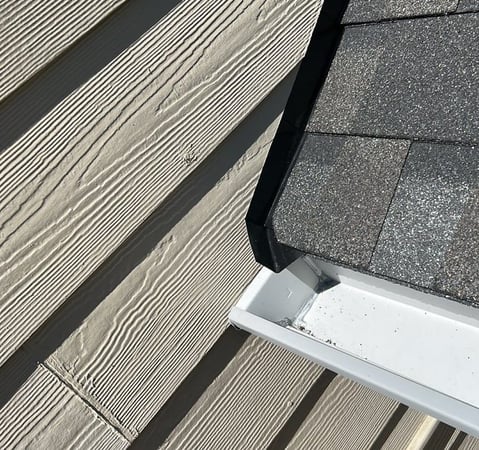
Kick flashing is a type of flashing that is installed over the siding where the roof meets the wall. The last piece of kick flashing can include kickout flashing, which is a bent-out piece of flashing installed at the edge of the roof where the gutter hits the wall that prevents water from running down the wall and behind the siding.
For example, on a recent customer’s roof, we discovered that she didn’t have kick flashing on her roof in places where the roof and gutter met siding:
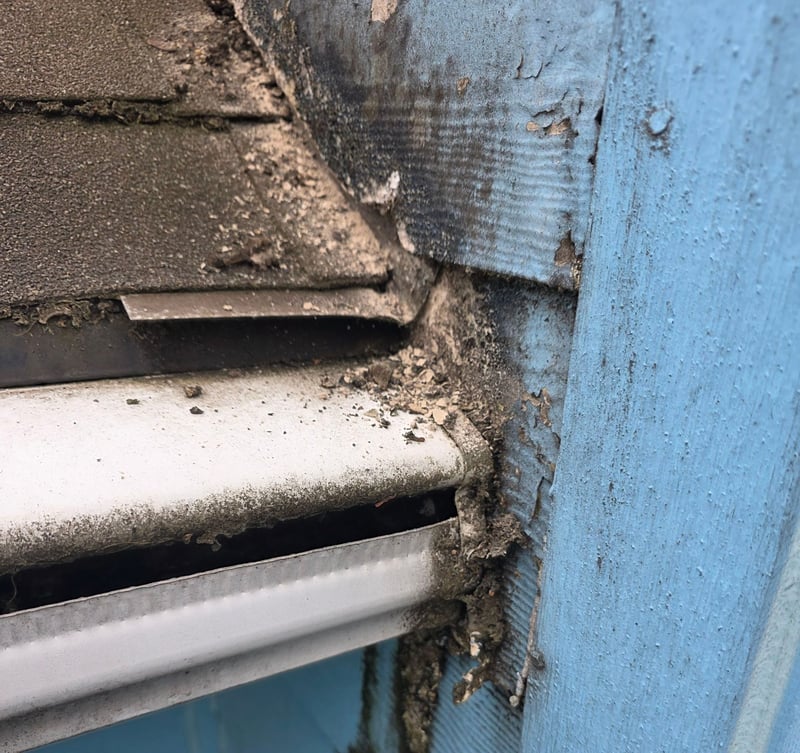
As you can see, there is step flashing installed (notice the piece of metal sticking out from underneath the shingle). Step flashing goes underneath the shingles and behind the siding, whereas kick flashing (which is missing) goes above the siding.
It’s good that the roof had at least some protection, but without both layers of flashing, water still got through and caused damage.
This is what it looked like when we installed the proper flashing:
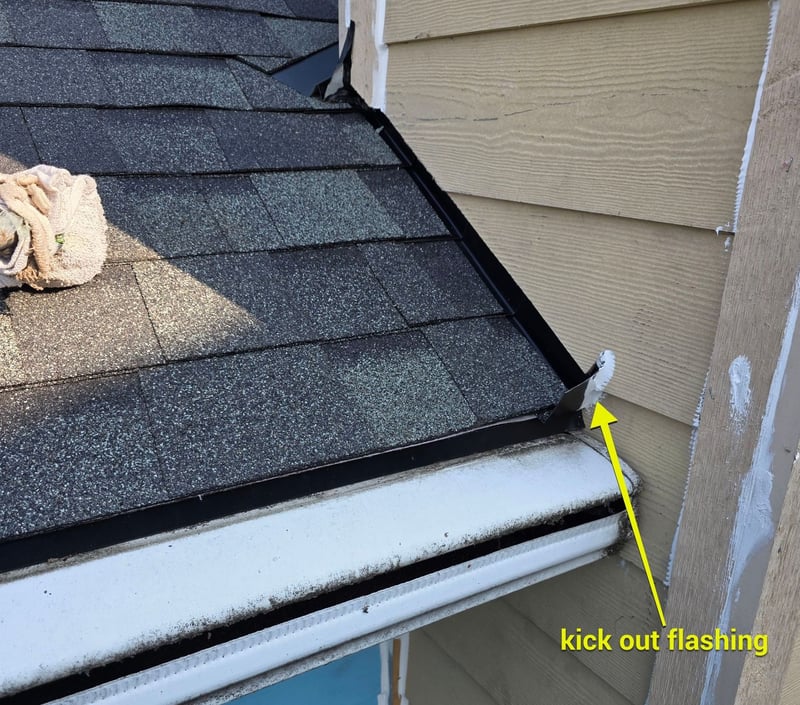
Now the siding is protected from water getting underneath and behind it. Also, the diverter (aka kickout flashing) helps direct water away from the wall and onto the gutter.
Kick flashing is important to install, but you don’t always need kickout flashing. In this case, it was crucial to install it to help make sure that water is flowing away from the wall and into the gutter.
This will be beneficial when the runoff from the chimney cricket flows down this spot. Instead of allowing water to overflow at the corner, it will be sent in the other direction and down to the gutter where it belongs.
Kick Flashing vs. Kickout Flashing: What's the Difference?
|
Feature |
Kick Flashing |
Kickout Flashing |
|
Primary Purpose |
Protects the roof-to-wall intersection from water intrusion |
Directs water away from the wall and into the gutter |
|
Installation Location |
Along the roof where it meets the wall |
At the bottom of the roof-to-wall intersection near the gutter |
|
Works With |
Step flashing and siding |
Kick flashing, step flashing, and gutters |
|
Prevents |
Water getting behind siding |
Water running down the wall past the gutter |
|
Protects Against |
Rotting sheathing, framing, and siding |
Siding leaks, foundation splash, and corner rot |
|
Required Everywhere? |
Recommended anywhere a roof meets a wall |
Most beneficial where roof runoff ends near a gutter |
|
Visible After Installation |
Mostly visible above the siding |
Visible at the bottom corner where the roof ends |
|
Cost to Install |
Relatively inexpensive |
Relatively inexpensive |
|
Cost of Ignoring |
Can lead to thousands of dollars in rot repairs |
Can lead to chronic siding leaks and water damage |
|
Best for Seattle Homes? |
Yes |
Yes, especially in high-rain areas |
What happens if my roof doesn’t have kick flashing?
Without kick flashing to keep water from getting behind your home’s siding as it flows down the roof, a leak can form and cause extensive rot.
Unfortunately, it is very common for siding leaks to stay hidden for a long time. The water soaks into the wood and causes it to rot.
This is what the rot looks like when you remove the siding:
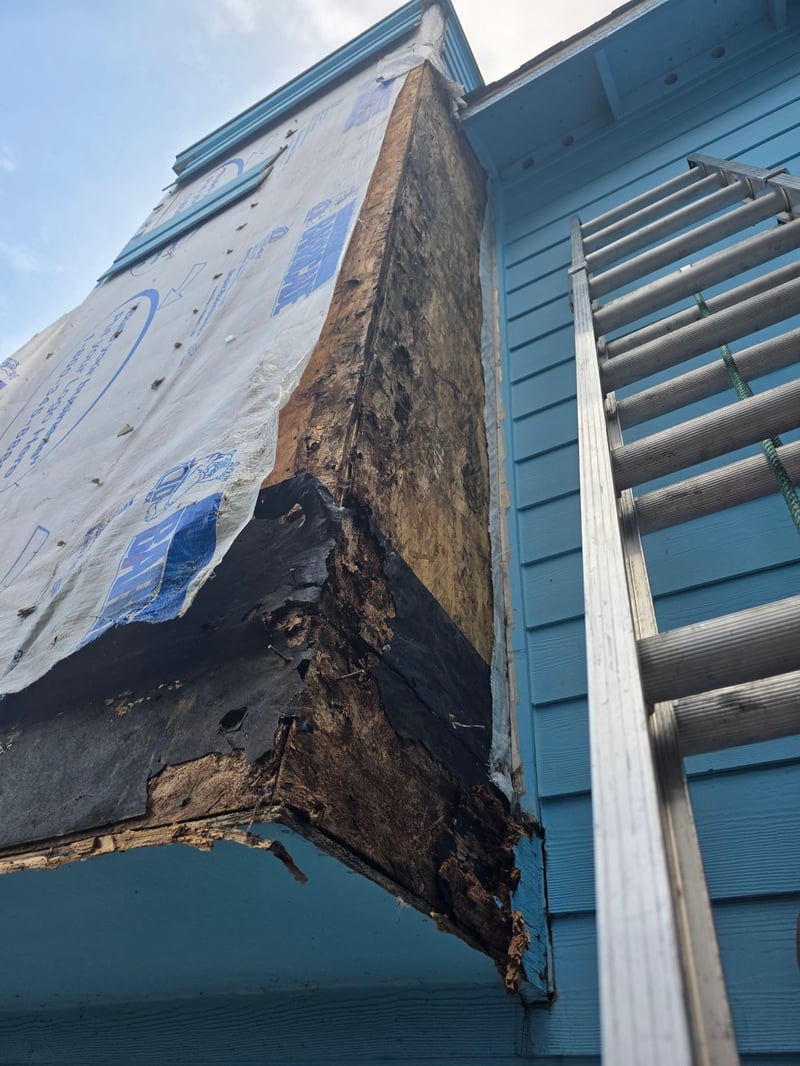
This is a great example of really bad rotting caused by a leak that had gone unnoticed for a long time. The OSB was so rotten that it began to crumble and fall apart when the crew tried to remove it.
How can you tell if your siding has a leak and is rotting?
Signs of a siding leak that’s rotting include:
- Dark staining on the wood
- Drip marks
- Peeling paint
- Mildew
- Spongy wood
You don’t see these signs until it’s too late to stop it. And even when you do see signs, it doesn’t always seem like rot. Here’s an example of extensive siding rot that we discovered at a recent customer’s house:
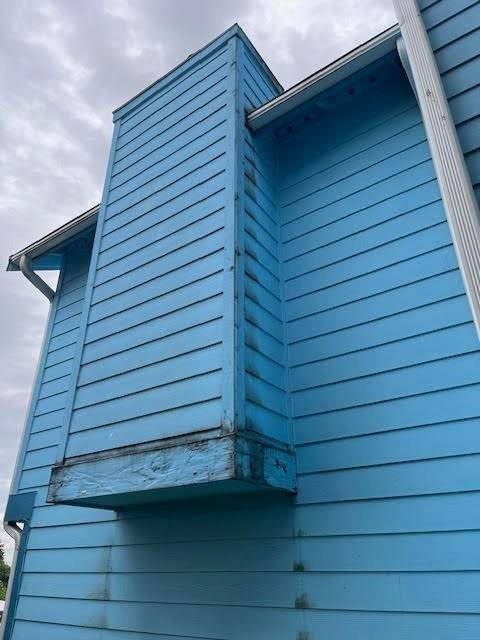
There is dark staining all along this chimney chase. It sort of looks like it’s just dirty, but when I saw that the kick flashing was missing and did a closer inspection of the drip marks, it became clear that the siding was rotting.
And by the looks of the dark staining, it meant that the leak had been happening for a long time.
This home had siding leaks all over. Here’s another example of drip marks on the siding:
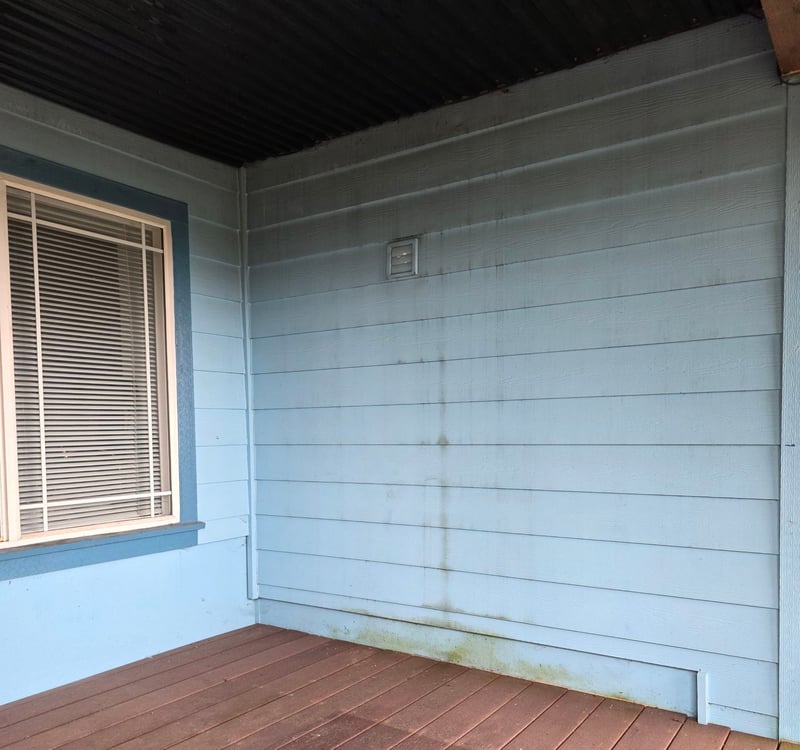
You can even see algae staining at the bottom of the siding.
Due to the extensive rot all over the siding of this house from the missing kick flashing, the repair ended up costing $20,000 for all of the reframing work. Some spots required scaffolding to be able to reach them, which made the project cost even more.
Common Signs of Missing or Failed Kick Flashing
|
Symptom |
Most Likely Cause |
Possible Consequence |
|
Dark stains on siding |
Water running behind siding |
Hidden moisture damage |
|
Peeling or bubbling paint |
Persistent moisture |
Rotting wood |
|
Soft or spongy siding |
Long-term water intrusion |
Structural repairs |
|
Drip marks below roof-to-wall intersection |
Missing kickout flashing |
Water bypassing gutter |
|
Mold or mildew on exterior wall |
Trapped moisture |
Mold growth inside wall |
|
Rot around chimney chase |
Missing flashing details |
Expensive framing repairs |
|
Water stains inside home near exterior wall |
Flashing failure |
Interior water damage |
|
Algae growing on siding |
Constant water runoff |
Premature siding deterioration |
|
Crumbling sheathing behind siding |
Long-term leak |
Major wall reconstruction |
|
Overflow at roof corner |
No kickout flashing directing water into gutter |
Siding and foundation water damage |
Why do installers not use kick flashing on the roof?
Kick flashing is often omitted by roofers to save on installation time, which is bizarre because it really only takes a few minutes to install. Leaving out flashing can also be a way for roofers to bring down the total job cost.
Building code requires flashing in a bunch of places, including anywhere where a wall and roof meet, but it doesn’t specifically say that kick flashing is required. So, legally, I suppose there is a bit of a gray area argument that your roofer could make for not installing it.
Honestly, in my opinion, there’s no good reason to not install kick flashing in the Seattle area. It rains a lot for most of the year, which means that your roof is frequently being attacked by water.
It will take any opportunity it can get to get inside your roof, meaning that your roof is vulnerable if it is missing flashing.
How much does it cost to repair a roof leak in Seattle?
As you've seen, something as small as a missing piece of kick flashing can have enormous consequences. When water is allowed to run behind your siding instead of safely into the gutter, it can quietly rot your sheathing, framing, and exterior walls for years before anyone realizes there's a problem.
The good news is that properly installed flashing is an inexpensive way to prevent these kinds of leaks. The bad news is that once hidden water damage has spread through your walls, the repairs can become much more extensive, and much more expensive.
If you're already seeing signs of a leak, or you suspect water has been getting behind your siding, your next question is probably: How much will it cost to fix?
Read our article “How Much Does It Cost to Repair a Roof Leak?”. In this guide, we'll break down the typical cost of roof leak repairs in the Seattle area, explain what factors drive repair costs, and show you why catching leaks early can save you thousands of dollars in structural repairs.

Frequently Asked Questions About Kick Flashing
1. What is kick flashing on a roof?
Kick flashing is a metal flashing installed where a roof meets a vertical wall. Its job is to keep rainwater from getting behind the siding and into the wall assembly, where it can cause rot and leaks.
2. What is kickout flashing?
Kickout flashing is the final piece of flashing installed at the bottom of a roof-to-wall intersection. It is bent outward to "kick" water away from the wall and direct it into the gutter instead of allowing it to run behind the siding.
3. Why is kick flashing important?
Kick flashing helps prevent one of the most common sources of hidden water damage on homes. Without it, rainwater can repeatedly soak the wall behind the siding, eventually causing wood rot, mold, and structural damage.
4. What happens if my roof doesn't have kick flashing?
A missing kick flashing can allow water to:
- Leak behind the siding
- Rot the wall sheathing
- Damage framing
- Promote mold growth
- Lead to expensive repairs that often aren't discovered until significant damage has occurred
5. How can I tell if my home is missing kick flashing?
Some signs include:
- Water stains on siding
- Peeling paint near roof-to-wall intersections
- Rotting trim
- Dark streaks beneath roof edges
- Water damage inside the wall near the roofline
A roofing inspection is usually the easiest way to confirm whether kick flashing is present.
6. Is step flashing the same as kick flashing?
No.
Step flashing is installed beneath shingles and behind the siding to waterproof each course of shingles along the wall.
Kick flashing is installed over the siding and works with the step flashing to direct water away from the wall. Both components serve different purposes and work together to prevent leaks.
7. Can missing kick flashing cause siding rot?
Yes.
Without proper flashing, rainwater can repeatedly run behind the siding. Over time, this moisture can cause:
- Rotting OSB or plywood
- Damaged framing
- Mold growth
- Siding failure
Many siding leaks begin because water isn't directed away from the wall properly.
8. Why do some roofs not have kick flashing?
In some cases, installers leave it out to save time or reduce installation costs. Older homes may also have been built before modern flashing practices became common.
Regardless of the reason, adding kick flashing during a roof replacement is often a relatively inexpensive upgrade that can help prevent costly future repairs.
9. Can kick flashing be added to an existing roof?
Often, yes.
If a roof is otherwise in good condition, a roofing contractor may be able to retrofit kick flashing into certain areas. However, the complexity depends on the roofing material, siding type, and existing flashing details.
10. Is kick flashing especially important in Seattle?
Absolutely.
Seattle's frequent rainfall means roof-to-wall intersections are exposed to water for much of the year. Proper flashing helps direct that water safely into the gutter instead of allowing it to enter the wall assembly, making it an important component for homes in wet climates.
Topics:
