

TL;DR: Summary
Fascia boards provide the proper foundation for gutters, helping them drain correctly while protecting your roof from water damage.
Without fascia boards, gutters must be attached directly to the rafter tails, making it difficult to achieve the correct slope and increasing the risk of standing water, gutter failure, and structural rot.
Fascia also acts as a sacrificial layer, absorbing moisture from minor gutter leaks before it can damage the roof framing, making repairs much simpler and less expensive.
The key takeaway: while fascia boards aren't always required, they are one of the best ways to improve gutter performance and protect your Seattle home from costly water damage, especially when paired with moisture-resistant materials like cedar.
Are you planning to install new gutters and wondering whether you really need fascia boards, or if they're just an optional trim piece? Have you noticed your gutters pulling away from your home, overflowing, or leaking behind the roof edge and worried that the problem goes deeper than the gutters themselves?
Fascia boards are often overlooked because they're seen as a cosmetic feature, but they actually play a critical role in supporting your gutters and protecting your roof from water damage.
At RoofSmart, our thorough inspection process allows us to look beyond the roof to make sure that your gutter system is intact, which includes checking to see if the fascia board is in good condition.
In this article, we'll explain why fascia boards are so important for gutter installation, what can happen when gutters are attached directly to rafter tails, and which fascia materials hold up best in the Seattle area so you can build a drainage system that lasts.
Fascia Boards vs. No Fascia Boards for Gutter Installation
|
Feature |
Roof with Fascia Board |
Roof Without Fascia Board |
|
Gutter support |
Provides a straight, solid mounting surface |
Gutters attach directly to rafter tails |
|
Gutter slope |
Easier to establish proper drainage toward downspouts |
Difficult to create the correct pitch |
|
Water management |
Helps direct water into the gutter |
Greater chance of water getting behind the gutter |
|
Protection from leaks |
Fascia acts as a sacrificial board if leaks occur |
Roof sheathing and rafter tails absorb water directly |
|
Ease of future repairs |
Damaged fascia can often be replaced independently |
Repairs may require removing roofing and replacing framing |
|
Risk of wood rot |
Lower when properly maintained |
Higher due to exposed framing |
|
Gutter durability |
Better support for heavy rain and debris |
Greater risk of gutters pulling away from the house |
|
Appearance |
Creates a clean, finished roof edge |
Exposed rafter tails create a more rustic appearance |
|
Material options |
Cedar, pine, composite, PVC, and more |
No fascia material installed |
|
Best choice for Seattle? |
Yes, due to frequent rainfall and moisture |
Generally not recommended for most homes |
Do I need a fascia board if I want to install gutters on my roof?
Not every roof in the Seattle area has fascia boards, so you can technically get away with not installing them. However, fascia boards are crucial if you want to make sure that your gutters are set up properly.
Here are the benefits of installing fascia boards on your roof:
- Gutter setup: Installing fascia provides a solid, level backing for gutters. It also ensures that you can set up your gutter in a straight line, even if the roofline is not perfectly straight.
- Moisture protection: The fascia can also act as a sacrificial layer in case there is a leak in the gutter. The moisture will soak into the fascia, protecting the structural rafter tails right behind it from water damage. This helps to minimize the damage and keep repair costs down.
Fascia is not just an aesthetic piece. It is an important foundation for setting up your gutters and protecting your roof from water damage. If you choose to go without it, you risk the quality of your roof’s drainage system.
What happens if my roofer installs gutters on the rafter tails instead of using fascia?
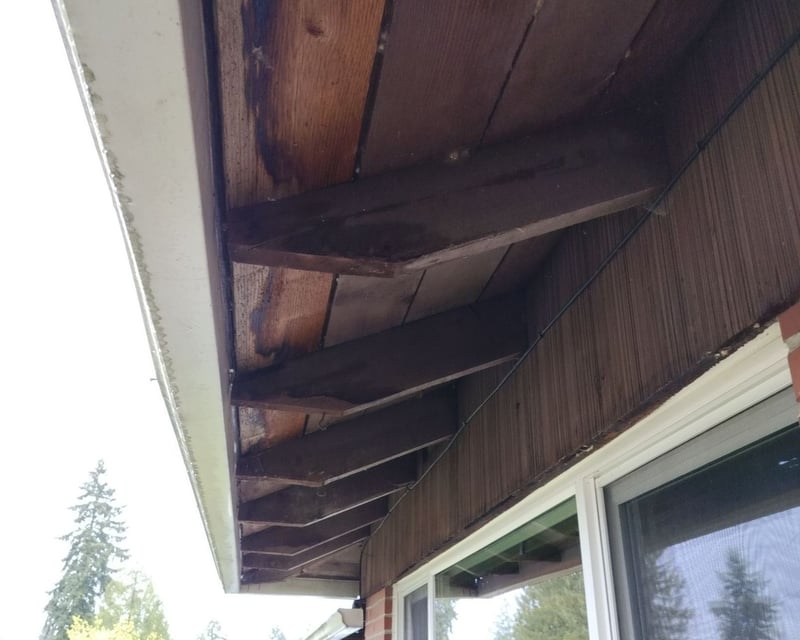
If you choose not to install any fascia board on your home, then you have to install your gutters directly to your rafter tails. This can result in structural damage and gutter failure.
Here are some examples of the issues and damage that can be caused by installing your gutters on the rafter tails rather than on a fascia board:
- Improper Slope: When you're installing a gutter, usually you want it to angle downhill towards a drain, but if you don't have a fascia board, then you can't really do it because you run out of room (the rafter tails aren’t very long, so there’s not a lot of space to angle it downward). The gutter would end up dangling, which means that it is not secure and is at risk of falling off, especially in heavy rainfall or when a lot of debris piles up. The only option that you’re left with is to install the gutter level with the roof. If you do that, it’s likely to consistently have standing water and plug a lot more easily with debris and mud.
- Structural Rot: If water ends up leaking behind your gutter, then it will splash right onto unprotected rafter tails and roof sheathing, causing rot and fungus. Without the fascia board there to absorb all of the rot instead, the framing of your roof weakens over time and eventually becomes a safety hazard.
- Gutter Failure: Weight from too much water, debris, snow, or ice collecting in the gutter can tear it off the house.
For example, when we went to inspect a potential customer’s house, we noticed that there was a leak falling behind the gutter and rotting the OSB behind it:
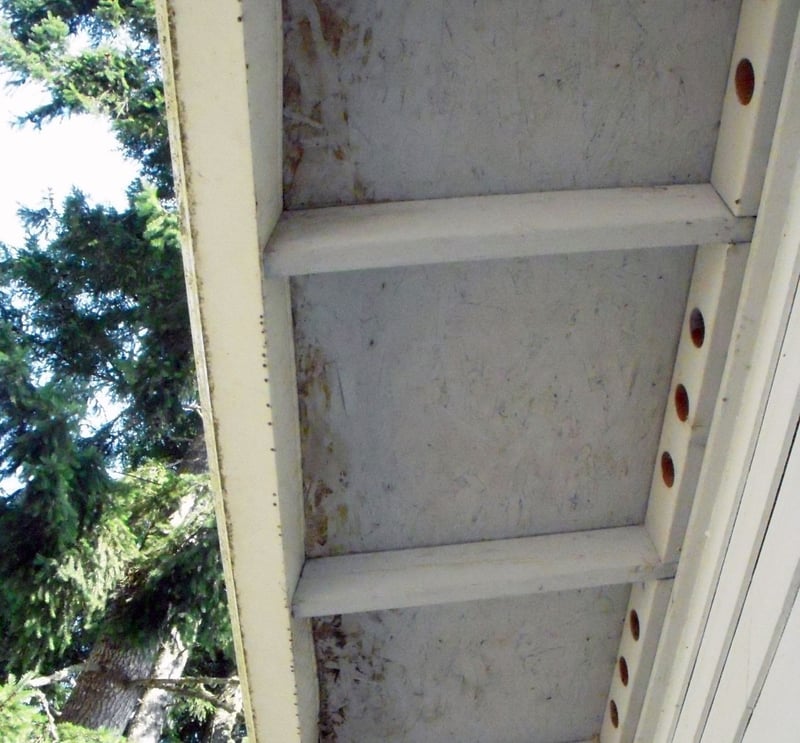
You can see that the gutter was installed all the way up to be level with the roofline, and now there is all this rot happening on the roof sheathing.
As water falls into the gutter and splashes (or as it plugs or as you get debris), all the water is accumulating right at the edge of the roof. In this case, the OSB acts as a sponge and just soaks up all of the water, causing it to rot.
If this customer had installed a fascia board, then the repair process would be much easier because all they’d have to do is remove the gutter and rotting fascia. But, in this case, they have to pull back the roof to get rid of and replace all the rot. Depending on how rotten the rafter tails are, this could be even more.
What is the best material for fascia boards in Seattle?
In a rainy, damp area like Seattle, it’s important to pick the right material for your home’s fascia. A lot of homeowners choose pine because it’s cheaper, but it is also very susceptible to absorbing water and rotting because it is a soft wood.
On the other hand, cedar is a more expensive option, but it is much more resistant to moisture and will last a lot longer.
Ultimately, the decision is up to you, but I always recommend cedar to customers because I’ve found that it lasts longer. It will help protect your roof so that you don’t need to deal with rotting fascia (or rafter tails).
Is pine a good material for fascia boards in Seattle's wet climate?
As you've seen, fascia boards do much more than give your roof a finished appearance. They provide the solid foundation your gutters need, help direct water safely away from your home, and serve as a sacrificial layer that can prevent expensive damage to your roof framing if a leak develops.
Choosing to install fascia is only part of the equation, though. The material you choose matters just as much.
While pine is one of the most affordable fascia options, it's also more susceptible to moisture damage than other materials. In a rainy climate like Seattle's, understanding the pros and cons of pine can help you decide whether the upfront savings are worth the potential long-term maintenance.
Read our article “Is Pine a Good Fascia Trim Board?” In this article, we'll take an honest look at pine fascia boards, explain where they perform well, where they fall short, and compare them to other fascia materials so you can choose the best option for your home and budget.

Frequently Asked Questions About Fascia Boards
1. What is a fascia board?
A fascia board is the horizontal board installed along the edge of the roof, covering the ends of the rafters. It provides a finished appearance while serving as the primary mounting surface for gutters.
2. Do all homes have fascia boards?
No. Some homes, particularly certain architectural styles or older homes, have exposed rafter tails instead of fascia boards. While gutters can sometimes be installed without fascia, doing so often creates additional installation challenges and maintenance concerns.
3. Why are fascia boards important for gutters?
Fascia boards provide a strong, continuous surface for securely fastening gutters. They also make it easier to establish the proper slope needed for water to flow efficiently toward the downspouts.
4. Can gutters be installed directly onto rafter tails?
Yes, but it is generally less desirable. Without fascia, gutters have fewer mounting options, making it more difficult to achieve the proper pitch. The exposed framing is also more vulnerable to water damage if the gutter leaks or overflows.
5. What happens if water gets behind the gutter?
If water consistently runs behind the gutter, it can soak into the wood behind it. With fascia installed, the fascia board often absorbs much of the damage and can be replaced relatively easily. Without fascia, the moisture can rot the roof sheathing and structural rafter tails, leading to much more expensive repairs.
6. Why do gutters sometimes pull away from a house?
Gutters become extremely heavy when filled with water, leaves, snow, or ice. If they aren't properly supported or are fastened directly into weakened wood, the fasteners can loosen over time, causing the gutter to sag or separate from the roof edge.
7. What is the best wood for fascia boards in Seattle?
Cedar is often a popular choice because it naturally resists moisture, insects, and decay better than many softwoods. While pine is typically less expensive, it generally requires more maintenance and is more susceptible to rot in Seattle's wet climate.
8. How do I know if my fascia board is rotting?
Common warning signs include:
- Soft or spongy wood
- Peeling paint
- Dark discoloration
- Visible cracks
- Sagging gutters
- Water stains near the roof edge
- Sections of wood crumbling when touched
A roofing inspection can determine whether the damage is limited to the fascia or has spread into the roof structure.
9. Can fascia boards be replaced without replacing the entire roof?
Often, yes. If the roof is still in good condition and the damage is limited to the fascia, contractors can usually remove the gutters, replace the damaged fascia boards, and reinstall the gutter system. However, if rot has spread into the roof sheathing or framing, additional repairs may be necessary.
10. Is installing fascia worth the extra cost?
For many homeowners, yes. Fascia boards improve gutter performance, help protect structural framing from moisture, simplify future repairs, and create a cleaner finished appearance. In rainy climates like Seattle, they can help reduce the likelihood of costly water damage over the life of the home.
Topics:
