

TL;DR: Summary
Flat roof leaks can cause extensive hidden rot because water can spread into the roof decking, framing, and walls long before homeowners see obvious signs inside the building. In this case, what initially appeared to be a flat roof replacement turned into a much larger project after the crew discovered severe rot behind the siding and roofing, including damage to a major support beam.
The repairs included rebuilding one wall, replacing siding on additional walls, installing new roof decking and a glulam beam, and replacing the soffit. The crew also created a warm roof assembly with two layers of polyiso insulation and gypsum backer board to help protect the roof from condensation before installing a new PVC membrane.
The key takeaway: Flat roof damage can be much more extensive than it appears from the outside because leaks and condensation can remain hidden behind the roof and walls. If an older flat roof shows signs of deterioration, gaps, or moss growth, the full extent of the damage may not become clear until the roofing and siding materials are removed.
Does your aging flat roof have moss, gaps, or other signs of wear that make you wonder if the roof is leaking and needs to be replaced? Worried that moisture might be quietly rotting your roof decking, walls, or even structural framing where you can’t see it?
At RoofSmart, we’ve repaired and replaced close to a hundred flat roofs across the Greater Seattle area. In this case, I initially visited a customer who expected to replace an aging flat roof. Once we started removing materials, we discovered extensive hidden water damage that ultimately required us to replace the roof, repair three walls, and replace severely rotted structural material.
In this case study, I’ll show you where the damage was hiding, what allowed the leaks and rot to become so extensive, and how our crew rebuilt the damaged walls and roof. I’ll also explain how we created a properly insulated warm roof assembly and installed a new PVC membrane to help protect the building from future moisture and condensation problems.
Where do flat roofs leak in Seattle, and why are they hidden?
Flat roofs leak into the roof decking and the siding. The leaks stay hidden so well because they are hidden by the ceiling and the walls of your home.
Unfortunately, leaks can progressively get worse and worse on your flat roof for a long time before you even notice the signs. For example, I recently had a customer who initially called me out to get an estimate for replacing his flat roof, but we ended up replacing the roof AND three walls that were rotting due to leaks.
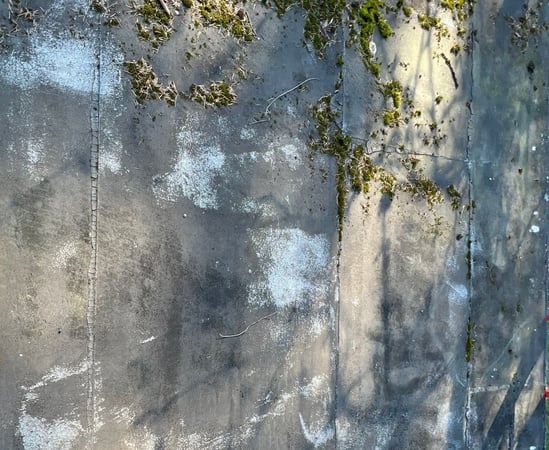
When I first got there, I knew that the customer suspected there might be some leaks due to the age of the roof. It was a flat roof with painted torch down. The roof was in pretty rough condition, and it even had moss on it. There were also some spots with gaps near the edge of the roof where water could easily get in.
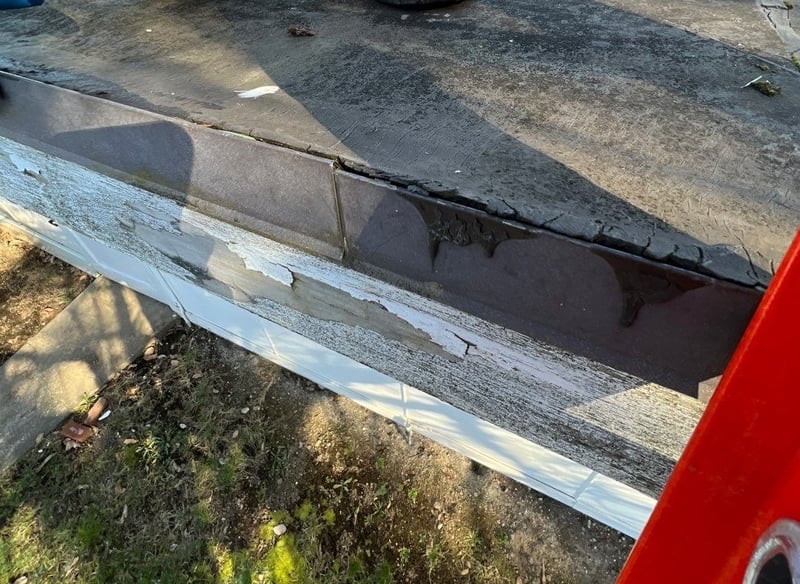
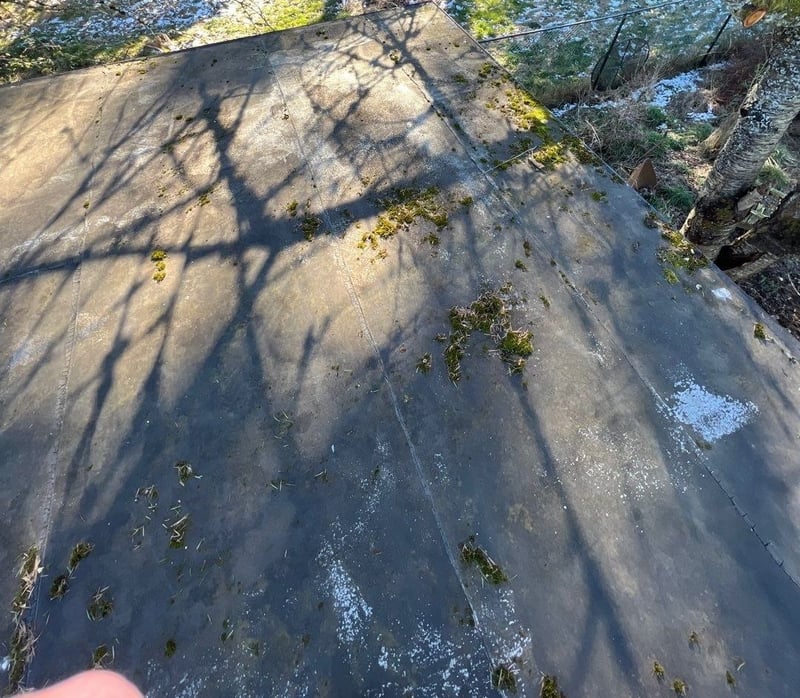
There wasn’t a way to know the true extent of the water damage until the roof and outer walls began to get torn off.
Part of the plan in the proposal was to replace the siding on one of the walls and the material on the underside of the overhang on one side of the roof. While removing the material in these spots, our roofing crew noticed extensive rot:
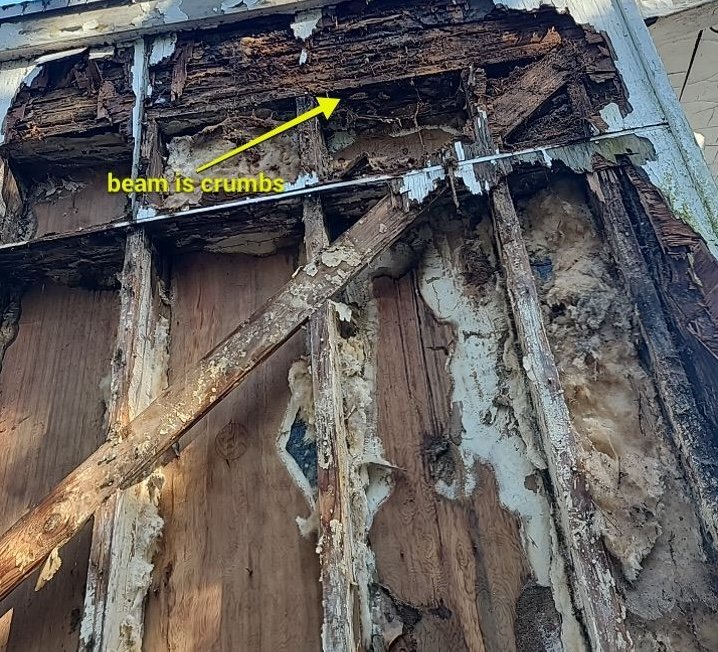
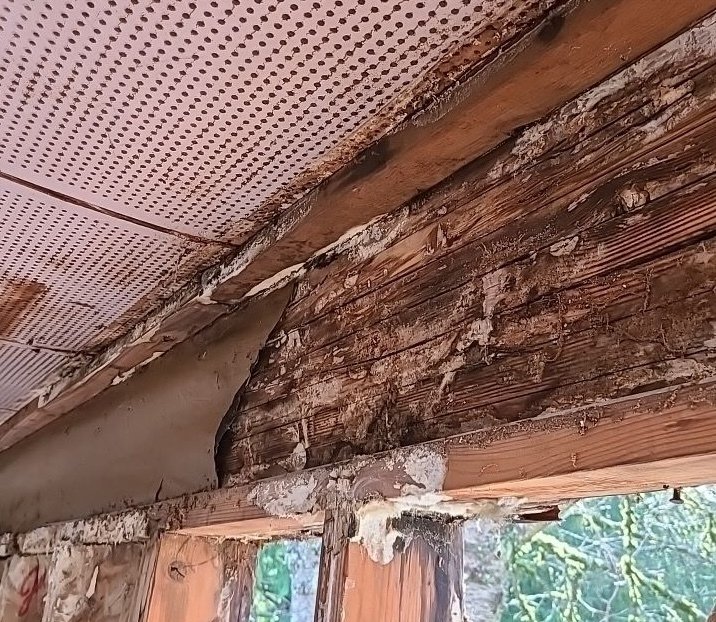
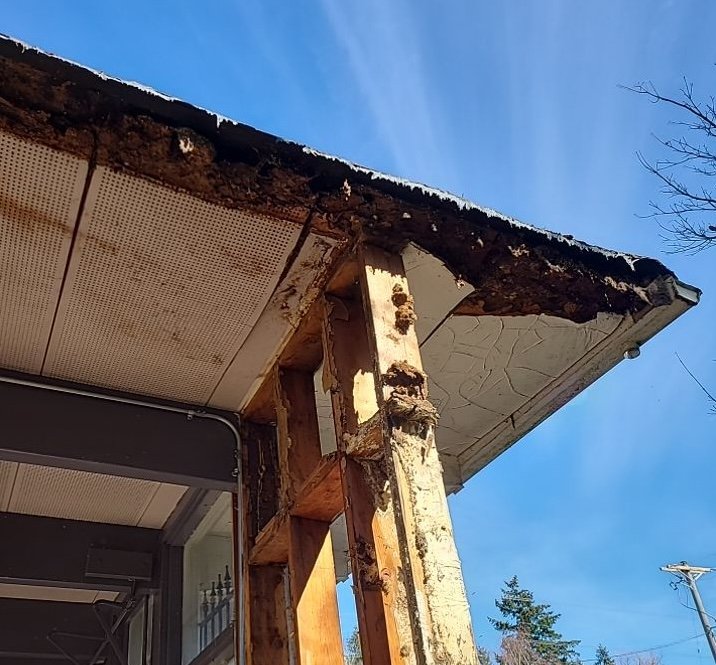
This wall was completely rotten on the inside, including the support beam at the top. This is supposed to be the strongest and sturdiest part of the roof, but it was severely rotted and had to be removed.
This is also a good example of how rotten parts of the roof were underneath the membrane and behind the fascia.
The old age of this roof, the moss growth, and the gaps at the edge of the roof all make it extremely vulnerable to leaks. This flat roof was definitely leaking down into the siding, causing this beam and other portions of the wall to rot and grow mold.
Flat Roof Hidden Rot: Warning Signs, Causes, and Repairs
|
Flat Roof Issue |
Why It Happens |
Where Damage Can Be Hidden |
How It May Be Repaired |
|
Roof membrane leaks |
Aging or damaged roofing allows water to penetrate |
Beneath the membrane and inside the roof decking |
Remove the old roofing, replace damaged decking, and install a new membrane |
|
Leaks at roof edges |
Gaps near the roof edge allow water into the assembly |
Behind fascia, siding, and walls |
Repair damaged framing and siding and properly rebuild the roof edge |
|
Rotten roof decking |
Water remains trapped against wood decking |
Directly underneath the roofing membrane |
Remove rotten decking and replace it with new plywood |
|
Rotten wall framing |
Roof leaks travel into exterior walls |
Behind siding and interior walls |
Remove damaged framing and rebuild affected sections |
|
Damaged structural beams |
Long-term moisture exposure causes structural wood to deteriorate |
Behind siding and near the roof-to-wall connection |
Remove severely damaged material and install new structural framing or beams |
|
Mold growth |
Persistent moisture creates conditions where mold can develop |
Inside walls and roof assemblies |
Remove damaged materials and address the source of the moisture |
|
Condensation damage |
An improperly insulated flat roof allows condensation to affect the decking |
Inside the roof assembly |
Build a properly insulated warm roof assembly |
|
Moss growth |
Moisture remains on an aging roof surface |
Visible on the exterior but may indicate conditions conducive to deterioration |
Evaluate the condition of the existing roof and address underlying problems |
|
Damaged siding |
Water from the roof migrates into exterior walls |
Behind the siding |
Replace affected siding and any rotten material underneath |
|
Improper flat roof insulation |
Insufficient insulation leaves the decking vulnerable to condensation |
Between the interior ceiling and roof membrane |
Install properly layered insulation as part of the new roof assembly |
What’s the process for repairing a flat roof leak?
After discovering all the rot in the walls and on the roof, the crew knew that this was going to be a lot more than just a standard flat roof replacement. In addition to replacing the siding and roof decking, we needed to add new insulation to the roof to protect it from condensation damage.
1. Replace the wall and siding: One of the walls needed to be fully replaced (including the framing), but the other two just got new siding. For the siding, we chose T1-11 cedar plywood siding. It looks great and holds up well in the damp, rainy Seattle weather. For the full wall replacement, we tore off the siding, built new framing, and then installed the siding. On top of the framing, we used a new glulam beam.
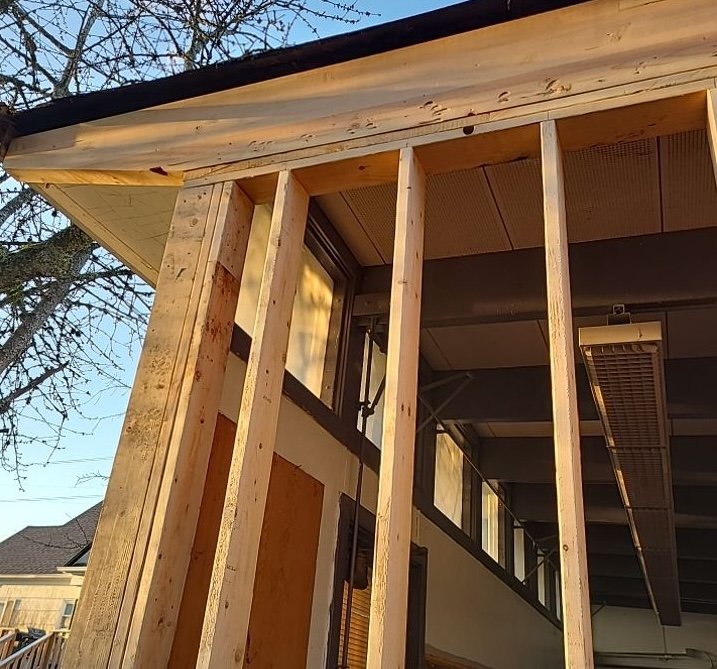
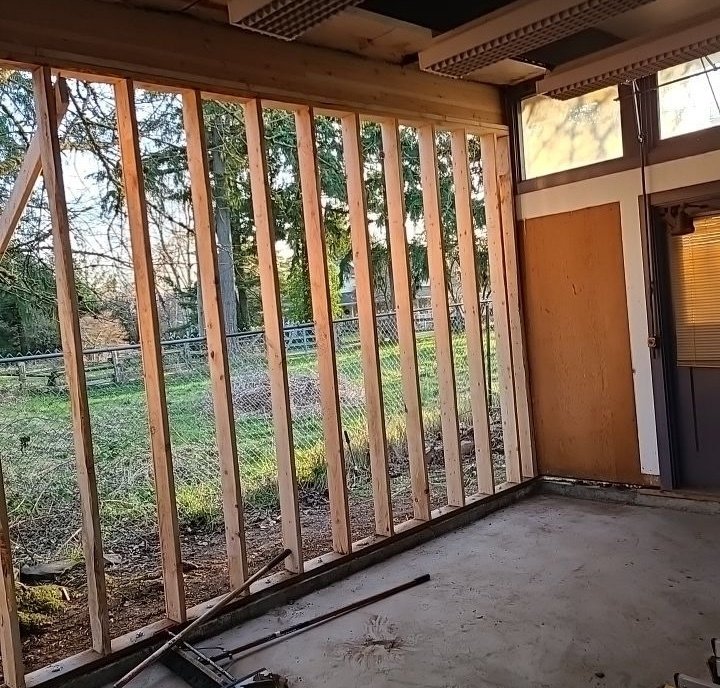
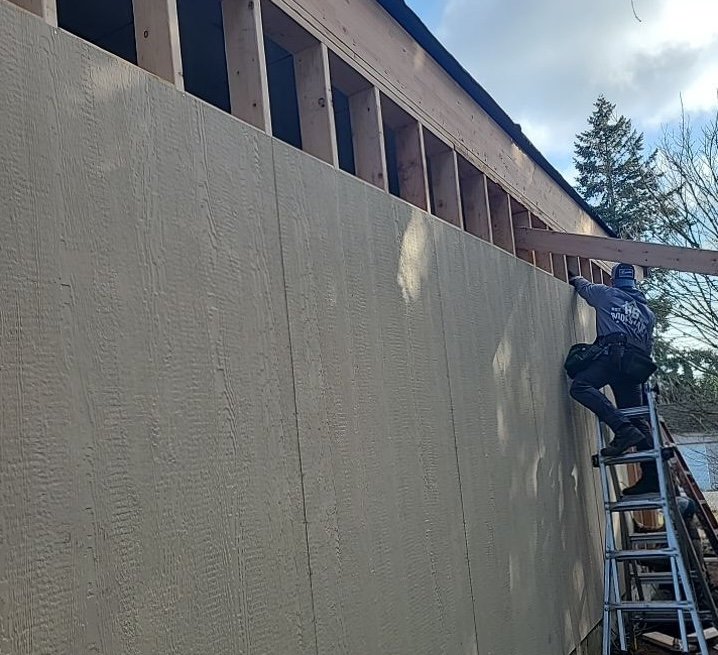
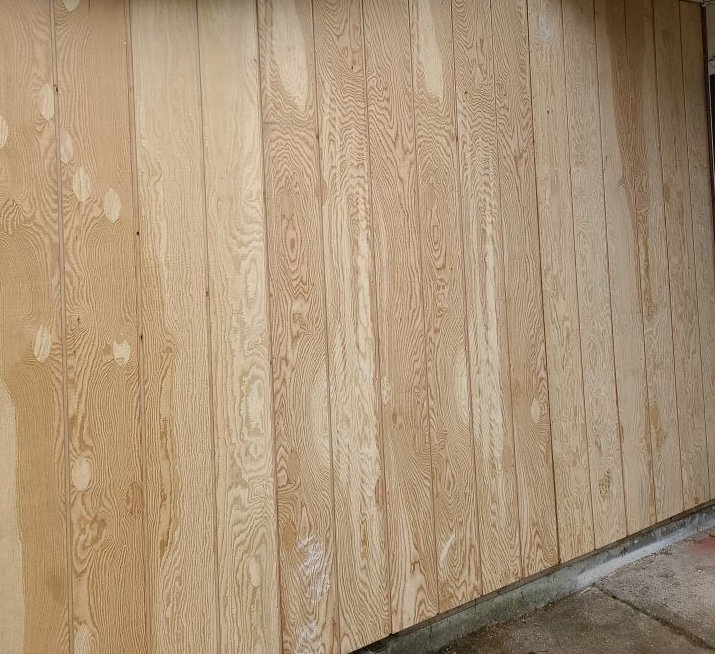
2. Remove the old roof and install new roof decking: The torch down was installed directly onto the roof decking, so removing it completely ruined it. The old roof decking was replaced with a layer of new plywood boards to give the flat roof a strong base.
3. Layers of underlayment and insulation: Flat roofs need to be insulated properly. If not, they are at a high risk of collecting condensation and rotting. This is a huge problem that we run into all the time when working on flat roofs and rooftop decks all over the Greater Seattle area. Here are the steps our crew took:
- Install underlayment
- Install 2 layers of polyiso foam insulation boards
- Install gypsum backer board
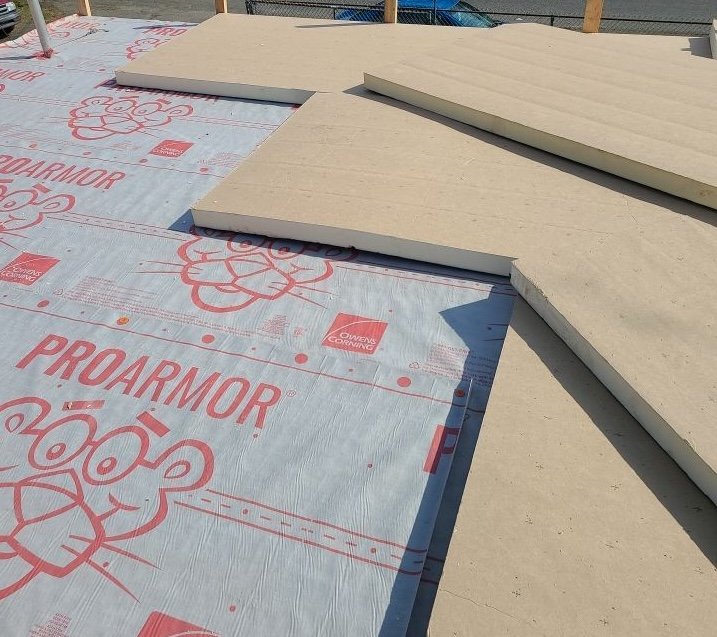
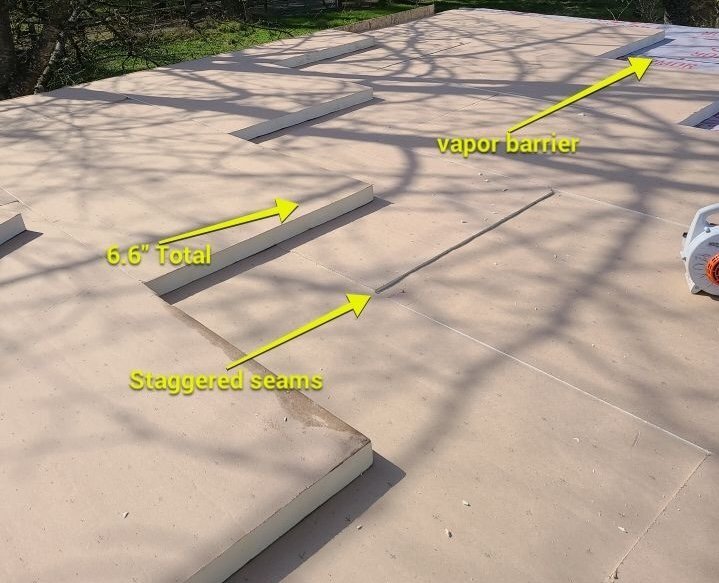
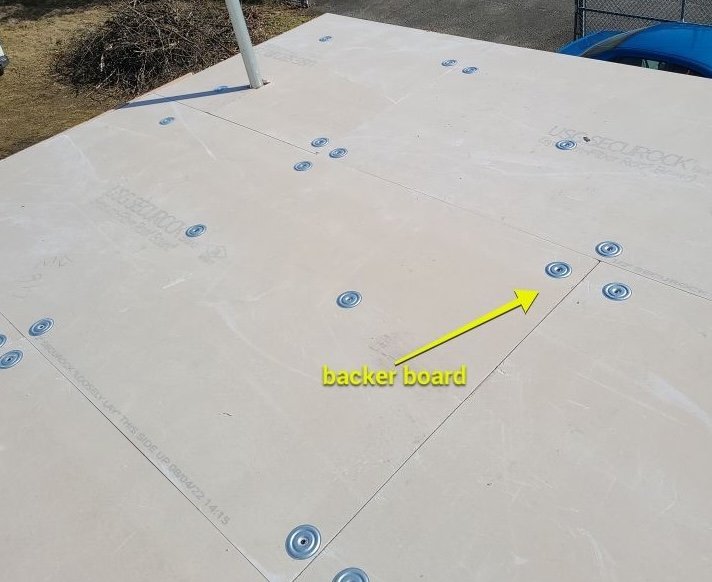
When installing the foam insulation, it’s important to stagger the seams so that moisture cannot easily fall through all the layers if it somehow gets in. Gypsum board is used on flat roofs as the top layer because the PVC cannot be adhered to the foam, and gypsum is much more water-resistant than plywood.
All of these layers together create what is referred to as a warm roof assembly. The insulation is right up against the roof decking, protecting it from condensation damage.
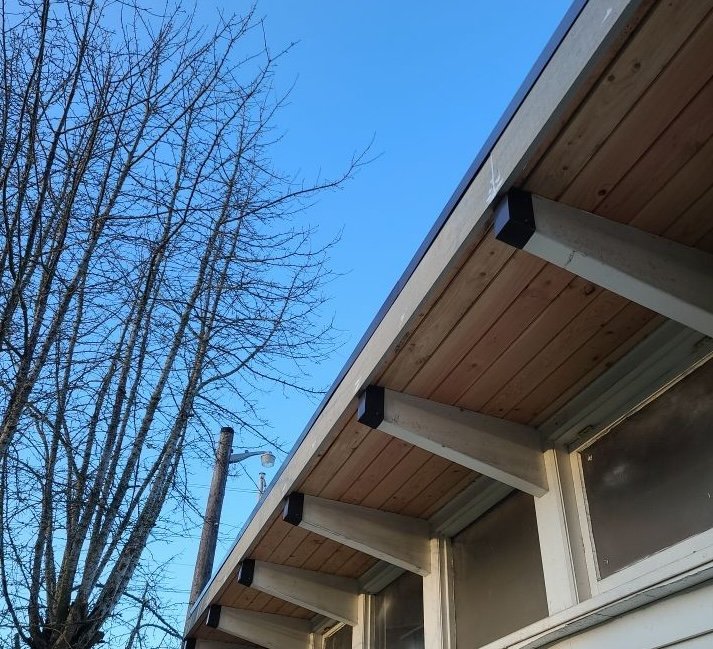
4. New soffit under the overhang: As the crew was installing the new roof and its layers, they also ended up replacing the soffit on the overhang. Here’s what it looks like now:
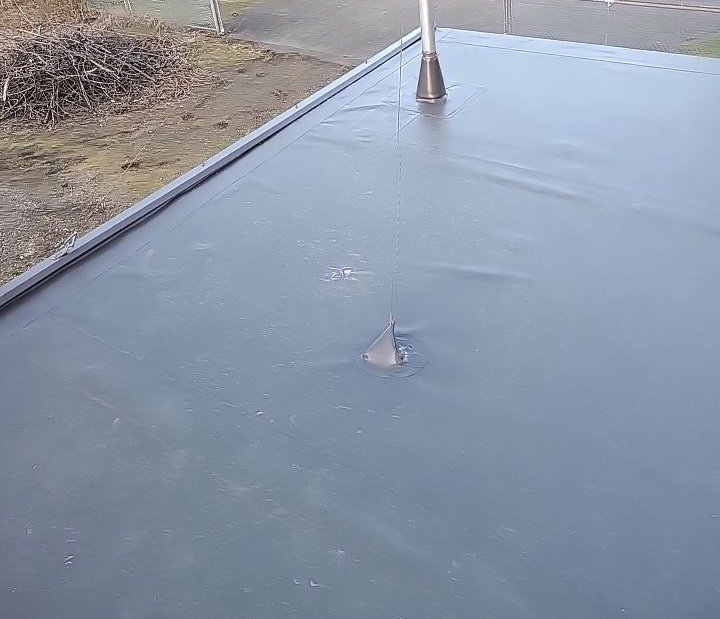
5. Installed new PVC membrane: The final step on the roof was to install the PVC membrane. We recommend PVC to our customers with a flat roof because it lasts a long time and does well in standing water.
The customer wanted to fix this building up to make it into a place where people can get together and hang out. He was very excited about the improvements that we made and couldn’t wait to start using the building again.
What Is the Average cost to replace a leaking flat roof in Seattle?
This project is a good example of why it can be difficult to know the full extent of a flat roof problem before removing the existing roofing materials. What started as an aging flat roof replacement revealed rotten decking, damaged siding, mold, and even a severely rotted structural beam hidden behind the roof and walls.
Once we uncovered that damage, we made sure to rebuild damaged portions of the walls, replace roof decking, and create a properly insulated warm roof assembly before installing the new PVC membrane. Addressing those underlying problems is a key part of doing a proper roof replacement.
Read our article “How Much Does It Cost to Install a Flat Roof in Seattle?” to learn what you can expect to pay and which factors can cause the cost of your flat roof project to increase.

Frequently Asked Questions About Leaks on Flat Roofs
1. Can a flat roof leak without showing water inside the house?
Yes. A flat roof can leak for a long time before you notice obvious water stains or dripping inside the building. Water can enter the roof assembly and damage the decking, framing, siding, fascia, or other concealed materials.
Because ceilings and walls hide these components, significant deterioration can develop before the homeowner sees what's happening.
2. Where does hidden rot develop on a leaking flat roof?
Hidden rot can develop underneath the roofing membrane, in the roof decking, behind the fascia, inside exterior walls, and around structural framing.
In the project discussed in this article, the damage extended beyond the roof itself. Water had traveled into the walls and severely rotted portions of the framing, including a structural support beam.
3. How can you tell if a flat roof has hidden water damage?
Some warning signs can suggest that further investigation is needed, including an aging roof membrane, moss growth, visible gaps, deteriorated roof edges, damaged siding, or other signs that water may be getting into the roof assembly.
However, you can't always determine the full extent of hidden damage during the initial inspection. In some cases, the severity of the rot only becomes clear after the old roofing, siding, fascia, or other materials are removed.
4. Can a flat roof leak cause the walls to rot?
Yes. Water entering through a flat roof doesn't necessarily stay in the roof assembly. It can migrate into the exterior walls and expose the siding, sheathing, framing, and structural components to prolonged moisture.
That's what happened in the project described here. What began as a flat roof replacement ultimately required work on three walls, including completely rebuilding one wall.
5. Why can a flat roof replacement uncover more damage than expected?
Much of a flat roof's structure is concealed. The roofing membrane covers the decking, while siding, fascia, ceilings, and walls can hide damage to framing and other components.
Once those materials are removed, contractors can see areas that weren't accessible during the initial inspection. This is why a seemingly straightforward flat roof replacement can sometimes uncover substantial rot that also needs to be repaired.
6. Can poor insulation cause a flat roof to rot even if the roof isn't leaking?
Poor insulation can create a separate moisture problem: condensation. If the flat roof assembly isn't properly insulated, condensation can develop and expose the roof decking to moisture.
That's why the roof in this project wasn't simply rebuilt with new decking and a membrane. The crew also installed insulation as part of a warm roof assembly to help protect the decking from condensation damage.
7. What is a warm roof assembly on a flat roof?
A warm roof assembly places insulation against or above the roof decking to help protect the decking from condensation.
For this project, the assembly included underlayment, two layers of polyiso foam insulation, and gypsum backer board before the PVC membrane was installed. The seams between the insulation layers were staggered so moisture wouldn't have an easy path through the assembly.
8. Why is gypsum board used under a PVC flat roof membrane?
In the roof assembly described in this article, gypsum backer board provided the surface needed above the foam insulation because the PVC membrane couldn't be adhered directly to the foam.
The gypsum board also provides better water resistance than using plywood in that position within the assembly.
9. Why did RoofSmart install PVC instead of another flat roofing material?
RoofSmart recommends PVC for its flat roof customers because the material has a long expected lifespan and performs well where standing water may occur.
In this project, the PVC membrane was installed as the final roofing layer after the damaged materials were removed and the new decking, insulation, and gypsum backer board were installed.
10. How expensive can hidden rot make a flat roof replacement?
Hidden rot can significantly increase the scope of a flat roof replacement because the repair may no longer involve only the roofing material. Damaged decking, siding, wall framing, soffits, insulation, and structural beams may also need to be replaced.
The project in this article is a good example: the homeowner initially needed a flat roof replacement, but once demolition exposed the damage, the project expanded to include three affected walls, new framing in one wall, a new glulam beam, roof decking, insulation, soffit work, and a new PVC roofing system.
Topics:
