

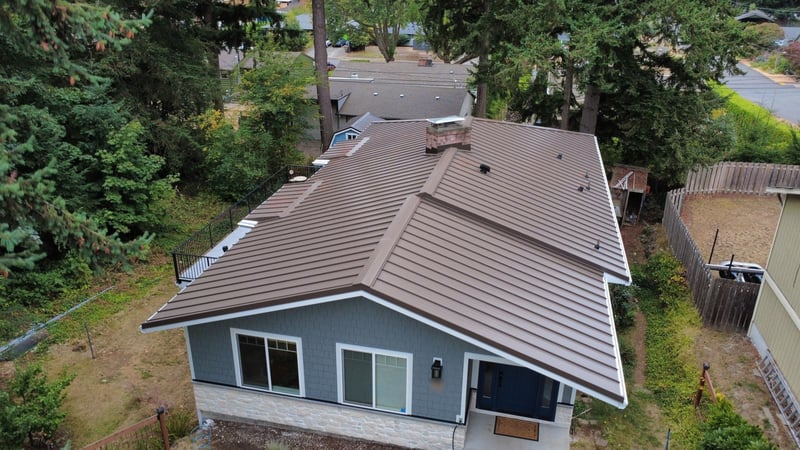
Do Seattle windstorms leave you worrying that you’ll wake up to missing shingles, a tree branch through your roof, or water leaking into your home from wind-driven rain?
And if you’re already planning a roof replacement, are you wondering whether spending more on a tougher material could actually reduce the damage and expensive repairs you might face the next time a major storm rolls through?
At RoofSmart, we’ve inspected and repaired hundreds of roofs throughout the Greater Seattle area after windstorms, and we’ve seen firsthand how differently roofing materials respond to high winds and falling debris. We’ve seen asphalt shingles blow off or become punctured, while materials such as Euroshield, standing seam metal, and wood shake can provide significantly different levels of wind and impact protection.
In this article, I’ll compare how Euroshield, 24-gauge standing seam metal, wood shake, and asphalt shingles perform against wind and falling debris, explain why proper flashing and vent installation still matter regardless of which material you choose, and cover what you should know about the fine print in roofing wind-damage warranties.
Quick Answers
Seattle windstorms can damage roofs through shingles blowing off, impacts from falling trees or branches, and wind-driven rain entering vulnerable areas such as ridge vents, flashing, and roof penetrations.
Euroshield, 24-gauge standing seam metal, and wood shake are roofing materials that can provide better protection against wind and impact damage than standard asphalt shingles.
Euroshield offers strong impact resistance, standing seam metal combines wind resistance with protection from falling debris, and wood shake can absorb impacts and is relatively easy to repair when damaged.
Roofing warranties may also include wind coverage, but the actual protection depends on the manufacturer’s limits, exclusions, installation requirements, and required accessories.
The key takeaway: If wind and falling-tree damage are major concerns for your Seattle-area home, consider a durable material such as Euroshield, standing seam metal, or wood shake. Regardless of the material you choose, review the wind warranty carefully and make sure the entire roofing system is installed according to the manufacturer’s requirements.
What damage can windstorms in Seattle cause to your roof?
During the fall and winter, it is common for Seattle to get hit with storms that have strong winds. These wind storms usually cause the following issues on roofs in Seattle and the surrounding areas:
-
Shingle Blow-Off: A lot of homes in the Seattle area have asphalt shingles on the roof. These are at risk of blowing off in a storm, especially if your roof is old or in bad shape.
It’s common for homeowners to lose 1-3 shingles during a wind storm. If the wind is really strong and your roof is in poor condition, you might lose more.
-
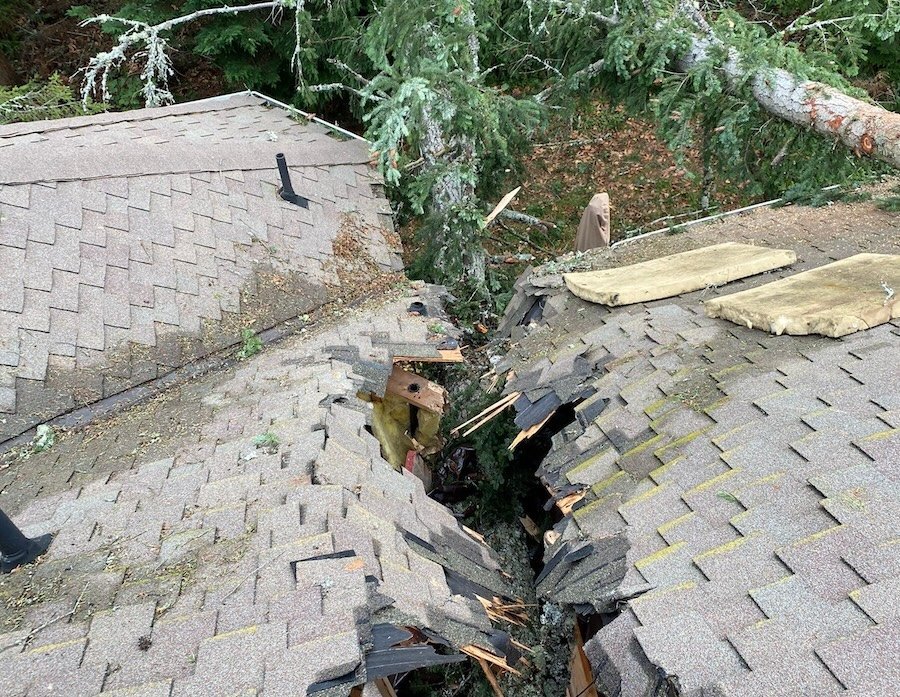
Impact Damage: Falling trees and tree branches can hit your house and cause pretty significant damage to your roof. This happens more often than having shingles blow off.
We’ve seen trees smash right through some homes and tree branches puncture holes in the roof.
Other times, there is just mild scuffing or denting. The amount of damage depends on what hits your roof and the type of roof material that you have.
-
Wind-Driven Rain Leaks: If your roof is poorly installed or you have cheap materials that don’t work, then the wind can easily blow rain into the vulnerable, exposed areas of your roof that are normally protected. Some examples include:
- Ridge Vents: Ridge vents that aren’t protected with a baffle can leak due to water being blown inside during a strong windstorm.
- Flashing: If the metal overlapping in the valley is poorly installed or the roof does not have ice and water shield underlayment for extra protection, then water can get into the roof.
- Vents sticking out of the roof: Pipe flashings and other flashings around the items must be installed properly and sealed. If not, they are a prime target for leaks.
What are the best roofing materials to protect your roof from wind damage?
If you’re concerned about your roof losing shingles or getting damaged during a windstorm, then choosing a more durable roofing material can provide you with peace of mind.
Here are some examples of roofing materials that we’ve noticed hold up well in Seattle windstorms:
-
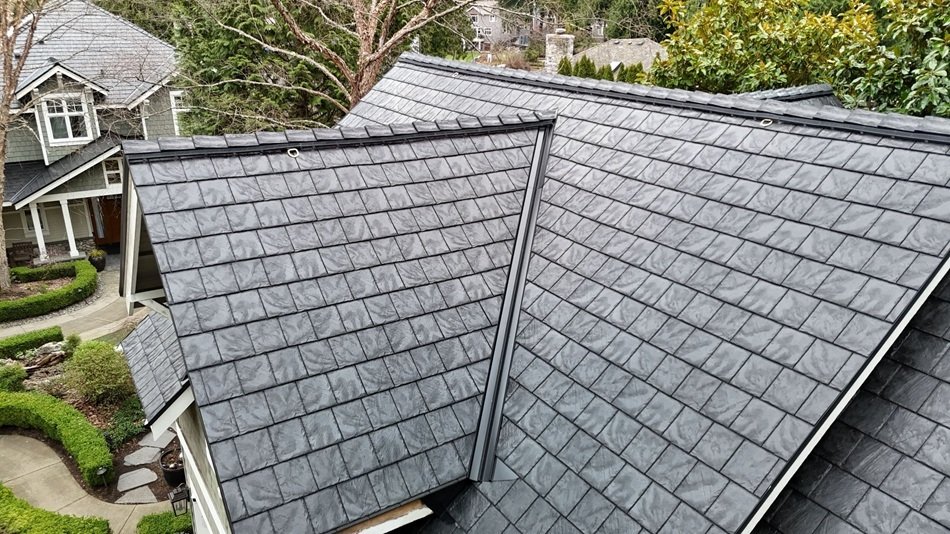
Euroshield: Euroshield is a rubber shingle that is bouncy and incredibly impact-resistant. It is the best roofing material we’ve seen for protecting your roof from a falling tree.
Full disclosure: RoofSmart is a Euroshield authorized installer and a CSSB member.
In fact, on one house with Euroshield roofing, a tree fell on the house and made a small puncture that cracked a few trusses. In other similar situations where the home had asphalt shingles, the tree fell right through the roof and created a large hole.
-
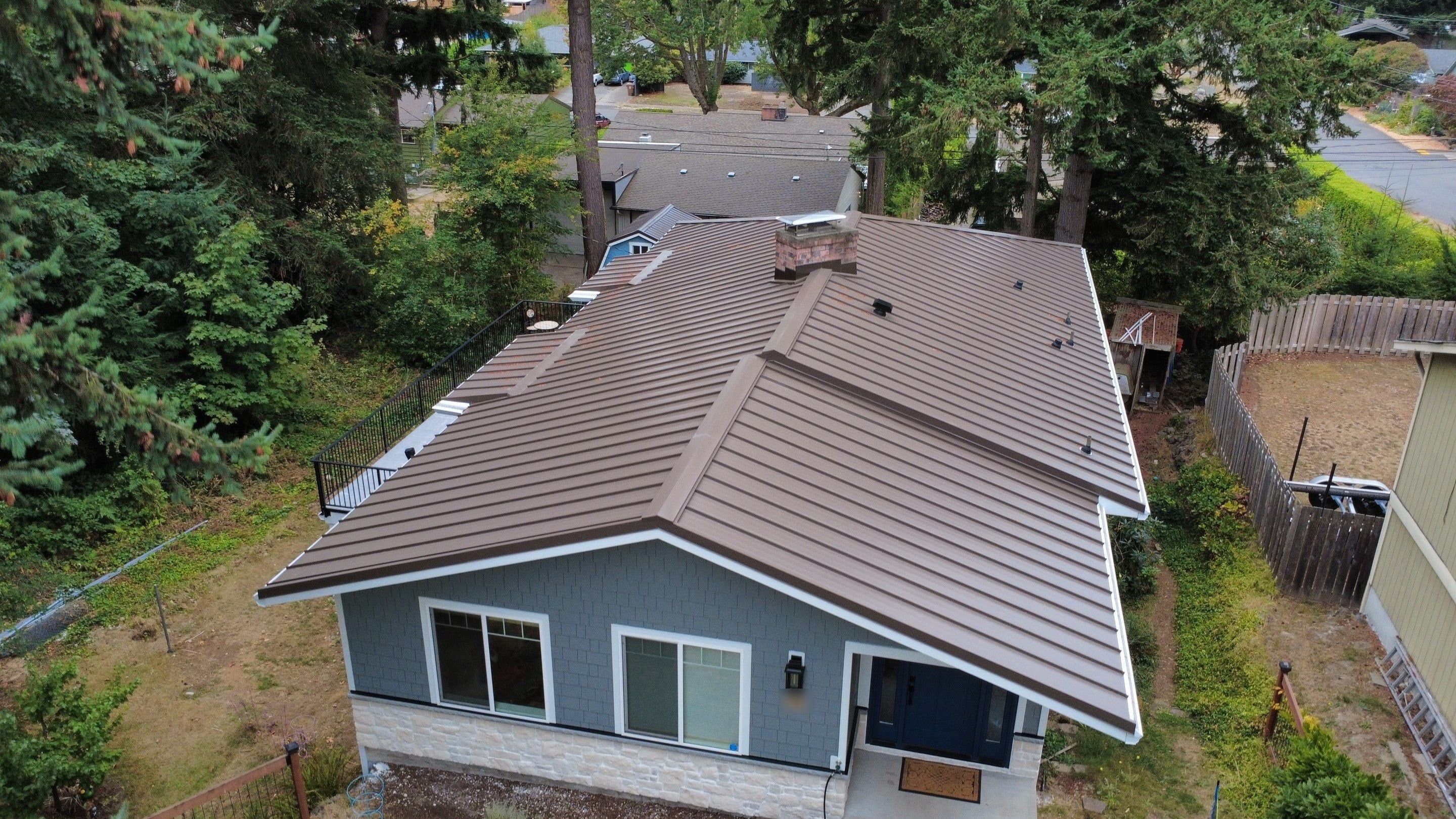
24-gauge standing seam metal: Another good option is 24-gauge standing seam metal. It has great wind resistance and can also protect your roof really well from falling branches or entire trees.
It may scuff or dent when hit by debris, but this surface damage will not impact the roof’s ability to keep out water.
-
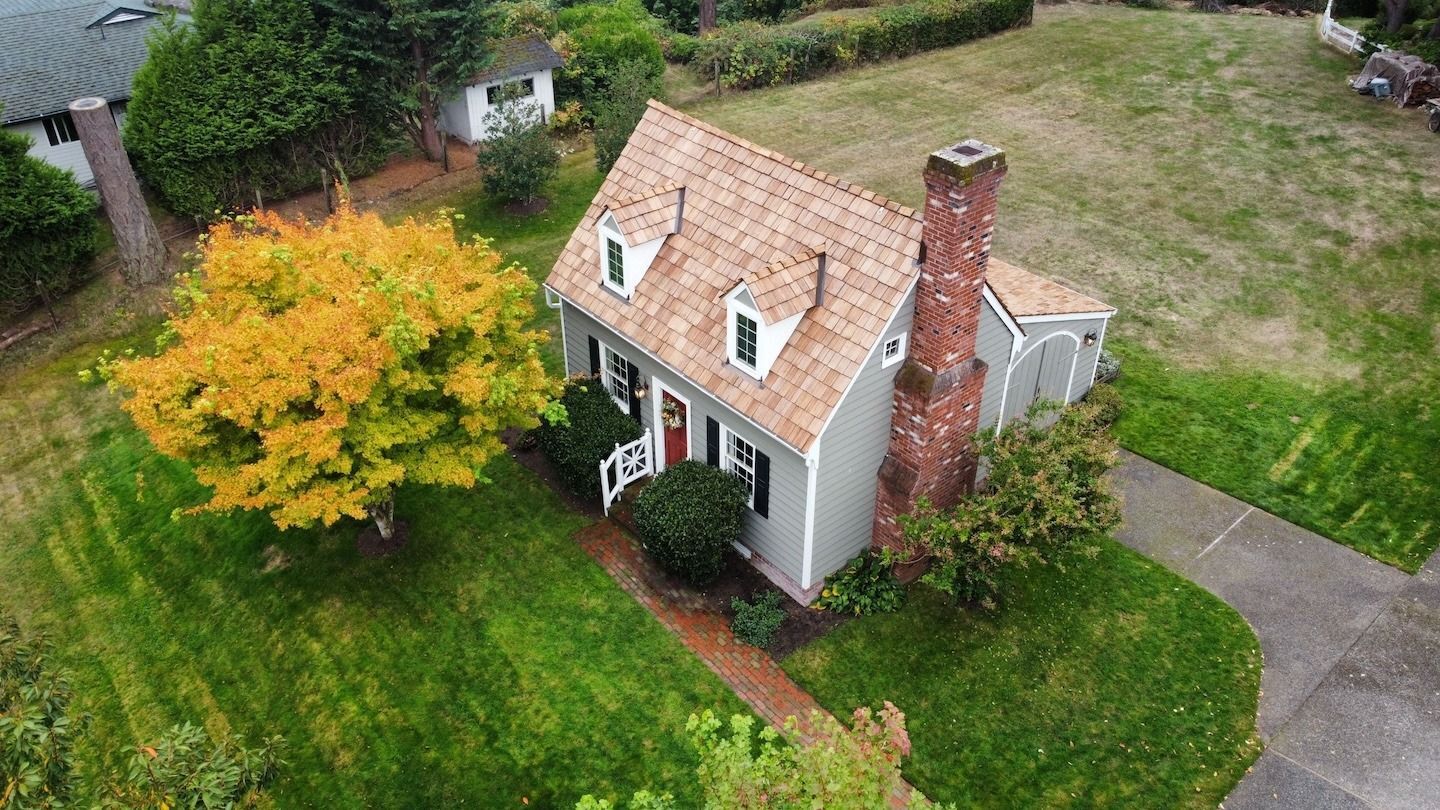
Wood shake: One other roofing material that works really well is wood shake because it acts as a shock absorber when hit by a tree. So, it takes on less damage than you might think.
Plus, if it does get damaged, it’s pretty easy to replace.
The advantage of choosing a more durable and impact-resistant material is that you’re less likely to need to repair your roof after it gets hit by a branch. And you’ll have less damage than usual if a tree hits it.
Asphalt shingles are easy to repair and replace, but they don’t really protect your roof from damage. If a tree falls on it, it’s going to go right through.
Roofing Materials for Wind and Impact Damage
| Roofing Material | Wind Performance | Impact Protection | Typical Storm Damage | Repair Considerations | Best Fit |
|---|---|---|---|---|---|
| Euroshield rubber shingles | Strong option for wind-prone roofs when properly installed | Excellent | May flex or sustain localized damage when hit by falling debris | Individual damaged areas can be repaired | Homeowners especially concerned about falling trees and branches |
| 24-gauge standing seam metal | Excellent | Very good | Falling debris may cause dents or scuffs without necessarily compromising water protection | Cosmetic damage may not require immediate replacement | Homeowners prioritizing wind resistance and durability |
| Premium wood shake | Good when properly installed | Very good | Wood can absorb some of the force from falling branches or trees | Individual damaged shakes can often be replaced | Homeowners wanting impact resistance and repairability |
| Asphalt shingles | Varies by product, roof age, condition, and installation | Lower than the premium materials discussed here | Individual shingles can blow off; falling trees or branches can puncture the roof | Individual shingles are generally easy to replace | Homeowners prioritizing affordability and easy repairs |
| Older/deteriorated asphalt shingles | Higher risk of blow-off | Low | Losing 1-3 shingles during a Seattle windstorm can occur, with greater losses possible on deteriorated roofs | May require repairs or replacement depending on overall condition | Should be inspected if shingles begin blowing off |
| Any material with poor flashing/vent installation | Material alone won't prevent leaks | Depends on material | Wind-driven rain can enter at ridge vents, valleys, pipe penetrations, and other vulnerable areas | Installation defects need to be corrected | Proper installation is essential regardless of roofing material |
What do wind damage warranties really cover?
Roofing material warranties typically provide coverage for wind damage up to a certain wind speed (this varies between brands and roof types). However, these warranties can have extra exclusions and rules in the fine print, so you have to pay close attention.
This gives the impression that you’ll get coverage for certain circumstances when you might get told that you’re actually out of luck due to a hidden exclusion.
For example, in 2020 GAF removed the wind speed cap from the warranty on some of their shingles. They said that their warranty would cover damage with no cap on the wind speeds, even if it’s a “named storm” (hurricanes, tropical storms).
They make it seem like they have unlimited coverage, but then you read the fine print and see that it only covers the shingles, and only if you install four GAF accessories. But in Seattle, pretty much every high wind event is a windstorm that isn’t named, so a named-storm exclusion rarely applies here.
Another common requirement that asphalt shingle manufacturers want you to meet to be eligible for wind warranty coverage is to install a certain amount of their other products (like hip or ridge cap and other accessories).
Which Roofing Material Performs Best in Seattle Windstorms?
Choosing a roof for Seattle’s windstorms isn’t only about finding the material with the highest wind rating. You also need to think about what happens when shingles start lifting, a large branch hits the roof, or wind-driven rain finds a vulnerable ridge vent, valley, or penetration.
Based on what we’ve seen on Seattle-area homes, Euroshield, 24-gauge standing seam metal, and premium wood shake can all provide advantages when wind and falling debris are major concerns. Asphalt shingles are more vulnerable to blow-offs and impact damage, but they’re also relatively straightforward to repair when only a few shingles are affected.
No matter which material you choose, proper installation is critical because even a durable roof can leak if its flashing, vents, or other vulnerable areas aren’t installed correctly.
Read “Will My Roof Survive a Seattle Windstorm? Pros and Cons of Different Roof Types” for a closer comparison of how different roofing systems handle Seattle’s storm conditions and to learn the pros and cons you should consider before deciding which material is right for your home.
Not sure what your roof needs?
Free SmartMatch visit: your roof, plus your attic where safe. If you don’t need a new roof, we say so.
Want to see how we'd look at your roof?
Start with a SmartMatch™ Needs Analysis, or call (206) 487-4877.
FAQs About Wind Damage on Different Roofing Materials
1. What roofing material provides the best protection from wind damage?
For the Seattle conditions discussed in this article, Euroshield, 24-gauge standing seam metal, and wood shake have all performed well against storm damage in RoofSmart's experience.
The best choice depends on the type of damage you're most concerned about. Euroshield stands out for impact resistance, while 24-gauge standing seam metal combines strong wind performance with good protection from falling debris.
Wood shake can also absorb significant impact and is relatively straightforward to repair when individual shakes are damaged.
2. What is the best roofing material for protecting a house from falling trees?
Based on RoofSmart's experience, Euroshield is one of the strongest options for impact protection from falling trees and branches. Its rubber construction allows the roofing material to flex and absorb impact.
On one Euroshield roof discussed in this article, a falling tree caused a relatively small puncture even though the impact cracked several roof trusses. RoofSmart has seen other tree impacts on asphalt roofs create substantially larger holes.
3. Is standing seam metal roofing good for Seattle windstorms?
Yes. 24-gauge standing seam metal is one of the options RoofSmart has seen perform well during Seattle-area windstorms.
Metal can also withstand significant impact from branches and other debris. A strong impact may leave a dent or scuff in the metal, but cosmetic surface damage doesn't necessarily mean the roof has lost its ability to shed water.
4. Can a windstorm blow asphalt shingles off my roof?
Yes. Shingle blow-off is one of the common types of wind damage RoofSmart encounters on Seattle-area asphalt roofs.
It's especially likely when the roof is older or already deteriorating. Losing one to three shingles can occur during a windstorm, while a roof in poor condition may lose considerably more during a severe event.
5. Can wind cause my roof to leak even if no shingles blow off?
Yes. Wind-driven rain can create leaks without visibly removing the roofing material.
Strong winds can push rain into vulnerable areas that normally remain protected during typical rainfall.
Potential problem areas include improperly protected ridge vents, poorly installed valley flashing, inadequate underlayment, pipe flashings, and other roof penetrations. That's why storm resistance depends on the complete roofing system rather than the surface material alone.
6. How do ridge vents cause leaks during windstorms?
A ridge vent without adequate protection can allow wind-driven rain to enter through the ventilation opening.
A properly designed system should account for this exposure. If you're experiencing leaks that only appear during strong wind and rain, the ridge vent is one of several areas a roofer may need to inspect.
7. Is wood shake resistant to falling branches and trees?
Wood shake can perform surprisingly well against impact because the material can absorb some of the force rather than immediately breaking apart.
Another advantage is repairability. If only a small portion of a wood shake roof is damaged by a branch, individual shakes can often be replaced rather than requiring replacement of a large section.
8. Should I replace my asphalt roof with a more impact-resistant material if I have large trees around my house?
It may be worth considering if falling branches and trees are a significant concern on your property. Euroshield, 24-gauge standing seam metal, and wood shake provide greater impact protection based on the field experience discussed in this article.
That doesn't mean every homeowner with nearby trees needs a premium roof. Asphalt shingles remain relatively easy to repair, but they provide less protection when a large branch or tree directly impacts the roof.
9. Does a roofing warranty cover wind damage?
It depends on the manufacturer, roofing product, installation, and specific warranty terms. A stated wind warranty doesn't necessarily mean every type of windstorm damage is covered.
Coverage can include exclusions and installation requirements. Some manufacturers may also require specific accessories or components to qualify for certain warranty protection.
Read the actual warranty rather than relying solely on the advertised wind rating.
10. What should I look for in a roofing warranty if I'm concerned about wind damage?
Look beyond the advertised wind rating and determine what events are excluded, what installation requirements must be followed, what additional manufacturer components are required, and what type of damage is actually covered.
You should also ask your roofer to explain those requirements before installation. A high wind rating isn't very useful if your roofing system doesn't meet the manufacturer's installation requirements or the type of storm that damages your roof falls under a warranty exclusion.
Topics:
