

TL;DR: Summary
Stucco and EIFS can both provide a textured exterior finish and perform well when installed correctly, but they have different water-damage risks. EIFS has a higher risk of leaks and hidden rot because water that gets behind its foam insulation boards can become trapped instead of draining properly. This can be especially concerning in Seattle’s wet climate.
Traditional stucco is more expensive and labor-intensive to install, but it offers better water resistance and is less likely to cause hidden moisture damage. EIFS costs less, is easier to install, provides additional insulation, and resists cracking, but flashing or installation problems can allow moisture behind the system and lead to significant rot that can be difficult to repair.
The key takeaway: If water resistance is your top priority, traditional stucco is generally the better choice. EIFS can be a more affordable, insulating alternative, but proper installation and flashing are especially important to reduce the risk of trapped moisture, leaks, and hidden rot.
Do you like the look of stucco but worry that choosing the wrong exterior material for Seattle’s rainy climate could leave you with hidden water damage? If you already have EIFS on your home, are you concerned that water could be getting behind the foam and rotting your walls?
At RoofSmart, we’ve seen firsthand how damaging water intrusion around exterior walls can become when flashing and other waterproofing details aren’t installed correctly. We’ve encountered homes where water made its way behind EIFS and contributed to extensive hidden rot, including damage to walls, fascia, and structural beams.
In this article, I’ll explain how traditional stucco and EIFS are constructed, cover why EIFS can present a greater hidden water-damage risk in Seattle’s wet climate, and compare the pros and cons of stucco and EIFS to help you make your decision.
What are stucco and EIFS made of?
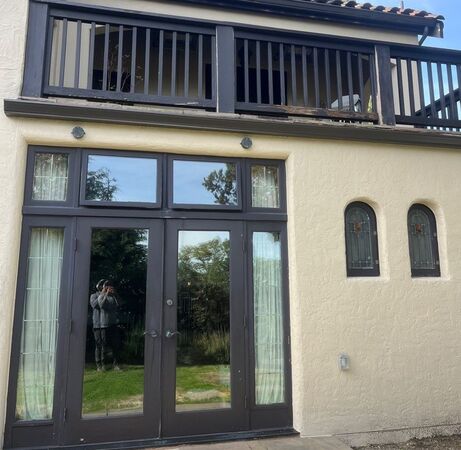
Stucco is a plaster that is applied to the exterior of your home, while EIFS is a stucco imitation made from insulation boards with a textured coating.
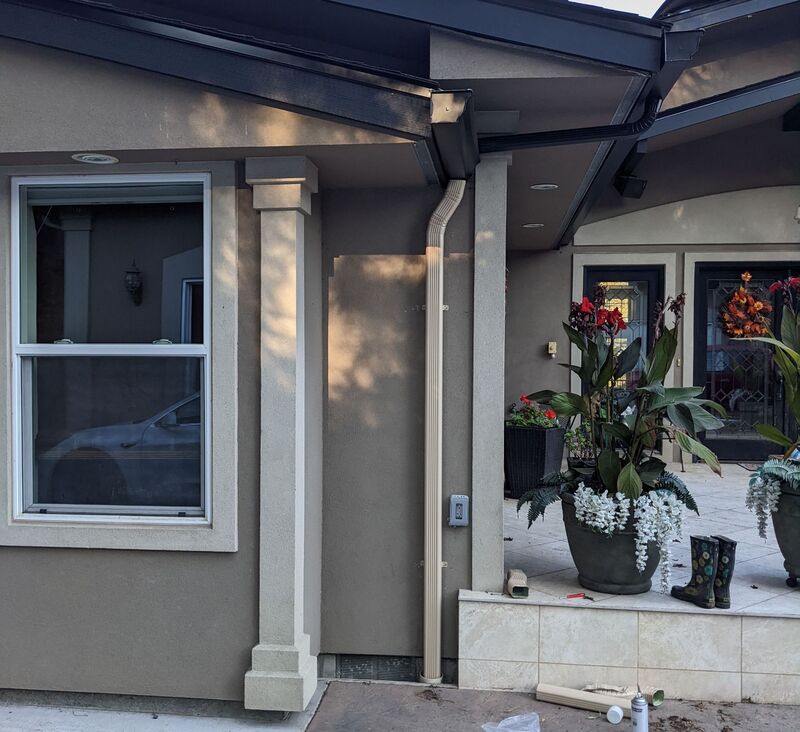
Stucco is typically made of a mixture of:
- Portland cement
- Water
- Sand
- Lime
- Polymers
- Fiber
It’s typically applied in multiple coats until you achieve the desired thickness.
EIFS is made of two layers: foam insulation (EPS) and a coating that gives the textured effect of stucco.
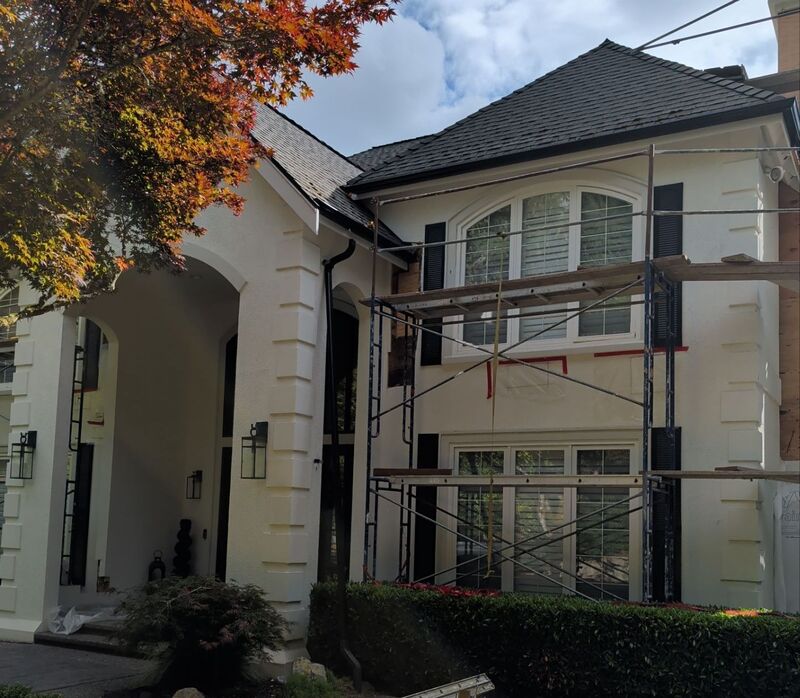
The boards either have an adhesive backing that sticks them in place or they are nailed to the outer wall of the home. The wall should be wrapped in building paper to protect from moisture intrusion.
Water Damage Risk Comparison of Stucco and EIFS
|
Category |
Traditional Stucco |
EIFS |
What Seattle Homeowners Should Know |
|
Basic construction |
Cement-based plaster applied in multiple coats |
Foam insulation boards covered with a textured coating |
Both can create a similar stucco appearance, but their construction is very different |
|
Water damage risk |
Lower when properly installed |
Higher, particularly when installation or flashing fails |
Stucco has the advantage for water resistance |
|
What happens when water gets behind it |
Proper installation should manage water and allow drainage |
Water can become trapped behind the foam |
Trapped moisture can lead to concealed rot |
|
Drainage |
Designed to manage water when properly installed |
Water behind tightly installed foam may have difficulty draining |
Drainage is particularly important in Seattle's wet climate |
|
Flashing importance |
Critical |
Critical |
Incorrect or missing flashing can allow water into the wall with either system |
|
Hidden damage risk |
Water intrusion can still cause damage |
Damage can remain concealed behind foam boards |
EIFS can hide significant moisture and rot before it becomes obvious |
|
Insulation |
Does not use the same exterior foam insulation system |
Foam boards provide additional wall insulation |
EIFS has the advantage for insulation |
|
Cracking |
Can be susceptible to cracking over time |
More resistant to cracking |
EIFS has an advantage if cracking is a primary concern |
|
Installation |
More labor-intensive |
Faster and easier to install |
EIFS is generally the simpler installation |
|
Cost |
More expensive |
Less expensive |
EIFS may appeal to homeowners prioritizing upfront cost |
|
Repairs |
Depends on the type and extent of damage |
Patches can be difficult to blend, potentially requiring a larger area to be recoated |
Water damage can make EIFS repairs more extensive |
|
Best fit |
Homeowners prioritizing authentic appearance, durability, and lower water-damage risk |
Homeowners prioritizing cost and additional insulation |
Installation quality should be a major factor with either system |
Stucco vs. EIFS: Which material is best for Seattle weather?
As long as they’re installed properly, EIFS and stucco are both solid options for your home. However, it’s important to keep in mind that EIFS is more likely to leak, especially if there is an installation issue.
People who want the stucco look often end up getting an EIFS because it’s cheaper and less labor-intensive than traditional stucco.
You put your foam on, and then you put your top coat, which looks like the stucco. You don't have to put up reinforcement, put chicken wire up, or do your base coat of cement. You're just putting a top coat on.
When installed properly, you have a flashing termination at the bottom to hold it up, and paper comes over the top of it. If it's all taped properly, then water that gets behind will hit the paper, and it'll come out, just like regular siding.
In practice, it doesn't seem to work that way. You have seams in your foam, and those are buried and hidden. Maybe you tape your seams or whatever, but there's always some way that water gets behind that sheet of foam.
And when it does, it's so tight to the paper that you have permanent capillary action, and the water never drains. So water does make it in there (because of course it does), and it can't get out.
Now, it can get out when it gets a lot of full sun, it gets really hot, and it turns it back into water vapor. In that case, it can kind of evaporate out.
But that only works if it's an area that gets full sun. A lot of times, there are flashing issues that let water get behind the flashing, causing a leak.
For example, on this house, there was a flashing issue, and the water got behind the flashing and EIFS, rotting the beam and the entire wall:
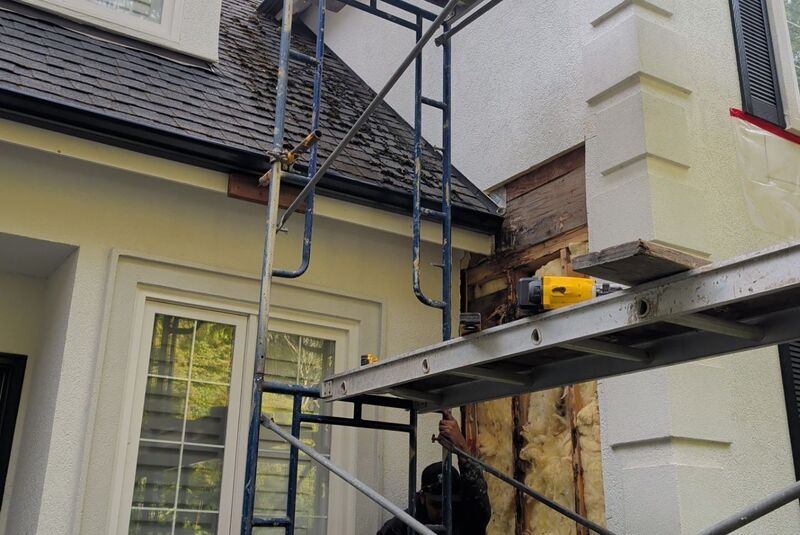
There was also rot where the kick flashing was missing. This caused the fascia to rot right up against the wall:
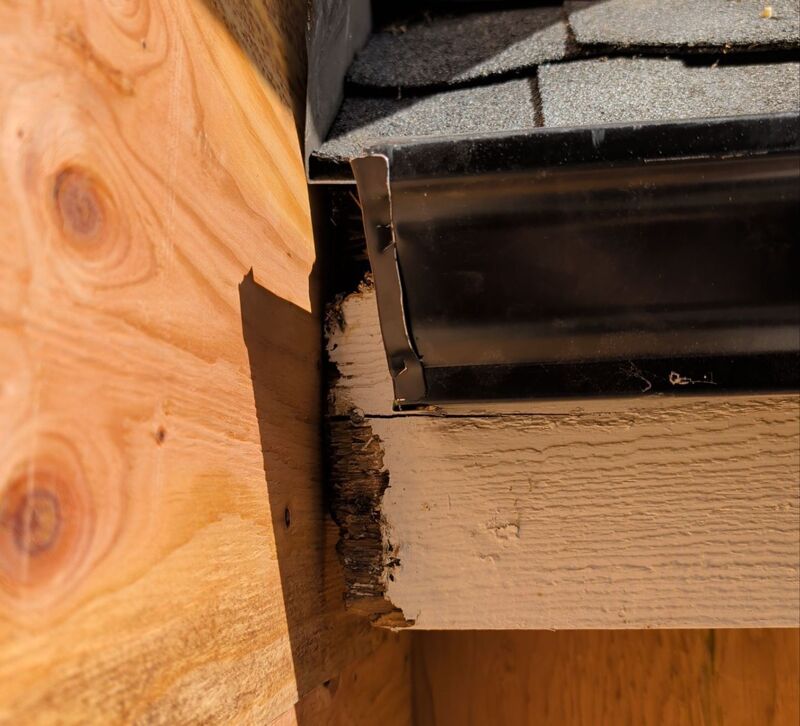
Unfortunately, you can't patch into the EIFS to do a repair. It won't blend, so you’ll have to re-coat all of it to get it to blend.
A lot of the time, stucco is on a masonry construction. So instead of plywood, there are bricks. Another thing that can happen is the EIFS gets waterlogged because it rains a lot. So let's say that there are some imperfections in the paint or in the caulking, and water manages to get in there. If you get a freeze event, the brick will start cracking everywhere.
What are the pros and cons of stucco and EIFS?
Stucco and EIFS both provide the same textured appearance that gives your house a rustic, timeless effect. Although both are good at handling water when installed properly, they both pose a potential risk of leaking. If this happens, then EIFS is an especially big risk because it traps water behind the foam boards or the flashing and causes your wall to rot.
So, the top factor to consider when deciding between these two options is to make sure that you find a contractor that has a lot of experience and will install it properly.
Beyond that, there are a few differences between stucco and EIFS, so to help you make your decision, here are the pros and cons of each:
Stucco
Pros:
- Authentic look of stucco
- Less likely to cause water damage
- Good waterproofing
- Durable and long-lasting
Cons:
- More expensive than EIFS (including installation costs)
- More labor-intensive to install
- Can be susceptible to cracking over time
EIFS
Pros:
- Cheaper than real stucco (including installation costs)
- Easier and quicker to install
- Provides insulation for your wall
- Resistant to cracking
Cons:
- Higher risk of leaks and rot
- Not waterproof
- Must replace entire sections when damaged
If you’re willing to pay more for the authentic look or you want an option that has the best water resistance, then real stucco is probably the best option for you.
If you want a more budget-friendly option or want extra insulation for your home, EIFS is a good option.
How can improperly installed siding cause hidden Water Damage in Seattle Homes?
When choosing between traditional stucco and EIFS, the biggest concern in Seattle’s wet climate is what happens when water gets behind the exterior. Properly installed stucco and EIFS should manage moisture, but EIFS can create a particularly difficult problem when water becomes trapped behind its foam insulation boards and can’t easily drain or dry.
As we’ve seen in the field, a seemingly small flashing mistake can lead to much bigger consequences. Missing kick flashing or improperly terminated flashing can allow water into areas you can’t see, eventually contributing to rotten fascia, wall framing, or even structural beams. By the time the damage becomes obvious, the repair can be far more extensive than fixing the original entry point.
And this problem isn’t limited to EIFS or older homes. We’ve also encountered newer homes with other exterior siding systems where installation and water-management details have contributed to unexpected leaks and hidden damage.
Read “Why Do So Many Newly Built Homes with Panel Siding Leak?” to learn how water gets behind panel siding, which installation details can contribute to leaks, and what Seattle-area homeowners should watch for before hidden moisture causes more extensive damage.

Frequently Asked Questions About the Water Damage Risk of Stucco vs. EIFS
1. Is EIFS more likely to have water damage than traditional stucco?
Yes. Based on the issues discussed in this article, EIFS has a higher risk of concealed water damage, particularly when there's a problem with flashing, seams, caulking, or installation.
Water that gets behind the EIFS foam can become trapped instead of easily draining away. Over time, that persistent moisture can cause deterioration and rot in the wall behind the exterior finish.
2. Why can EIFS cause hidden rot?
EIFS uses foam insulation boards covered with a textured exterior coating. When water gets behind those foam boards, the tight space between the foam and the material behind it can make it difficult for that moisture to escape.
That means the outside of the wall may appear relatively normal while moisture is affecting the materials underneath. In severe cases, rot can spread into the wall framing or structural components before the homeowner realizes how extensive the damage is.
3. How does water get behind EIFS?
Potential entry points include improper flashing, missing kick flashing, seams, failed caulking, or imperfections in the exterior coating.
The project discussed in this article had multiple examples. Water got behind flashing and EIFS and contributed to rot in a beam and wall. Missing kick flashing in another area allowed water to damage the fascia where it met the wall.
4. Is traditional stucco waterproof?
Traditional stucco can provide good water protection when the complete wall assembly is installed correctly, but homeowners shouldn't assume that the exterior finish alone makes a wall incapable of leaking.
Flashing, drainage, and the materials behind the stucco still need to work together correctly. Poor installation can therefore create moisture problems even with traditional stucco.
5. Is EIFS a bad choice for Seattle's rainy climate?
Not necessarily. Properly installed EIFS can be a viable exterior system, but Seattle's frequent moisture makes water management especially important.
Homeowners considering EIFS should pay close attention to contractor experience, flashing details, seams, caulking, and drainage. Installation mistakes that allow water behind the system can be particularly problematic when the wall doesn't dry easily.
6. What are the warning signs of water getting behind EIFS?
Problems around flashing, roof-to-wall intersections, fascia, caulking, seams, and other penetrations deserve particular attention. Visible deterioration or rot around these areas can indicate that water isn't being managed correctly.
However, EIFS damage can be difficult to identify because the foam and exterior coating can conceal what's happening inside the wall. If you suspect moisture intrusion, further investigation may be necessary to determine the extent of the damage.
7. Why is flashing so important with EIFS and stucco?
Flashing helps direct water away from vulnerable areas and prevents it from entering the wall assembly. When flashing is missing or improperly installed, water can travel behind the exterior finish instead.
This is especially important at roof-to-wall intersections and other transitions. The example in this article demonstrates how a flashing problem allowed water behind EIFS and eventually contributed to significant wall and structural rot.
8. Can damaged EIFS be patched?
EIFS can be difficult to patch in a way that visually blends with the existing finish. According to the experience described in this article, repairing one damaged area may require recoating a much larger section to achieve a consistent appearance.
That can make an EIFS water-damage repair more involved than simply fixing the exact location where moisture entered.
9. What are the biggest advantages of EIFS over traditional stucco?
EIFS is generally less expensive, quicker and easier to install, resistant to cracking, and provides additional exterior insulation because of its foam boards.
Traditional stucco's advantages include its authentic appearance, durability, and lower water-damage risk compared with EIFS when the systems are properly installed.
10. Should I choose stucco or EIFS for my Seattle home?
Traditional stucco may be the better fit if your priorities are an authentic stucco appearance, durability, and reducing the risk of moisture becoming trapped behind an exterior foam system. You'll generally pay more because traditional stucco is more labor-intensive to install.
EIFS may make more sense if you're prioritizing a lower upfront cost, quicker installation, and additional insulation. Whichever material you choose, contractor experience and proper installation are critical. In Seattle's wet climate, flashing and water-management details can ultimately be more important than the exterior appearance itself.
Topics:
