

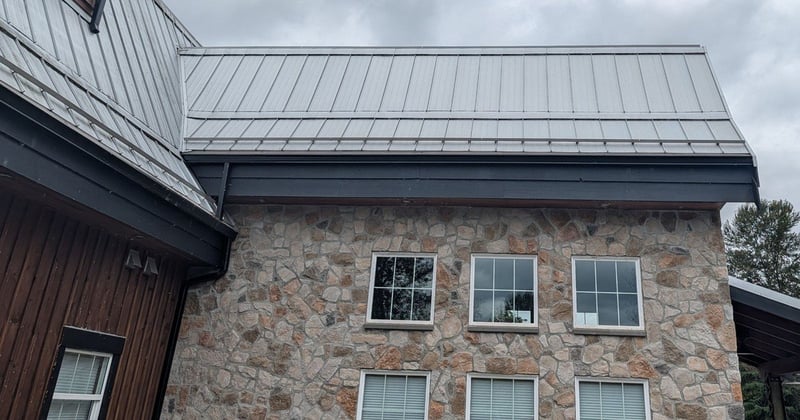
Are you trying to blend a new addition into a metal roof that's already well into its second decade, and worried the old and new will never look like one roof? Do you need gutters on a steep metal roof but keep hearing that the first real snowfall will rip them right off?
At RoofSmart, we've been roofing Greater Seattle homes since 2011. We complete 500+ full replacements a year, including steep metal, additions that have to match existing panels, snow guards, and gutter guards (we install MasterShield). Nestor Martinez, our COO, has been part of the barn-to-home work on this property from the start.
In this case study, I'll walk you through how we blended a 17-year-old metal roof with a brand-new addition on a dairy barn turned into a four-level home. We replaced a whole roof plane so old and new would match, redid the sections cut open for heat and fireplaces, then added two rows of snow guards and MasterShield so the gutters could stay put.
Quick Answers
RoofSmart blended a new addition into a 17-year-old metal roof on an Auburn dairy barn turned four-level home by replacing one whole roof plane, so the old and new panels match. We also redid the sections cut open for heat and fireplaces, then added two rows of snow guards and MasterShield gutter guards so the new gutters stay put. Seventeen years in, the original metal is still doing just fine.
How did RoofSmart complete this Auburn barn roof project?
Starting in 2023, we did the roofing work on a dairy barn that was turned into a four-level home in Auburn, Washington. Our crew replaced the 17-year-old metal roof on one side of the barn so that it would blend nicely with the new metal roof installed on the new addition and resealed sections cut open for heating. Then we added two rows of snow guards and installed MasterShield gutter guards over the gutters.
| Detail | Information |
|---|---|
| Location | Auburn, WA; a farm property |
| Home type | Dairy farm cow barn converted into a four-level house |
| Roof area | About 3,200 sq ft of new standing seam metal on the addition and the adjacent lower roof planes. The upper roof was left in place. |
| Original roof | Steel standing seam metal panels, about 17 years old, installed by Nestor and crew before he worked at RoofSmart (the first metal roof he ever did). |
| Pitch | Very steep gambrel with mixed pitches: 8/12, 10/12 and 17/12 sections |
| Key challenges | Matching a 17-year-old roof to a new addition; very steep metal; roof sections opened when heat and fireplaces were added; keeping gutters from getting ripped off by sliding snow |
| Timeline | Signed in May 2023. New metal went on the addition and lower planes in June 2023. Then came gutters, snow guards and MasterShield on later visits. |
| Price | About $60,000, plus tax, for this repair-and-addition job (including the later gutters, snow guards and MasterShield). For current full-replacement ranges, see our Seattle roof replacement cost page. Those are replacement numbers, not the price of a job like this one. |
What problems did this Auburn barn home have?
Despite the metal roof being 17 years old, it was still in decent condition. So, the challenge was to blend an older roof into a new addition, plus making sure that any updates that the homeowner made to the roof during the transition from barn to home were done right.
This house belongs to a Greater Seattle homeowner, and it started life as a cow barn on a dairy farm.
The original metal roof has some history for us. It was the first metal roof that our COO Nestor ever did. 17 years later, the customer hired RoofSmart, and Nestor was given the opportunity to blend his old and new work on this roof.
Years after the initial metal roof installation, a new addition was built off the front of the house. The challenge was that the new roof had to sit right next to 17-year-old metal without looking like a patch job.
Then, the owner added heat, fireplaces, and everything that goes with them during the renovation. A lot of that went up through the roof. When we came out, we found some giant holes in the roof where that work had gone through.
The last piece was gutters. For most of its life, this roof didn't have any, but the owner wanted gutters, and he didn't want to spend his time cleaning them. We discussed his options and decided to also install gutter guards.
On a steep metal roof, that brings up a couple of issues. Snow slides off metal fast, so without snow guards, the first real dump of snow can tear new gutters (and gutter guards) right off. And on a roof this steep, snow (and rain) will slide off the roof even faster.
Plus, on a steep roof, nobody wants to be up there cleaning out leaves. It's dangerous and difficult.
The addition, the openings, the gutters, and the snow all touch the same roof. So we treated it as one system, not four repairs.
How did RoofSmart blend the new and old metal panels and protect the new gutters on this steep metal roof?
This wasn't a new roof on the whole house. It was effectively a large repair and an addition, blended together. Here's how it went, step by step:
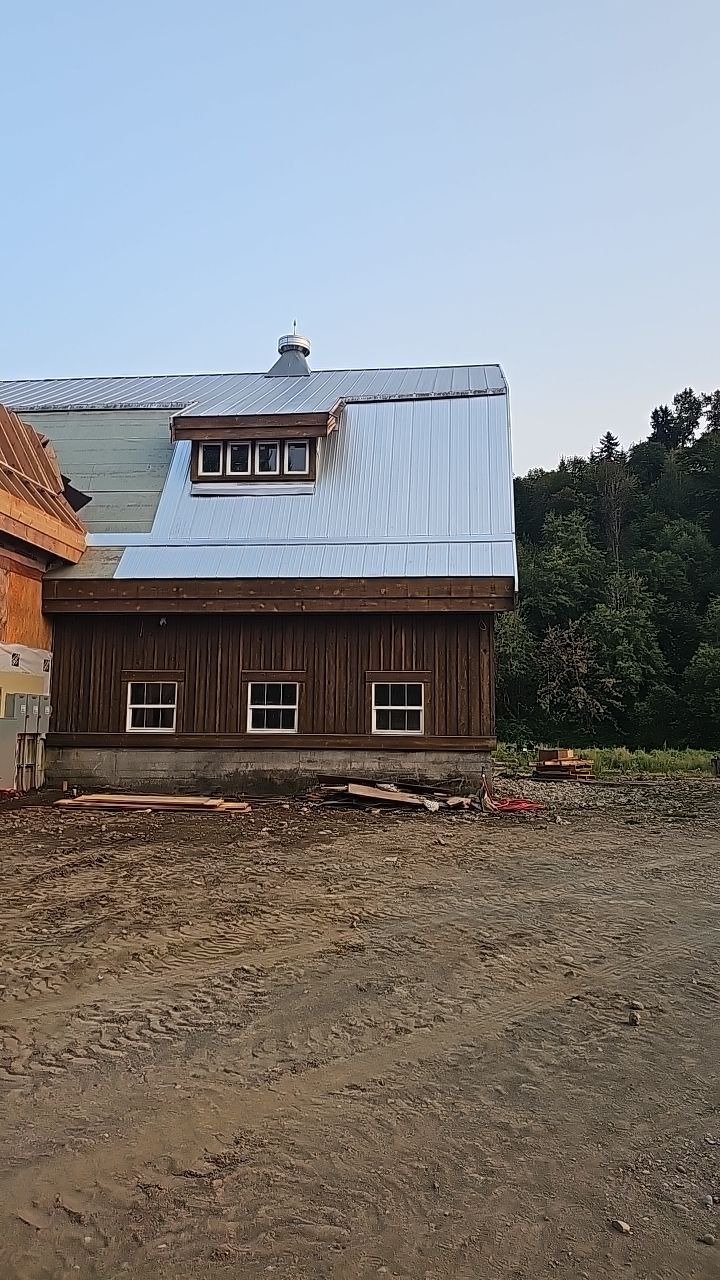
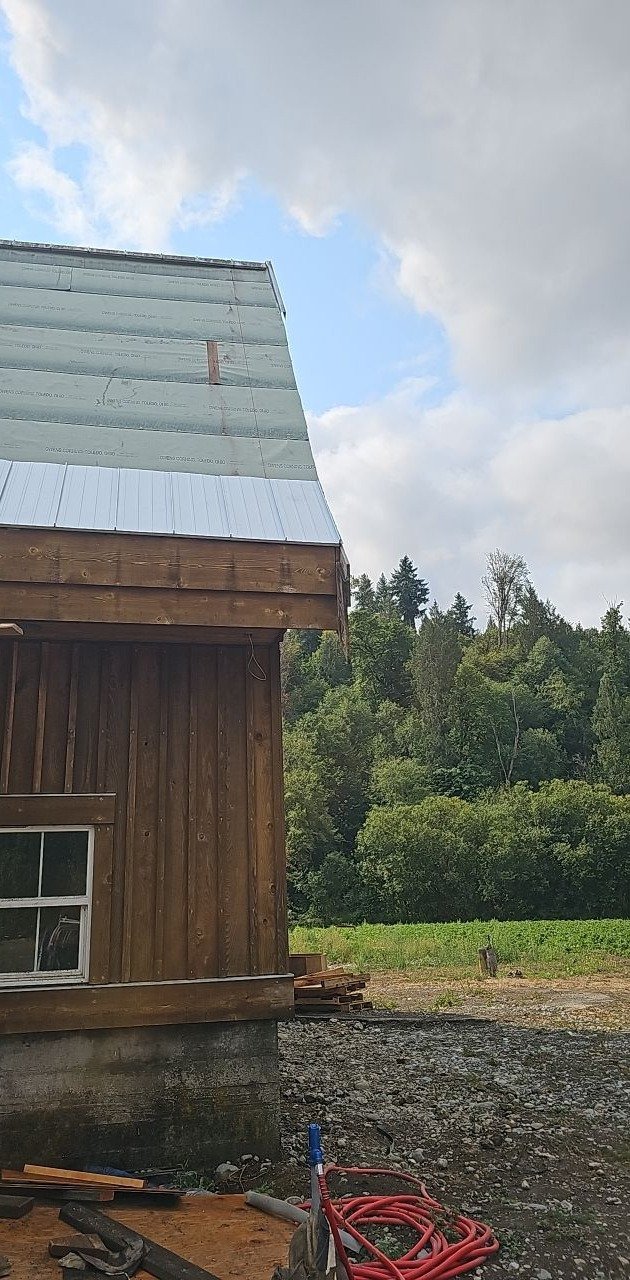
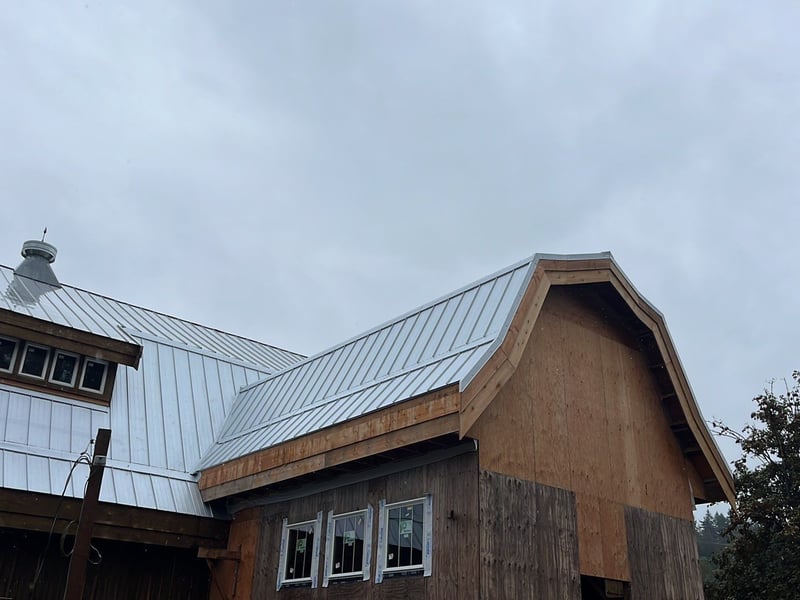
Step 1: We rebuilt with 8 inches of polyiso and a vented deck
Under the new metal, on the addition and the sections we rebuilt, we put down two layers of 4-inch polyiso, then a vented deck, then the panels. We did that across the new work so the build-up would match.
Polyiso is a common high-performance roof insulation. Building Science Corporation notes it has one of the highest R-values per inch among common insulations. Installing it prevents condensation from collecting in the attic and damaging the roof decking from inside.
Step 2: We roofed the new addition in metal
We roofed the addition in standing seam metal so it would look like part of the original roof, not something tacked on later. The panel, underlayment, and edge specs are in the materials table below.
Step 3: We replaced a whole plane so old and new would blend
Matching new metal to a 17-year-old roof is the hard part. Even when the finish name is the same, metal that's been out in the rain and sun for 17 years can look different from fresh panels.
So instead of stitching new panels in next to old ones, we replaced that whole plane. Custom intersection flashings tie the new panels into the old. The new panels are Galvalume finish. This is a thicker primer coat with a clear coat on top, so they have the stainless steel look without being stainless.
That way the old and new actually blend together, and your eye doesn't catch a seam where one stops and the next begins.
Step 4: We redid the roof where the heat and fireplace work went up
We redid the roof in the section where there were holes from new heating and fireplaces additions so it wouldn't leak, rather than just patching around each hole.
Step 5: We installed two rows of S5 snow guards
One row sits near the top to stop an avalanche before it gets going. The other sits further below to protect the gutters.
The Metal Roofing Alliance explains how snow sliding off a metal roof can be dangerous and how snow guards help. We walk through the same idea, including multiple rows of snow guards on metal, in our post on protecting your roof from damage in a snowy climate.
Step 6: We installed MasterShield gutter guards on the steep metal
We installed MasterShield over the gutters. Full disclosure: RoofSmart installs MasterShield, so we have a stake in it.
A gutter guard on metal this steep doesn't sound like it would work and part of the reason is how it goes on. MasterShield is installed at the same angle as the roof, so debris slides off instead of sitting there. We go deeper on that in our MasterShield gutter guard review for Seattle homes.
An honest note: this kind of work snowballs
We'll be straight with you. Projects like this one tend to grow: gutters lead to snow guards, and snow guards lead to gutter guards.
That's not us padding the bill. It's what happens when you change one part of a roof system, and the other parts have to keep up. If we see that chain coming on your house, we'll tell you up front so it isn't a surprise later.
| Item | What was used | Notes |
|---|---|---|
| Tear-off | One layer of old metal, torn off and hauled away | Where the addition meets the lower roof planes |
| Roofing | Metal: the 17-year-old original plus new sections on the addition and the replaced plane | New sections: NU-RAY 26-gauge standing seam, 16-inch pencil rib, Galvalume finish (thicker primer plus clear coat) |
| Underlayment | Synthetic underlayment (Tri-Built Synthetic 25, plus Titanium PSU HT) | Under the new metal only |
| Flashing | Matched hook-eave starter and drip edge, W-valley, endwall, sidewall and gable flashings, custom intersection flashings | Intersection flashings custom made for this job, where the new panels tie into the old |
| Ventilation and safety | Baffled ridge vent; three permanent stainless steel double D ring safety anchors; roof jacks and toe boards on the job; a lift | Anchors stay on the roof for future work. Roof jacks, toe boards and a lift were used during the install. |
| Insulation and deck | Two layers of 4-inch polyiso (8 inches total), then a vented deck, under the new metal | On the addition and the sections we rebuilt, so the new work would match |
| Heat and fireplace openings | Large repair: the roof section where the heat and fireplace work went up was redone | Redone with proper flashing so water stays out |
| Snow retention | S5 snow guards, two rows | Two rows: one near the top, one lower to protect the gutters |
| Gutter guards | MasterShield; carries a lifetime warranty | RoofSmart installs MasterShield |
| Gutters | Gutters installed, then covered with MasterShield | Installed as part of the later visits after the new metal |
For general context only (not a promise for this roof), the Metal Roofing Alliance says a metal roof will last between 40 and 70 years.
How did this barn conversion roof turn out?
Seventeen years on, the original metal still looks pretty good, the old and new sections blend, and the snow guards are mostly blended so they are really not that noticeable.
The original metal has spent 17 years on a farm. Nobody washed it. It's just been out there in the rain, and it didn't even have gutters for most of that time. It's still doing just fine.
It's a little dirty, but otherwise it looks good. It certainly doesn't look like a 17-year-old shingle roof would. The south side has less algae than the other side, which is about what you'd expect.
| Area | Before | After |
|---|---|---|
| Old and new roof | A 17-year-old metal roof next to a brand-new addition | One replaced plane so the old and new sections blend |
| Heat and fireplace openings | Giant holes in the roof where the work went up | Section redone to keep water out. |
| Gutters | No gutters for most of the roof's life | Gutters with MasterShield gutter guards |
| Snow | Nothing to hold snow on a very steep metal roof | Two rows of snow guards, subtle and mostly blended |
You'll also notice how massive the fascia is. That's the polyiso and vented deck showing at the roof edge. It's a visible feature of the build, not a measured result.
The biggest change isn't on the roof at all. Three years ago, nobody was living in this house. Now the owners have moved in.
They're certainly proud of it, and they've earned that. The customer expressed that did an incredible job, saying "I don't think anybody else could have even touched this." He was thrilled with how everything turned out.
What should I do next if I have a steep metal roof or an addition that needs to blend?
This barn-to-home roof is a good example of what we mean by fixing the whole system, not just covering something up. We blended a 17-year-old metal roof with a new addition, replaced a plane so old and new would match, and redid the sections cut open for heat and fireplaces.
Then we finished the chain: gutters, two rows of snow guards, and MasterShield. Seventeen years in, the original metal is still doing its job.
If you have a steep metal roof, an addition that needs to blend in, or gutters that keep getting hammered by snow, start with a free SmartMatch Needs Analysis. Call (206) 487-4877.
An estimator walks your exterior roof and, where it's safe, your attic. You get a plain-English findings sheet that says whether to repair, replace or monitor, and what the next step is. If you don't need a new roof, we say so.
No pressure and no invented deadlines. Take the time you need, and come meet your very own meticulous roofing nerd.
Read next: How Can I Protect My Roof From Damage in a Snowy Climate?
Want to see how we'd look at your roof?
Start with a SmartMatch™ Needs Analysis, or call (206) 487-4877.
What Are Common Questions About Blending Metal Roofs With Additions?
1. How much does a project like this cost in Auburn?
This one came in around $60,000, plus tax. That covers the repair-and-addition roofing, then the later gutters, snow guards and MasterShield. Every mix of those pieces changes the total, so yours won't match this number line for line.
If you're weighing a full replacement instead, our Seattle roof replacement cost page shows current ranges from real RoofSmart jobs, plus tax. Those are replacement numbers, not repair-and-addition costs.
2. Does RoofSmart include tear-off and disposal?
On full replacements, yes. The base on our cost page includes tear-off, haul and dump, underlayment, starter, flashing and pipe boots.
This job wasn't a full tear-off, though. We tore off and hauled away one layer of old metal where the addition meets the lower roof planes, and the upper roof stayed in place.
3. Can you match a new metal roof to a 17-year-old metal roof?
On this job, yes. Rather than splice new panels in next to old ones, we replaced a whole plane so the old and new would blend. Step 3 above walks through it.
4. Do I need snow guards if I add gutters to a metal roof?
If you're going to do any gutters on steep metal, you want snow guards. Otherwise snow can slide off in one sheet and take the gutters with it.
On this job we used two rows: one at the top to stop avalanches, one lower to protect the gutters. The Metal Roofing Alliance covers why this matters, and we go into more detail in our snowy-climate roof protection post.
5. Do gutter guards work on a steep metal roof?
They can. On this very steep metal roof, MasterShield works. It's not what most people expect, but it does the job.
MasterShield is installed at the same angle as the roof, between 22.5 and 75 degrees, so debris slides off. Our MasterShield review covers the details. And again, full disclosure: we install MasterShield.
6. Will snow guards make my roof look cluttered?
They don't have to. On this job the snow guards are subtle and mostly blended in. Unless you're looking for them, they're really not that noticeable.
7. How long does a metal roof last?
This one has gone 17 years on a farm, never washed, with no gutters for most of that time, and it's still doing just fine.
In general, the Metal Roofing Alliance puts metal roofs at 40 to 70 years. That's an industry range, not a promise for any one roof, including this one.
8. Why use polyiso and a vented deck under metal on a job like this?
On the addition and the sections we rebuilt, we installed two layers of 4-inch polyiso (8 inches total) plus a vented deck, then the metal. It's the kind of Egghead layering we like to nerd out on.
Building Science Corporation notes polyiso has one of the highest R-values per inch among common insulations. We didn't measure an R-value or energy savings on this home, so we won't claim either. We put that build-up under the new metal on the addition and the sections we rebuilt, so everything matched.
9. What happens when you cut into a metal roof for heat and fireplaces?
On this home, the heat and fireplace work left giant holes in the roof. We redid that section so it wouldn't leak.
If you're adding anything that goes through an existing metal roof, plan on proper flashing and a real roof repair, not a patch-and-hope.
10. Can you roof a barn conversion addition without replacing the entire old metal roof?
On this job, yes. We treated it as a large repair and an addition. We roofed the new addition, replaced one full plane so everything would blend, and kept the 17-year-old metal that was still performing.
That only works when the existing metal is still sound. If it isn't, we'll tell you. On this job, the scope left the upper roof untouched and called for checking the deck for rot as we went.
Topics:
