

TL;DR: Summary
A clogged or malfunctioning ridge vent can contribute to serious damage to a Euroshield roof by preventing hot air from escaping the attic. If the attic becomes excessively hot because the ridge vent is plugged with dust, moss, or moisture, the Euroshield shingles can shrink and develop large gaps that allow debris and water into the roofing system.
Proper attic ventilation is also a requirement for Euroshield warranty coverage. In this case, a homeowner’s ridge vent became clogged from the inside, contributing to excessive attic heat and shrinking shingles, but her warranty claim was denied as a maintenance issue. RoofSmart has seen ridge vents become restricted on other Seattle-area homes as well, including vents clogged externally by moss or water.
The key takeaway: A Euroshield warranty does not eliminate the need to maintain your attic ventilation. If you have a ridge vent, periodically checking that it remains clear and functioning properly can help prevent heat-related roof damage and reduce the risk of a ventilation problem affecting your warranty coverage.
Did you invest in a Euroshield roof expecting it to last for decades, only to hear that something as easy to overlook as a clogged ridge vent could damage your shingles? Even more frustrating, what if your attic ventilation stopped working without you realizing it, and the resulting roof damage isn’t covered by the warranty you thought would protect you?
At RoofSmart, we’ve seen clogged ridge vents on homes throughout the Greater Seattle area, and recently encountered an especially severe case involving a Euroshield roof. The homeowner’s ridge vent became plugged with attic dust, restricting airflow and contributing to excessive heat that caused sections of her Euroshield shingles to shrink. When the damage was discovered during the process of selling her home, her warranty claim was denied, leaving her responsible for the replacement costs.
In this article, I’ll show you what happened to this homeowner’s Euroshield roof, how a clogged ridge vent can contribute to heat-related shingle damage, and why ventilation and maintenance can affect warranty coverage. I’ll also explain how ridge vents can become clogged with dust, moss, or water and what you can do to reduce the risk of an unnoticed ventilation problem turning into an expensive roof repair.
Can a ridge vent malfunction cause damage to my Euroshield roof?
Ridge vents are used on a lot of roofs in the Seattle area, but if it plugs from the inside with dust, it can cause serious damage to your Euroshield shingles.
This is actually more common than you think. Sometimes the screen on your ridge can fill up with dust from the inside, causing it to plug. This completely ruins the ventilation in your attic, which makes your attic excessively hot. When that happens consistently over time, it causes the Euroshield to shrink.
We recently did a roof replacement for a customer facing this exact issue on her newly installed Euroshield roof. The homeowner didn't notice the shrinking shingles, so she went to sell the home. But when she got an inspection, they flagged it for roof damage.
Her warranty claim was denied, so she hired us to replace the roof.
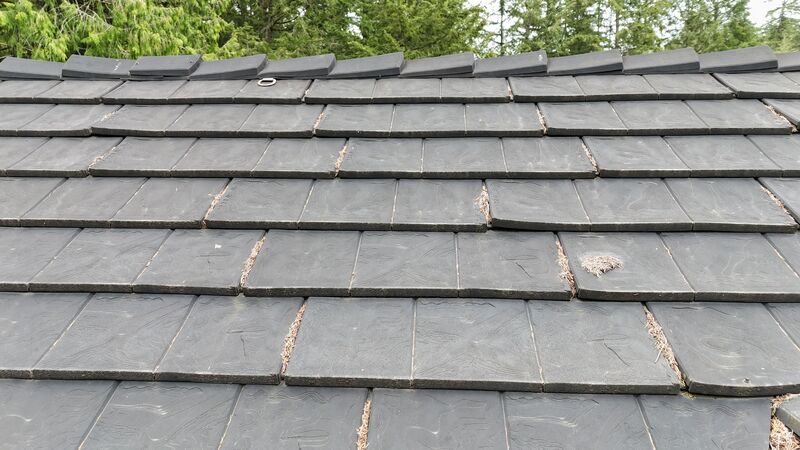
So, they got this really nice product, and it's weathering well, but if you look closely, you can see that it's shrinking and shriveling:
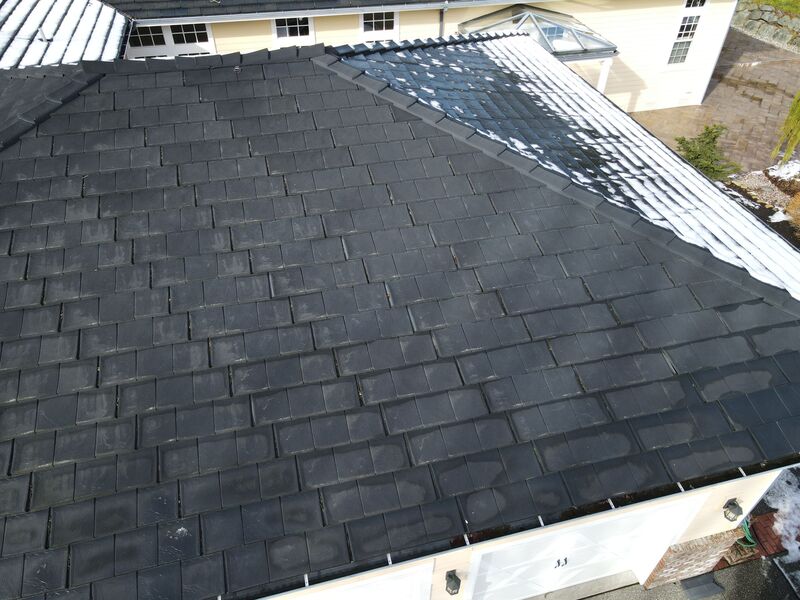
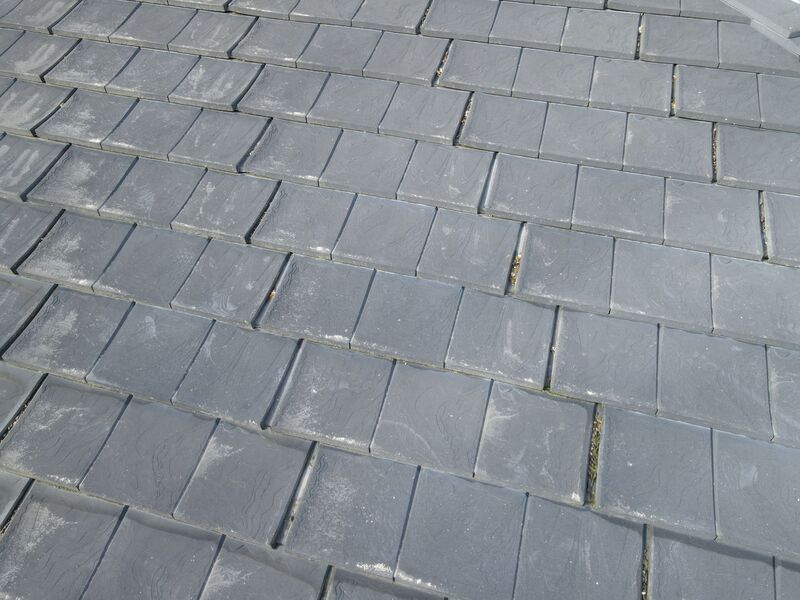
See how there are large gaps between the shingles? There shouldn’t be that much space there, which demonstrates that the Euroshield shingles are shriveling up. These gaps are a huge problem because debris is getting in, and you're going to get leaks. It's not shedding water the way it's supposed to.
The pattern's off, and the roof is definitely shrinking, but not on every face. It’s only the south face, which is a pretty good clue that there's a heat problem here.
The ridge vent installed on the roof had a certain rating for how much ventilation it would provide in the attic, but it stopped working after getting plugged with dust.
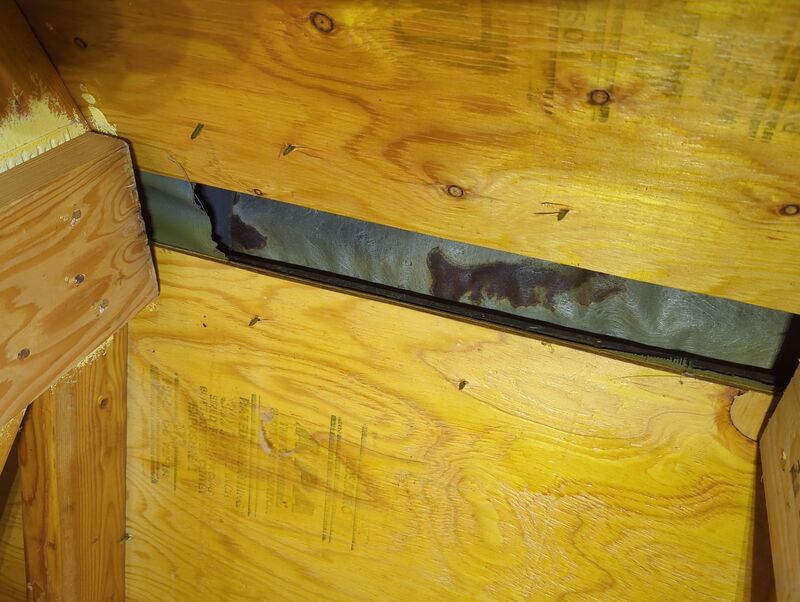
Excess dust from the attic was getting caught in the fabric filter and sticking there. Eventually, this completely plugged the ridge vent and prevented air from flowing out of the attic.
This customer took extra precautions to prevent mold in the attic, so no mold was growing. However, she thought that her attic ventilation was working just fine, when in reality it was completely plugged.
As a result, the attic had extremely poor airflow, making it too hot inside the attic (especially in the summer). The excessive heat caused the Euroshield shingles to shrink.
How can a plugged ridge vent void your Euroshield warranty?
What many homeowners do not realize is that even though they might have a 50-year warranty for their Euroshield roof, it’s a requirement that you have proper attic ventilation. If not, your warranty will be voided.
The homeowner with the shrinking Euroshield roof figured that this would be no problem for her because she got a lifetime warranty for the roof.
So she called the people who installed it, but the roofing company that installed the roof assessed the attic ventilation and found it exceeded the minimum requirements.
They rejected the warranty claim due to “maintenance issues”, saying that it’s the homeowner’s responsibility to check the vent and perform maintenance as needed to prevent it from clogging.
This is an incredibly frustrating thing to hear because no one ever warns homeowners that their ridge vent might plug and stop working. It’s something that you wouldn’t think needed to be checked.
So, the workmanship warranty with the roofer wouldn’t offer coverage. And because the attic ventilation was messed up, the Euroshield warranty was voided.
Unfortunately for this customer, that meant that she had to pay out of pocket to replace all of the damaged sections of her roof.
Is it common for ridge vents to plug and stop working?
Although this phenomenon of ridge vents clogging is not something that roofers or ridge vent manufacturers talk about, it is an issue that we at RoofSmart have seen on many homes all over the Greater Seattle area.
This customer’s story is one of many that we have encountered, but this is one of the more severe cases. Most of the time it happens on an asphalt shingle roof, and the plugging isn’t quite as bad yet.
Not only can your ridge vent clog from the inside with dust, but if it’s not protected by baffles on the outside, then the holes on the outside can plug with water or moss:
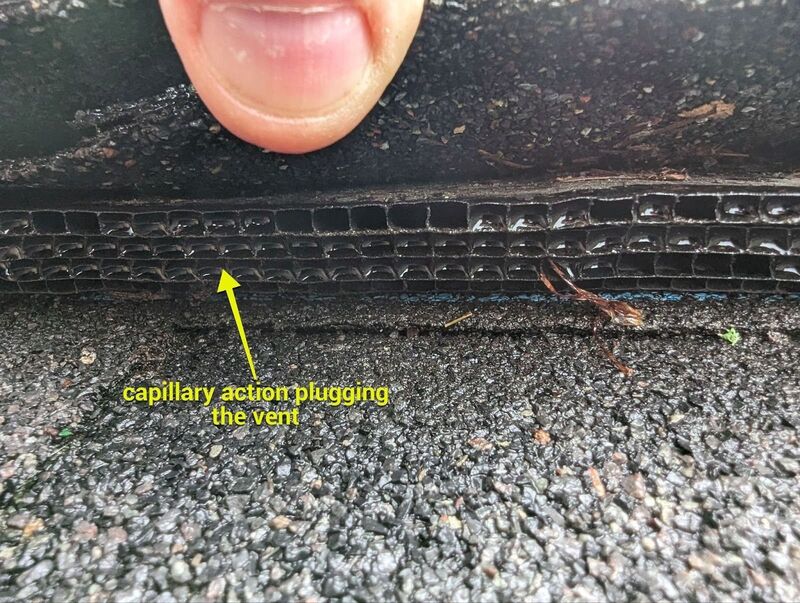
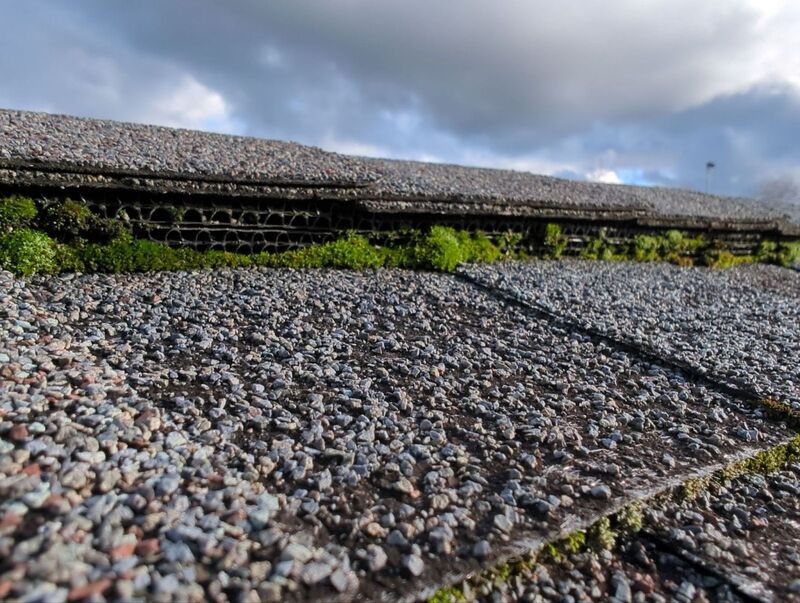
Depending on how much of the ridge vent is plugged with water or moss, this can reduce the vent’s function and ruin your roof’s ventilation. So, installing a ridge vent with baffles and checking it every once in a while to make sure it’s not plugged can go a long way in preventing tens or hundreds of thousands of dollars in roof damage.
Ridge Vent Issues and How to Fix Them
|
Ridge Vent Issue |
What Happens |
Potential Effect on Euroshield |
What Homeowners Should Do |
|
Dust clogs the ridge vent from inside |
Dust collects on the vent's filter or screen and restricts airflow |
Attic temperatures can rise and contribute to Euroshield shrinking |
Periodically inspect the ridge vent for internal blockage |
|
Moss clogs the exterior |
Moss covers or blocks ventilation openings |
Reduces the amount of hot air escaping the attic |
Remove moss and keep exterior vent openings clear |
|
Water blocks vent openings |
Water can interfere with airflow on poorly protected vents |
Reduces ventilation performance |
Use properly designed vents with exterior baffles and inspect them periodically |
|
Ridge vent has no exterior baffles |
Vent openings are more exposed to water and moss |
Increased chance of reduced airflow |
Consider a ridge vent designed with baffles |
|
Attic ventilation becomes restricted |
Hot air can no longer escape effectively |
Excessive attic heat can affect the roofing above |
Have the complete intake-and-exhaust ventilation system evaluated |
|
Euroshield begins shrinking |
Heat exposure causes the shingles to shrink or shrivel |
Large gaps can form between shingles |
Have the roof inspected as soon as unusual gaps appear |
|
Gaps form between Euroshield shingles |
Roofing pattern and coverage become distorted |
Debris can enter gaps and water-shedding performance can be compromised |
Determine whether ventilation problems are contributing to the damage |
|
Damage appears primarily on the south-facing roof |
That roof plane receives greater solar heat exposure |
May be a clue that excessive heat is contributing to deterioration |
Compare different roof faces during inspection |
|
Ventilation doesn't meet warranty requirements |
The roof system isn't operating under required conditions |
Manufacturer warranty coverage may be affected |
Verify Euroshield's specific ventilation and warranty requirements |
|
Vent isn't maintained |
A properly sized vent can still stop functioning after installation |
Damage may be treated as a maintenance-related problem |
Don't assume that adequate ventilation at installation means it will always remain adequate |
How can excessive attic heat damage your roof in Seattle?
A ridge vent can meet ventilation requirements when your roof is installed and still become a problem later if dust, moss, or water restricts its airflow. As this homeowner discovered, you may not even realize the vent has stopped working until excessive attic heat has already started affecting the roofing material above it.
In this case, the consequences were especially expensive. The clogged ridge vent contributed to excessive heat that caused the Euroshield shingles (particularly on the south-facing portion of the roof) to shrink and develop large gaps. Because the problem was attributed to ventilation and maintenance rather than a product defect, the homeowner’s warranty claim was denied, leaving her responsible for replacing the damaged roofing.
Understanding what excessive heat does to a roofing system can help you recognize potential warning signs and address ventilation problems before they contribute to premature roof failure.
Read our article “Can Excessive Attic Heat Damage My Seattle Roof?” to learn how high attic temperatures affect roofing materials, what causes an attic to overheat, and what you can do to protect your roof from heat-related damage.
Frequently Asked Questions About Ridge Vent Voiding the Euroshield Warranty
1. Can a clogged ridge vent damage a Euroshield roof?
Yes. A clogged ridge vent can restrict the airflow needed to remove excess heat from the attic. In the RoofSmart project discussed in this article, the ridge vent became plugged with dust from inside the attic, contributing to excessively hot attic conditions.
Over time, the excessive heat caused portions of the Euroshield roof to shrink and shrivel, creating unusually large gaps between the shingles.
2. How can I tell if my Euroshield shingles are shrinking?
Look for unusually large gaps between shingles, changes in the installation pattern, or shingles that appear shriveled or distorted.
It can also be helpful to compare different sides of the roof. In the example discussed here, the shrinking was concentrated on the south-facing roof rather than every roof plane. That provided an important clue that heat was contributing to the problem.
3. Why would a ridge vent stop working if it was installed correctly?
A ridge vent can be properly sized and functional when it's installed but become restricted later. In the example in this article, dust from inside the attic accumulated on the ridge vent's fabric filter until airflow became severely restricted.
Exterior conditions can cause problems too. RoofSmart has also encountered ridge vents where moss or water interfered with the exterior openings.
4. Can a clogged ridge vent make my attic too hot?
Yes. A ridge vent is intended to allow hot air to escape as part of the attic's overall ventilation system. If that exhaust path becomes clogged, attic airflow can be significantly reduced.
During Seattle's warmer summer conditions, that can result in excessive heat building up inside the attic. In the Euroshield project discussed here, that heat was associated with shrinking roofing material.
5. Can poor attic ventilation void a Euroshield warranty?
According to the experience described in this article, proper attic ventilation is a requirement for Euroshield warranty coverage, meaning inadequate ventilation can potentially affect or void coverage.
Homeowners should review the terms of their specific Euroshield warranty rather than assuming a long-term or lifetime warranty covers every type of roof failure.
6. Why was the homeowner's Euroshield warranty claim denied?
In this case, the homeowner initially expected the roof damage to be covered because she had a long-term warranty. However, the warranty claim was rejected after the ventilation problem was attributed to a maintenance issue.
The position taken was that checking and maintaining the vent to prevent clogging was the homeowner's responsibility. Because the ventilation wasn't functioning properly, the homeowner ultimately had to pay out of pocket for the damaged portions of the roof.
7. How often should I check my ridge vent for clogs?
The article doesn't establish a specific inspection interval, but RoofSmart recommends checking the ridge vent periodically rather than assuming it will continue working indefinitely.
Pay attention to both sides of the system. Dust can create a blockage from inside the attic, while moss and water can interfere with openings on the exterior.
8. Can a ridge vent clog even if there isn't mold in the attic?
Yes. The absence of mold doesn't prove that your attic ventilation is working correctly.
The homeowner in this article had taken additional precautions to prevent attic mold, and no mold was growing. However, the ridge vent was still severely clogged and the attic had poor airflow. The resulting heat damaged the Euroshield roofing even though mold wasn't an obvious warning sign.
9. Why are baffles important on a ridge vent?
Exterior baffles can help protect ridge vent openings from conditions that interfere with airflow. RoofSmart has encountered vents without adequate protection where water or moss blocked exterior openings.
A baffled ridge vent isn't a substitute for maintenance, but choosing an appropriate vent design and keeping its openings clear can reduce the risk of ventilation becoming restricted.
10. What should I do to protect my Euroshield warranty from ventilation problems?
Start by making sure your attic's ventilation system meets the requirements for your specific Euroshield roofing product and warranty. Then don't assume the system will remain functional simply because it worked correctly when the roof was installed.
Periodically check the ridge vent for dust buildup from inside the attic and moss, water, or other blockages from the exterior. If you notice large gaps, shrinking, shriveling, or unusual changes in your Euroshield shingles, have both the roofing and attic ventilation inspected promptly. Catching a ventilation problem early could prevent a relatively small blockage from developing into extensive roof damage.
Topics:
