

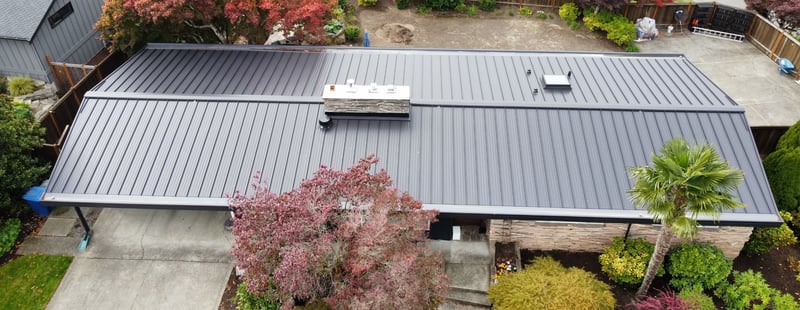
Are you trying to figure out whether your Seattle-area home sits in a Wildland-Urban Interface (WUI) zone, and what that means the next time you replace your roof? Have you heard about Class A roofs, ember-resistant vents, and noncombustible gutters, and wondered which of those rules actually apply here right now?
At RoofSmart, we've been roofing Greater Seattle homes since 2011. We complete 500+ full replacements a year across King, Pierce, Snohomish, Thurston, and Kitsap counties, and we pay close attention to local code changes before they show up in a bid.
In this article, I'll walk you through what WUI means for your roof, which Washington and Seattle rules are in force today versus still delayed, how that compares with California, and what you can do to make a roof more fire-resistant even when WUI isn't required on your property yet.
Quick Answers
WUI Roof Requirements and Fire-Resistance Upgrades
Wildland-Urban Interface (WUI) rules are designed to make homes in wildfire-prone areas more resistant to flames and wind-blown embers. Washington law includes requirements such as Class A roof assemblies for applicable WUI construction, including certain roof replacements involving 50% or more of the roof within a 12-month period.
However, Seattle’s new WUI code is not currently in effect because implementation has been delayed while Washington develops updated statewide wildfire hazard and risk maps.
When WUI requirements apply, roofing details such as the roof assembly, vents, valleys, gutters, and other components may need additional fire-resistant construction. Homeowners who want greater wildfire protection can also consider naturally fire-resistant materials such as metal roofing, debris-shedding gutter guards, and ember-resistant ventilation strategies.
The key takeaway: If you’re planning a Seattle-area roof replacement, check with your local building department to determine whether your property is in a designated wildfire-risk area and which WUI requirements currently apply. Even where WUI rules aren’t yet required, choosing a Class A roof assembly and reducing places where embers and combustible debris can collect can improve your home’s fire resistance.
| Roof Feature | WUI / Fire-Resistance Consideration | What Seattle-Area Homeowners Should Know |
|---|---|---|
| Roof assembly | Class A fire-rated roof assemblies are central to Washington's WUI construction requirements | Some roofing materials are Class A by themselves; others achieve Class A as part of a tested roof assembly |
| Asphalt shingles | Can be part of a Class A roof assembly | Proper installation and the complete assembly matter, not just the shingle |
| Metal roofing | Noncombustible and commonly available in Class A assemblies | Strong option for homeowners prioritizing fire resistance |
| Clay or concrete tile | Offers strong fire resistance | Effective but typically more expensive and may require structural considerations |
| Roof vents | WUI design focuses on preventing flame and ember entry | Vent type, opening size, screening, and location can matter |
| Soffit/eave vents | Seattle's draft WUI provisions restrict attic ventilation openings in soffits and eave overhangs | Alternative ventilation strategies may be needed when WUI provisions apply |
| Roof vent screens | Draft Seattle provisions call for noncombustible, corrosion-resistant mesh with openings no larger than 1/4 inch, unless the vent is otherwise approved to prevent ember/flame penetration | Ember-resistant vent design can reduce a vulnerable entry point |
| Roof valleys | Draft Seattle provisions specify enhanced metal flashing and underlayment requirements | Valleys can require additional fire-resistant detailing |
| Gutters and downspouts | Draft Seattle provisions require noncombustible materials | Metal drainage components reduce combustible materials along the roof edge |
| Gutter debris | Leaves, needles, and other debris can provide combustible material near the roof edge | A gutter guard that sheds debris can help reduce accumulation |
| Major roof replacement | Washington law specifically addresses existing roofs when 50% or more of the covering is replaced within 12 months | Check the applicable local requirements before starting a major replacement |
| Existing roof | Requirements depend on applicable codes, maps, jurisdiction, and project scope | Verify current requirements with the local building department before assuming your home or project is covered |
Does my roof need to meet WUI requirements in Seattle?
If your home is in a designated WUI (Wildland-Urban Interface) zone, then as a Washington State resident, you may be required to have a Class A fire-rated roof when you replace it, depending on your city and whether your home is in a mapped WUI area.
For example, homeowners in Seattle who live in a WUI area will need to follow the Seattle Wildland-Urban Interface code once it’s adopted.
As drafted, this requires a Class A fire-rated roof and certain thicknesses for flashing and underlayment at the valley. The regulations on vents are similar to Seattle’s draft requirements (described below).
If your roof is already compliant, you do not need to make any changes. These new updates are primarily for new construction homes or those replacing 50% or more of the roof in WUI zones, but are strongly recommended for homeowners in other high-risk zones.
As of right now, this is not required throughout the entire state, but I believe that there could be a statewide mandate implemented due to heightened fire danger each year.
Washington's statewide WUI roof rules aren't in force yet. The state expects to finalize its wildfire hazard maps by December 1, 2026, and they were still drafts as of late October. Some cities near us, including Bellevue, Kirkland, Redmond, Renton, Federal Way and Edmonds, have adopted the International Wildland-Urban Interface Code locally, so check with your city's building department before you replace your roof.
Although Washington State hasn’t yet adopted the same WUI requirements as other states, new updates happen every year.
Plus, other states are getting stricter requirements due to worsening wildfire risk. California has the strictest and most widely implemented requirements so far.
How do the WUI requirements for roofs differ in Washington State and California, and why does this matter for Seattle residents?
Under Seattle’s draft WUI code, homes in WUI zones would need to meet the following requirements (this would apply to new construction or anyone replacing 50% or more of their roof):
- Roof assemblies must have a Class A fire rating: Some materials have a Class A rating on their own, but others can only get this rating when they are installed on the roof with specific materials (like flashing and underlayment). As long as the roof is installed correctly and meets the right requirements as an assembly, it can still count as a Class A fire-resistant roof.
- Attic vents are not allowed in eave overhangs or soffit boards
- Roof vents must have noncombustible mesh with openings no larger than 1/4 inch
- Gutters must be made of noncombustible materials and have an approved way to keep debris out: Gutter guards made of metal are encouraged. Ones made of plastic or other combustible materials can melt or catch fire easily.
In California, all of these rules apply, and they also have some stricter requirements.
These WUI roof assembly requirements are mandated by law at the state level, not just by county or region. Also, the only acceptable roofing materials in a WUI or high-risk zone include:
- Asphalt shingles
- Metal panels and shingles
- Clay and concrete tiles
Even though wood shakes and shingles can be treated with chemicals to make them fire-retardant, they are no longer acceptable in WUI or other high-risk zones in California. This isn’t the case yet in Washington State, but it could be in the future.
What can you do to your roof to make it more fire-resistant?
If you’re in a WUI zone and are compliant with the code, then your roof should already be pretty fire-resistant. But whether you are in a WUI zone or not, here are some tips for making sure that your roof has excellent fire resistance:
-
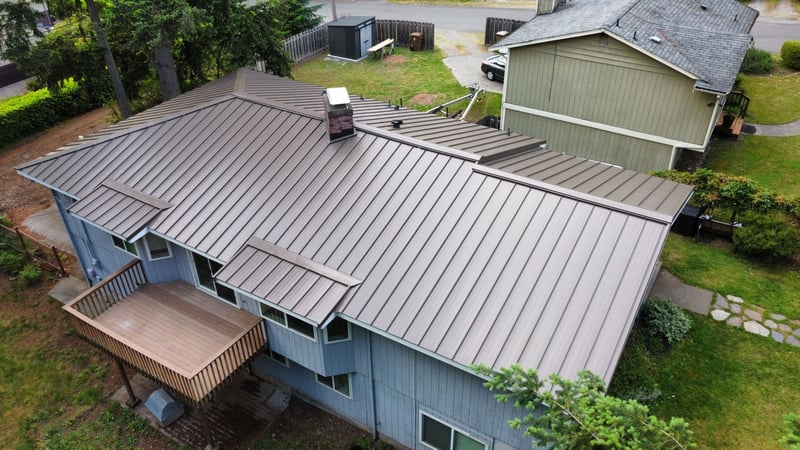
Choose metal roofing: Metal roofing is one of the most fire-resistant roofing materials. Of course, it can have a Class A fire resistance rating, but it’s also naturally resistant to fire.
Many Seattle homeowners hesitate to install metal roofing because it can cost close to twice as much as an asphalt shingle roof, but it’s a great fit for this situation (plus it has a lot of other benefits). Concrete or clay tile have good fire resistance as well, but they are typically more expensive to install.
-
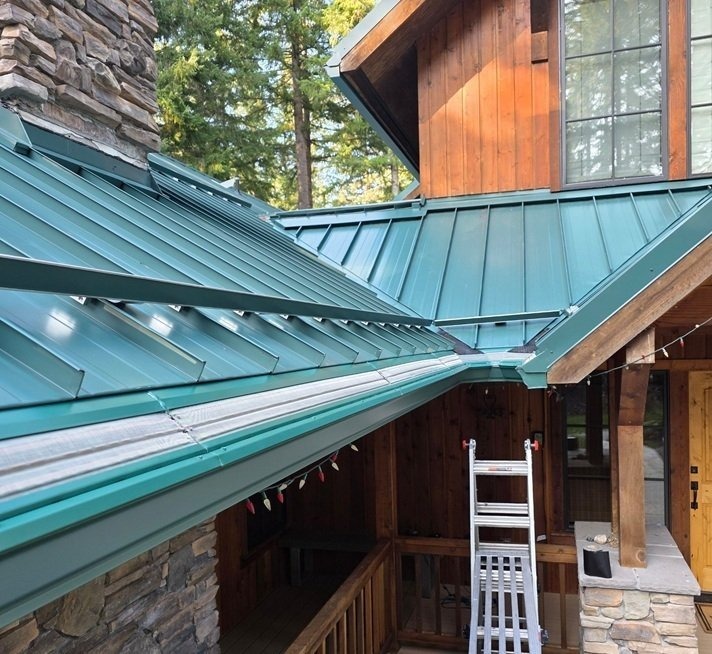
Get gutter guards that shed debris: Choosing a gutter guard that actually sheds debris is essential to prevent embers from igniting debris in gutters. Many gutter guards sit flat in your gutter and create a shelf that collects debris.
Instead, you want a gutter guard that sits at a downward angle to naturally shed debris. MasterShield gutter guards are an example of gutter guards that sit at an angle. Full disclosure: RoofSmart installs MasterShield gutter guards.
-
Install O'Hagin Vents: If you are struggling to figure out how to vent your roof without installing something in the eaves or using soffit vents, the O’Hagin vent might be a good solution. It’s installed on top of your roof, and O’Hagin says it meets California fire codes because it’s designed to keep embers out.
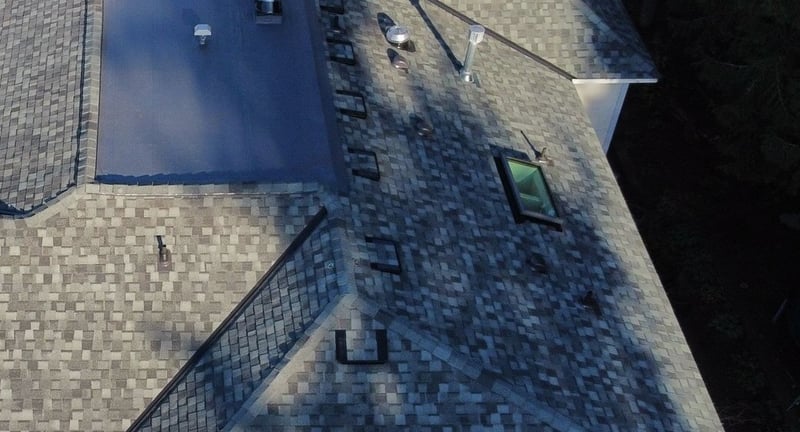
If you aren’t in a WUI or other high-risk zone, but you want to make sure that your roof has superior fire resistance, these are the updates I would recommend making.
If you’re already in a WUI zone, your current roof doesn’t have to change until you replace 50% or more of it. In that case, the only step you can really take is to install a metal or tile roof if you don’t have one already.
Want to know where your roof stands? A free SmartMatch™ Needs Analysis starts with the roof you have now.
What should I do next if I'm planning a Seattle-area roof replacement?
We started with a simple question: is your Seattle-area home in the WUI, and what does that mean for your next roof? Wildfire-resistant roof details matter, but Seattle's new WUI code is not currently in effect while Washington updates its wildfire hazard and risk maps.
When those rules do apply, Class A roof assemblies, vent design, valleys, and noncombustible gutters come into play. Even where they don't, a Class A assembly and less debris at the roof edge still help.
If you're planning a replacement or just want a clear read on your roof, start with a free SmartMatch™ Needs Analysis. Call (206) 487-4877.
An estimator walks your exterior roof and, where it's safe, your attic. You get a plain-English findings sheet that says whether to repair, replace, or monitor. If you don't need a new roof, we say so.
No pressure and no invented deadlines.
Want to see how we'd look at your roof?
Start with a SmartMatch™ Needs Analysis, or call (206) 487-4877.
FAQs About WUI Roof Requirements
1. What is a Wildland-Urban Interface (WUI) area?
A Wildland-Urban Interface is an area where homes and other development meet or intermingle with vegetation and wildland areas that can carry wildfire.
For roofing, WUI construction standards are designed to make it harder for flames and wind-blown embers to ignite a home. Roof coverings, vents, valleys, gutters, eaves, and other parts of the exterior can therefore become important parts of wildfire-resistant construction.
2. How do I know if my Seattle-area home is in a WUI zone?
Don't determine WUI status based only on whether your neighborhood looks wooded. WUI and wildfire-risk requirements are tied to official mapping and the rules adopted by the jurisdiction where the property is located.
This is particularly important right now because Washington's WUI implementation is undergoing changes. Seattle says its new WUI Code is delayed while updated statewide wildfire hazard and risk maps are developed.
Homeowners planning construction should therefore verify the property's current status with their local building department. Source: Seattle Department of Construction and Inspections
3. Does Seattle currently require homes in WUI areas to have Class A roofs?
Seattle's official construction department currently says its new Seattle Wildland-Urban Interface Code has not yet been adopted and does not currently apply to projects. Implementation was delayed pending updated Washington wildfire hazard and risk maps. Source: Seattle Department of Construction and Inspections
Washington law, however, establishes Class A roof assembly requirements that are to be applied to parcels identified as high or very-high hazard under the applicable mapping framework. Because implementation and mapping are evolving, homeowners should verify the rules in effect when their project is permitted. Source: Washington State Legislature
4. What is a Class A fire-rated roof?
A Class A rating is the highest roof fire-resistance classification under the testing standards referenced by Washington's WUI requirements. Importantly, the rating can apply to the complete roof assembly, not necessarily just the visible roofing material. That means the roof covering and other components may need to work together in a tested assembly to achieve the required rating. Source: Washington State Legislature
5. What happens if I replace 50% or more of my roof in a WUI or high wildfire-risk area?
Washington's WUI statute specifically addresses an existing building when 50% or more of its roof covering is replaced within a 12-month period. When the applicable WUI requirements are in force for the property, that replacement must meet the roof-covering requirements for new construction based on the required ignition-resistant construction classification. Source: Washington State Legislature
Because applicability depends on wildfire mapping and the local jurisdiction, confirm the current requirements before beginning a major roof replacement.
6. What roofing material is best for wildfire protection?
Metal is one of the strongest options to consider because the roofing itself is noncombustible and Class A-rated assemblies are available.
Asphalt shingles and other roofing products can also qualify as Class A assemblies when the complete system meets the appropriate testing requirements. The important distinction is that homeowners shouldn't assume a roof's fire resistance based only on the visible roofing material.
7. Why are roof vents important during a wildfire?
Wind-blown embers can potentially enter a structure through ventilation openings, making vent design an important part of WUI construction.
Seattle's draft WUI provisions address both vent location and ember resistance. They specify restrictions on attic ventilation openings in soffits and eave overhangs and call for qualifying vents to use noncombustible, corrosion-resistant mesh with openings no larger than 1/4 inch unless otherwise designed and approved to resist flame or ember penetration. Source: Seattle Department of Construction and Inspections
8. Can I use soffit vents on a WUI-compliant roof?
Under Seattle's draft WUI provisions, attic ventilation openings aren't permitted in soffits, eave overhangs, between rafters at eaves, or other overhang areas. Source: Seattle Department of Construction and Inspections
That means a WUI-focused ventilation design may require a different strategy. A roofer should evaluate both wildfire resistance and the amount of intake and exhaust ventilation the attic requires rather than simply eliminating vents without replacing the necessary airflow.
9. Why do gutters and gutter guards matter for wildfire protection?
Leaves, pine needles, and other dry debris can accumulate in gutters around the roof edge. Reducing that accumulation removes combustible material from a vulnerable part of the home.
Seattle's draft WUI provisions call for noncombustible gutters and downspouts and an approved method for preventing leaves and debris from accumulating in gutters. Source: Seattle Department of Construction and Inspections
A metal gutter guard designed to shed debris can therefore be useful as part of a broader wildfire-resistant roofing strategy.
10. What can I do to make my roof more fire resistant even if I'm not in a WUI?
Start by evaluating the complete roofing system rather than focusing only on the shingles. A fire-resistant strategy can include a qualifying Class A roof assembly, noncombustible roofing and drainage components, ember-resistant ventilation, properly protected valleys, and keeping combustible leaves and needles from accumulating on the roof and in gutters.
For homeowners already planning a replacement, it's also worth asking the roofer how the proposed system addresses ember entry and fire resistance. These upgrades can be considered even when WUI construction requirements don't currently apply to the property.
Topics:
