

TL;DR: Summary
The grade of stainless steel you install on your Seattle roof matters because different grades have different levels of corrosion resistance. While 304 stainless steel can work well away from saltwater environments, 316L marine-grade stainless steel is the better choice for homes near Puget Sound or the ocean because it is designed to withstand exposure to the salty ocean air that causes corrosion in metal.
The grade also matters for smaller roof components like screws, gutters, and gutter guards. These should be compatible with your roofing material and environment. Using lower-grade fasteners near saltwater, pairing the wrong metals together, or using unsuitable fasteners with treated cedar shakes can lead to corrosion and premature roof failure even when the primary roofing material is still in good condition.
The key takeaway: choose stainless steel based on your home’s environment, and don’t overlook the fasteners and other metal components. For Seattle-area homes exposed to marine conditions, using 316-grade stainless steel throughout the roofing system can help prevent corrosion and protect your investment for the long term.
Are you considering stainless steel for your Seattle-area roof because you want a durable material that won’t rust, but worried that you could spend all that extra money and still end up with corrosion? Are you unsure if your roofer is choosing the right grade of stainless steel for your roof panels, screws, and other roof parts?
At RoofSmart, we’ve helped over one hundred homeowners choose the right material for their home near the ocean. We have seen how using the wrong grade of stainless steel or pairing incompatible metals can lead to corrosion, fasteners coming loose long before they should, and roofs failing prematurely.
In this article, we’ll explain the differences between 400-, 304-, and 316-grade stainless steel, which grades work best for Seattle and marine environments, and why choosing compatible screws, gutters, and gutter guards is just as important as choosing the right metal for your roof.
What are the different grades of stainless steel metal roofing?
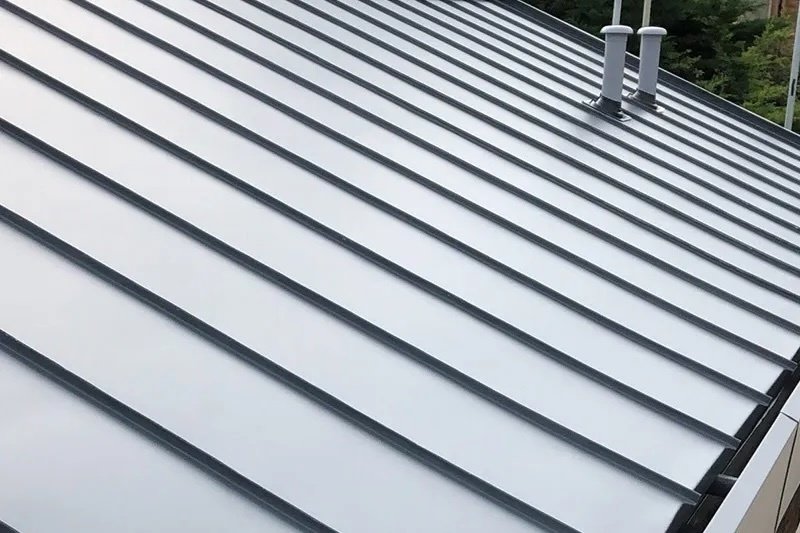
Image from TBK Metal
Stainless steel is a durable, high-quality metal roofing material. But what most homeowners don’t realize is that there are different grades of stainless steel metal roofing, and it’s really important to choose the right one for your environment.
Broadly, there are two different types of stainless steel that are used in general construction: 300 series and 400 series. Here is a breakdown of the different grades of stainless steel that metal manufacturers use to make metal roofing panels:
- 400 Series: This grade has a high iron content, which makes it magnetic. It also makes it stronger than other grades. The downside is that it rusts, so it’s not a good fit for Seattle-area homeowners who live near the ocean.
- 304 Series: This is surgical-grade stainless steel. It’s a good material, but it’s not totally corrosion-resistant near the ocean. It is non-magnetic and rust-resistant, but not great for saltwater environments. It’s technically meant for indoor use, but manufacturers still use it to make roofing panels. It’s actually a common choice for stainless steel roofing.
- 316L Series: This is marine-grade stainless steel. Contains molybdenum (for saltwater) and has low carbon for better weldability. It’s not quite as strong as the 400 series, but still plenty strong. It's lighter, and it's not magnetic. If you have a home in Puget Sound or anywhere near the ocean and you want stainless steel on your home, this is the grade you need.
How do I know which one is right for my Seattle roof?
You can order 400 series stainless steel for your roof, but that’s not a very common choice. In the Seattle area, homeowners with stainless steel have either 304 or 316 grade stainless steel.
The decision between the 304 and 316 grades depends on your home’s proximity to the ocean. If you’re far enough away, you don’t need to worry about corrosion. However, the ocean air is hard on 304-grade stainless steel, so you need to upgrade it to the 316 grade to provide the best protection against corrosion.
Does it matter what grade of stainless steel my roofing screws or gutters are made of?
Just like with your metal roof panels, items like screws and gutters can also come in varying grades of stainless steel. Your best bet is to match the grades of metal together. So, for example, if your home is near the ocean, then your screws and gutters should also be 316-grade stainless steel.
400 series stainless steel is often used to make the screws. It’s appealing to some roofers because they’re magnetic and stick in the nut driver, but they shouldn’t be used near the ocean.
You could do a 410 series stainless steel for your screws, and they'll last better than a zinc-coated screw, but they're still going to fall apart in a tough environment (aka a marine environment).
If you have a 304 grade metal roof, then 304 or 410 grade stainless steel screws are fine.
Stainless Steel Grades for Roof Panels, Screws, and Gutters
|
Stainless Steel Grade |
Key Characteristics |
Corrosion Resistance |
Best Use |
Good Choice Near Puget Sound/Ocean? |
|
400 Series |
High iron content, magnetic, strong |
Lower corrosion resistance |
General construction away from marine environments |
No |
|
304 Series |
Surgical-grade, non-magnetic, rust-resistant |
Good in normal environments, but vulnerable to saltwater exposure |
Seattle-area roofs away from marine exposure |
Not recommended near saltwater |
|
316L Series |
Marine-grade, contains molybdenum, low carbon |
Excellent resistance to marine corrosion |
Coastal homes and homes exposed to Puget Sound salt air |
Yes |
|
410 Stainless Screws |
Magnetic and more durable than zinc-coated screws |
Better than zinc-coated fasteners, but not ideal for marine exposure |
Fasteners away from harsh marine environments |
No |
|
316 Stainless Screws |
Marine-grade stainless fasteners |
Excellent |
316 stainless roofs, coastal homes, and pressure-treated cedar shake |
Yes |
|
316 Stainless Gutters/Components |
Designed for harsher corrosive environments |
Excellent |
Gutters, gutter guards, and other roof components exposed to salt air |
Yes |
When can using the wrong screws or gutter materials cause corrosion?
Although I’ve mainly focused on avoiding corrosion in a marine environment with this article, it’s also important to understand when using the wrong grade of stainless steel with another material can cause corrosion, even if you’re not near the ocean.
For example, if you’re installing pressure-treated cedar shakes, you need to use 316-grade stainless steel screws because the shakes have been treated with chemicals that are corrosive to the other grades of stainless steel screws.
At RoofSmart, we come across a lot of shake roofs where the shakes are just falling out because the installer used cheap fasteners. The roof is falling apart even though the shakes are still fine, all because the screws corroded.
These details matter because you can pay for a really high-quality roof, but if the contractor either didn't know or shaved a few bucks by substituting a less expensive fastener, then you might be out of luck.
This also comes into play in the gutter guard category. There are a bunch of gutter guards with surgical stainless steel filters that are indoor grade. If you install that on an asphalt shingle roof with copper granules, the runoff can corrode 304 stainless steel.
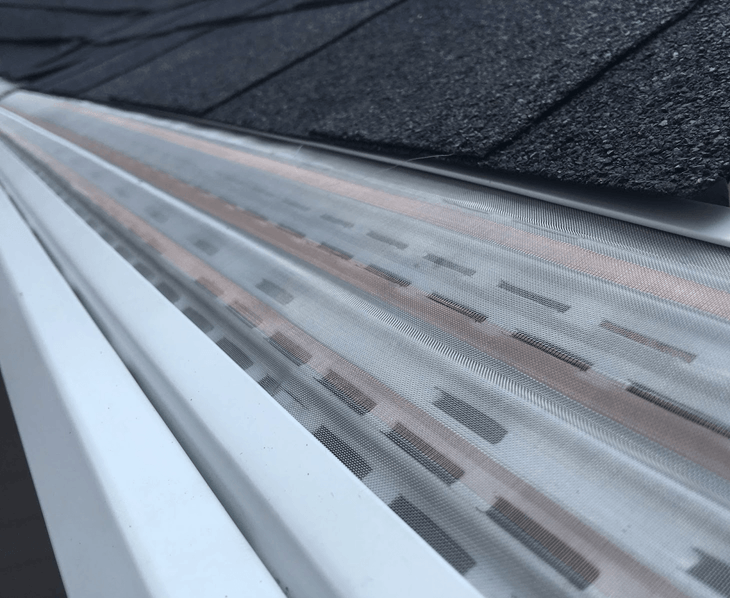
It’s best to get a gutter guard with a 316 stainless steel filter that has copper woven into it. This will protect it from corrosion. A great example of this is the MasterShield gutter guard, which has a stainless steel filter with copper woven in:
When you have a metal roof, no matter what kind it is, be aware of what kind of metal your gutter and gutter guards are made of because mixing the wrong kinds of metal can cause corrosion on your roof. Check out our article “Can Mixing Different Metals on My Roof Actually Cause It to Rust Faster?” to learn which metals you can and cannot mix on your roof.
How much does a stainless steel metal roof cost in the Seattle area?
If you live near Puget Sound or another marine environment, paying more for 316-grade stainless steel (and making sure your fasteners and other components are compatible) can help protect your roof from premature corrosion.
If you’re considering a metal roof, your next question is probably how much you’ll actually need to budget for the project. The type and grade of metal you choose are only part of the final price; your roof’s size, complexity, labor requirements, and other installation details can also affect your total.
Read our article “How Much Does It Cost to Install a Metal Roof in the Greater Seattle Area?” to learn what Seattle-area homeowners can expect to pay for a metal roof, what factors can increase or decrease the price, and how to decide if the long-term benefits are worth the upfront investment for you.
Frequently Asked Questions About Grades of Stainless Steel
1. What is the best grade of stainless steel for a roof near Puget Sound?
316L stainless steel is the best option discussed in this article for homes exposed to Puget Sound or other marine environments. It contains molybdenum, which improves its ability to withstand saltwater-related corrosion. If your home is close to saltwater, 316L is a better roofing choice than 304 or 400 series stainless steel.
2. What is the difference between 304 and 316 stainless steel roofing?
The biggest practical difference for Seattle-area homeowners is corrosion resistance. Both are high-quality stainless steels, but 316 is better suited for saltwater environments. If your home is far enough away from marine exposure, 304 may work well. Homes exposed to salty ocean or Puget Sound air should consider 316 instead.
3. Can 304 stainless steel roofing rust near the ocean?
304 stainless steel is rust-resistant, but it is not the best choice for a saltwater environment. Marine exposure can cause corrosion, which is why 316-grade stainless steel is a better option for homes near the ocean or Puget Sound.
4. Is 400 series stainless steel good for roofing in Seattle?
It depends on the environment. The 400 series has a high iron content and is strong, but it is more vulnerable to rust. That makes it a poor choice for Seattle-area homes exposed to marine conditions.
5. Should my roofing screws be the same stainless steel grade as my roof?
Matching compatible grades is a good rule to follow. If you're installing a 316 stainless steel roof because your home is in a marine environment, the fasteners should also be 316 stainless steel. Installing lower-grade fasteners can create a weak point even when the roofing panels themselves are highly corrosion-resistant.
6. Can cheap roofing screws cause a roof to fail?
Yes. The roofing material can remain in good condition while low-quality or incompatible fasteners corrode and fail. RoofSmart has encountered cedar shake roofs where the shakes were still usable but were falling out because the installer used fasteners that corroded.
7. Why is 316 stainless steel recommended for pressure-treated cedar shake?
Pressure-treated cedar shakes contain chemicals that can be corrosive to certain metal fasteners. According to the recommendations discussed in this article, 316-grade stainless steel screws should be used with pressure-treated cedar shake to reduce the risk of premature fastener corrosion.
8. Do stainless steel gutters and gutter guards need to be marine-grade too?
They may if your home is exposed to a marine environment. The corrosion resistance of your roof shouldn't stop at the roofing panels. Screws, gutters, gutter guards, and other metal components also need to be selected for the conditions they'll experience.
9. Can mixing different metals on a roof cause corrosion?
Yes. Certain combinations of metals can contribute to corrosion, especially when water runoff carries material from one metal onto another. This is why homeowners with metal roofing should pay attention to the metals used for gutters, gutter guards, fasteners, and other roof components, not just the primary roofing panels.
10. Is 316 stainless steel worth it for a Seattle roof?
It depends primarily on your home's environment. If you're away from marine exposure, upgrading every component to 316 may not be necessary. However, if your home is exposed to salt air from Puget Sound or the ocean, investing in 316 stainless steel can help protect the roof and its fasteners from corrosion.
Topics:
