

TL;DR: Summary
A tapering system is usually overlooked in reroof applications. It's usually assumed that what's already there is just fine. But is it?
A tapering system is one of the most important features of a flat roof because it directs water toward drains and prevents damaging ponding water from collecting on the roof. Without proper drainage, standing water can accelerate membrane wear, worsen condensation, increase the risk of leaks, and eventually lead to mold, rot, and costly structural damage.
Modern taper systems use custom-designed insulation or framing to create a gentle slope that improves drainage while protecting the roof from premature failure.
The key takeaway: adding a tapering system increases the upfront cost of a flat roof or rooftop deck, but it is one of the best long-term investments for preventing water damage and extending the life of your roof in Seattle's wet climate.
Does water sit on your flat roof or rooftop deck for days after it rains, leaving you wondering if it's quietly causing damage you can't see? Have you been told your roof needs a taper system but aren't sure whether it's really necessary or just an expensive upgrade that won't make much of a difference?
At RoofSmart, we have installed and replaced over one hundred flat roofs and rooftop decks in the Seattle area. If our customer doesn’t already have a taper system installed, then we typically recommend getting one to help their roof last as long as possible and prevent water damage from leaks.
In this article, we'll explain what a taper system does, why it's so important for flat roofs and rooftop decks, what can happen if your roof doesn't have one, how roofers design these systems, and why adding a taper system can significantly affect the cost of your roofing project.
Flat Roof Taper Systems at a Glance
|
Topic |
Flat Roof Without a Taper System |
Flat Roof With a Taper System |
|
Water Drainage |
Water can pond for days after rain |
Water is directed toward drains |
|
Risk of Ponding Water |
High |
Low |
|
Condensation Risk |
Increased because standing water cools the roof |
Reduced by allowing water to drain quickly |
|
Roof Membrane Lifespan |
Shorter due to prolonged moisture exposure |
Longer because water doesn't sit on the membrane |
|
Leak Potential |
Higher |
Lower |
|
Manufacturer Warranty |
Ponding water may void some warranties |
Better chance of meeting warranty requirements |
|
Structural Load |
Standing water adds significant weight |
Water drains before excessive weight accumulates |
|
Retrofit Difficulty |
Existing problems remain |
May require raising doors, HVAC units, or other roof features |
|
Installation Cost |
Lower upfront |
Higher upfront due to custom design and labor |
|
Long-Term Value |
Greater likelihood of future repairs |
Helps extend the roof's service life and reduce repair costs |
Does every flat roof or rooftop deck need a taper system?
New buildings are required to have a taper system if they have a flat roof, but a lot of older buildings do not have one. If you are getting your flat roof or rooftop deck replaced, then I recommend installing a taper system at the same time.
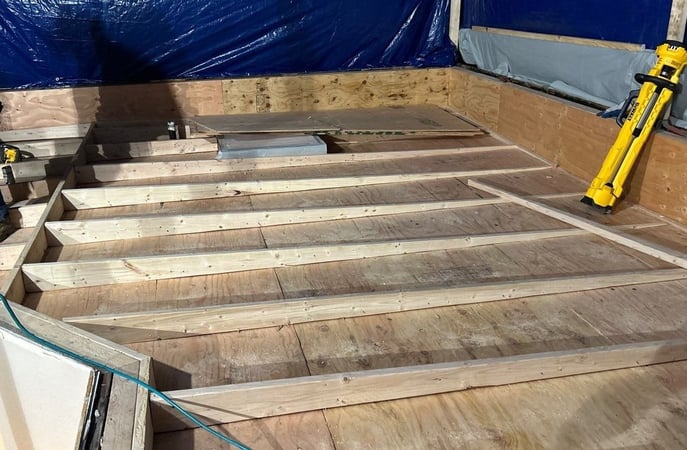
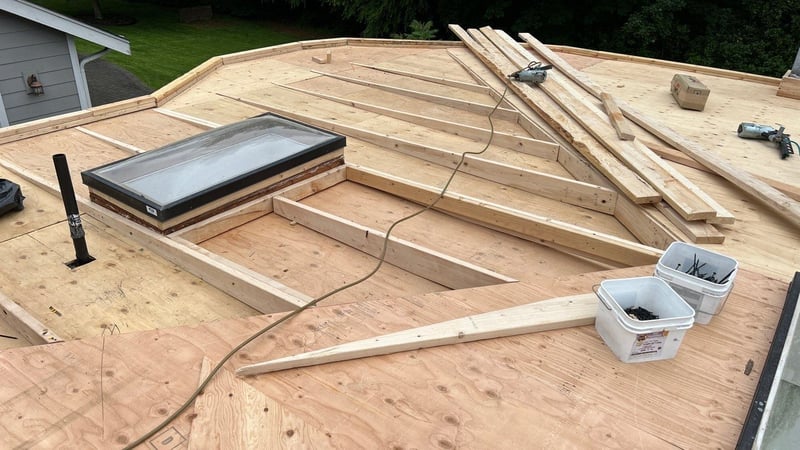
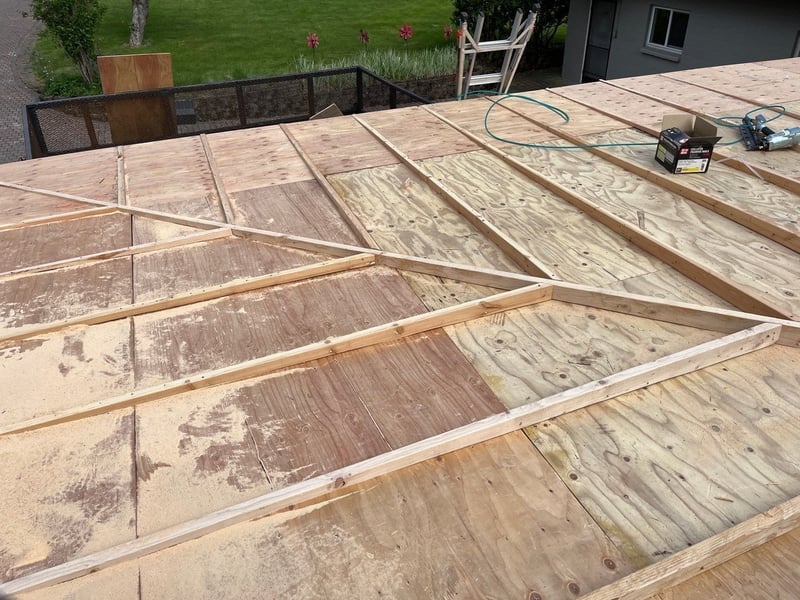
Taper systems prevent water from collecting on your roof and just sitting there, which adds weight, increases condensation risk, and even voids most manufacturer warranties. Some taper systems are built with wooden boards to angle the roof, while others are simply made of layered foam insulation.
In a rainy area like Seattle, it’s reasonable to expect that there will be a little bit of water on your flat roof, but if the water is consistently one inch or deeper, then this is when you’ll start to have problems.
Condensation is a huge concern on flat roofs and rooftop decks. Excessive moisture can cool down the roof too much, which will make your condensation problem worse (if you have one). A taper system will keep large amounts of water from building up.
It's good to note that most low-slope roofing manufacturers say you want to avoid ponding water on your roof.
What happens when ponding water is left to sit on my flat roof?
Ponding water can wreak havoc on your flat roof by making condensation worse, wearing down your roof membrane, or feeding leaks:
- Condensation issues: A lot of flat roofs and rooftop decks in the Seattle area are vulnerable to condensation because they were not insulated properly. Ponding water gathering on the roof and cooling it down only makes this problem worse. Condensation will build up on the underside of your roof deck, and then soak into it. This causes the wood in your roof to rot and grow mold, until eventually the roof is crumbling above you.
- Wearing down membrane: The vast majority of roof membranes do not handle ponding water well. They are not meant to sit underneath a significant amount of water, so when this happens, it wears the membrane down and causes it to fail prematurely.
- Feeding leaks: When your roof membrane is worn down, it is also susceptible to leaks. With a bunch of water sitting on top of it, these leaks can go on for a while and cause a lot of damage.
Not to mention that your flat roof is only rated to handle a certain amount of weight. Water is very heavy, and if your roof is weak, it can collapse or implode if too much water builds up. It would take a lot of water for this to happen, though.
The best way to prevent ponding water and protect your roof from all kinds of damage is to set up a tapering system that helps the water naturally flow toward the drain without giving it the option to sit on the roof.
How do you taper a flat roof or rooftop deck?
There are basic steps that your roofer should follow when installing your roof’s taper system. Each one is custom designed. The layout depends on where high and low points are on your roof and where the drains are located.
It's fairly common to go from maybe an inch thick at the edge to eight or ten inches at the high point. The boards are cut and laid out to create a minimum 1/4" per foot slope to drains.
If you have things on the roof like a door leading out onto the roof or an air conditioning unit, sometimes they need to be raised up. The whole door frame needs to be taken apart and reframed higher so that there's room to taper the roof.
There are a lot of features that you have to fight or figure out in a retrofit because it might’ve been designed wrong in the first place (like the door frame).
How much does it cost to add a tapering system?
Setting up your flat roof the right way can be expensive. Adding a tapering system can easily add tens of thousands of dollars to your total project cost (maybe even more, depending on the complexity of the roof).
Adding a tapering system can increase the total job cost by 50% to 100% due to additional material and labor costs.
The tapering system is custom-made for your roof and sometimes requires adjusting the level of other things on the roof (like the doorframe or HVAC unit). This additional labor can really drive up the price, especially in Seattle where the cost of living is so high.
While it’s true that installing a tapering system is expensive, it can be much more expensive to replace your roof early or have to replace rotting wood caused by condensation or leaks.
How much does it cost to install a flat roof in Seattle?
A taper system is one of the most important investments you can make in the long-term performance of a flat roof or rooftop deck. By directing water toward drains instead of allowing it to pond, it helps reduce the risk of condensation, premature membrane failure, leaks, and even structural damage.
Although adding a taper system increases the upfront cost of a roofing project, it can also help you avoid much more expensive repairs and an early roof replacement down the road.
Because every flat roof is different, the cost of installing a taper system can vary significantly. Plus, a taper system is just one of the many factors that can drive up the cost of installing a flat roof in Seattle.
Read our article “How Much Does It Cost to Install a Flat Roof in Seattle?” to learn the average cost of installing a flat roof in the Seattle area, the biggest factors that influence pricing, and what to expect before starting your project.
Frequently Asked Questions About Flat Roof Tapering Systems
1. What is a taper system on a flat roof?
A taper system is a specially designed layer of insulation or framing that creates a gentle slope across an otherwise flat roof. Its purpose is to direct rainwater toward drains or scuppers instead of allowing it to collect in low spots.
2. Does every flat roof need a taper system?
Modern building codes typically require new flat roofs to provide positive drainage. While many older buildings were built without taper systems, adding one during a roof replacement can significantly improve drainage and help prevent future moisture-related problems.
3. Why is ponding water bad for a flat roof?
Standing water increases the amount of time moisture stays on the roof. This can accelerate membrane deterioration, increase the likelihood of leaks, contribute to condensation issues inside the roof assembly, and add unnecessary weight to the structure.
4. How much slope does a flat roof need?
Most tapered insulation systems are designed to provide a minimum slope of approximately 1/4 inch per foot toward drains. The exact design depends on the roof layout, drain locations, and existing structural conditions.
5. What materials are used to build a taper system?
Many modern taper systems use rigid foam insulation boards of varying thicknesses to create the slope. Some roofs may also use wood framing or sleepers, depending on the building's design and the project's structural requirements.
6. Can a taper system be added to an existing flat roof?
Yes. During a roof replacement, contractors can often install a custom tapered insulation system. However, retrofits may require modifications to roof features such as doors, curbs, skylights, HVAC equipment, or parapet walls to accommodate the added height.
7. How do roofers design a taper system?
Every taper system is custom-designed for the specific roof. Contractors evaluate:
- Roof dimensions
- Drain locations
- High and low points
- Existing rooftop equipment
- Door thresholds
- Building height restrictions
The goal is to move water efficiently toward drainage points without creating new low spots.
8. Will adding a taper system make my roof thicker?
Yes. Because the insulation gradually increases in thickness across the roof, some areas become several inches higher than others. On larger roofs, tapered insulation may range from about one inch thick near drains or edges to eight inches or more at the highest points.
9. Is installing a taper system worth the extra cost?
Although tapered systems increase the upfront cost of a roof replacement, they can help reduce the likelihood of ponding water, membrane failure, leaks, condensation damage, and premature roof replacement. For many building owners, the long-term benefits outweigh the initial investment.
10. What other upgrades are commonly installed with a taper system?
Since a taper system changes the height and drainage of the roof, contractors often perform other improvements at the same time, including:
- New insulation
- Roof membrane replacement
- Drain or scupper upgrades
- Improved flashing
- Raising door thresholds or equipment curbs
- Additional waterproofing around penetrations
Topics:
