

TL;DR: Summary
For very steep roofs (12/12 or steeper), the roofing material you choose matters because weight, construction, and installation requirements can affect how well the roof performs. Metal, premium cedar shake, and standard architectural asphalt shingles are good options for steep Seattle roofs, while very heavy or thin shingles and 3-tab shingles can be more vulnerable to problems. Slate and tile can also work, but their weight may require additional structural reinforcement.
Steep-slope roofs also take more time and expertise to install. Depending on the material, manufacturers may require additional steps such as precise nail placement or hand sealing, while roofers may need scaffolding and extra safety measures. Metal roofs can also shed water very quickly on steep slopes, potentially requiring larger gutters and gutter guards capable of handling the increased runoff.
The key takeaway: For a steep Seattle roof, choose a roofing material that can handle the angle without excessive weight or structural stress. Metal, premium cedar shake, and properly installed architectural shingles are strong options, but the roof’s structure, installation requirements, drainage, and gutter system should all be considered before choosing a material.
Do you have an unusually steep roof and worry that the roofing material you choose could start pulling apart, slipping, or failing under its own weight? Are you concerned that replacing a 12/12-or-steeper roof could already cost more because of the extra labor and safety requirements—only to find out later that your roofer installed a material that wasn’t well suited for such an extreme slope?
At RoofSmart, we’ve repaired and replaced hundreds of steep-slope roofs throughout the Greater Seattle area, and we’ve seen firsthand that materials that perform well on a standard roof don’t always perform the same way on an extreme pitch. The material’s weight, construction, fastening requirements, water runoff, and even your gutter system all become more important when your roof is this steep.
In this article, I’ll explain which roofing materials we recommend and which ones we would avoid on roofs with a 12/12 pitch or steeper. I’ll also cover the additional installation and safety requirements that can make these projects take longer, why some asphalt shingles are better suited to steep slopes than others, and how your roof’s pitch can affect your gutters and gutter guards.
What’s the worst roofing material to install on a steep-slope roof?
Typically, asphalt shingles can have a lot of problems on a steep slope. Here are the styles of shingles you should definitely avoid on a steep roof:
- Heavy shingles (like thick luxury or designer shingles)
- Extremely thin architectural shingles
- 3-tab shingles
- Slate or tile
On a roof with a very steep slope, heavier asphalt shingles should be avoided because they can delaminate and start to pull apart under their own weight over time while they are sitting on the roof.
The heavier the shingle, the more pressure on the sealant. Think of it like a heavy sweater stretching on a cheap hanger. They’re not designed to sit on the hanger and be pulled down like that. Eventually, the sweater will be ruined, just like your roof.
An example of that is the now-discontinued GAF Grand Canyon. Unfortunately, for some reason, there was more than one house with a steep slope where I saw this shingle in particular fall apart. I haven’t seen any GAF shingles have the same frequency of delamination issues since it has been discontinued
On the other hand, even though thin architectural shingles and 3-tab shingles weigh less than heavy shingles, they do not have enough structural integrity to stay together at a steep angle. They’re more likely to fall apart.
You can add slate or tile, but the big issue there on a steep slope is the weight. The material itself will hold up fine on the roof, but you’ll need to hire an engineer to make sure that the roof and walls are properly reinforced for the weight of slate or tile. It will be a very expensive roof installation.
Note: For the purposes of this article, anything that is 12/12 or steeper is considered a steep-slope roof. This is important to clarify because some manufacturers consider a 4/12 slope to be steep. But we’d consider that to be more of a standard slope.
Here's what different roof slopes look like from 1/12 all the way to 18/12:
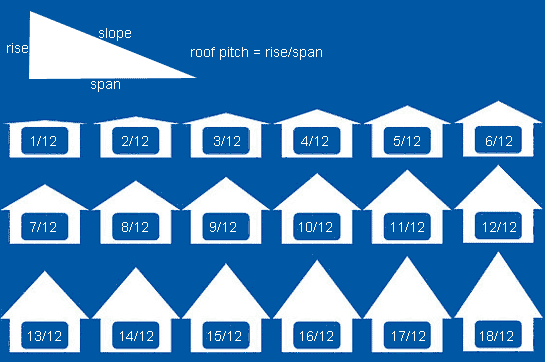 Image from Kentucky Metal Roofing
What’s the best roofing material to install on a steep-slope roof?
There are some roofing materials that work well on a steep slope. Here are the top options:
- Metal: An excellent choice for steep roofs because it is lightweight but still very strong. The panels are secured together with screws, so you don’t have to worry about them falling apart.
- Premium Cedar Shake: This is the ideal steep-slope roofing material because it drains quickly and prevents rot. It is not at risk of failure from water because the slope is so steep that the water just runs right off. It’s actually at a much lower risk of water damage when the roof is steeper. When cedar shake is able to stay dry, it lasts a long time.
- Asphalt Shingles: Pick a standard architectural shingle for the right balance of weight and quality shingle construction.
- Example: One example of this is the Owens Corning Duration shingle. It is a great option because of the SureNail strip technology it’s built with, which provides superior reinforcement. On other shingles, the nail strip is so small that it’s difficult to hit the nails on it every time.
Best and Worst Roofing Materials for Steep-Slope Roofs
|
Roofing Material |
Good for a 12/12+ Steep Slope? |
Main Advantage or Concern |
What Seattle Homeowners Should Know |
|
Metal roofing |
Yes |
Lightweight, strong, and mechanically secured |
An excellent steep-slope option, but fast water runoff may require larger gutters |
|
Premium cedar shake |
Yes |
Steep slopes shed water quickly, helping cedar stay dry |
One of the best applications for cedar because reduced moisture exposure can help prevent rot |
|
Standard architectural asphalt shingles |
Yes, with proper installation |
Balances weight with structural integrity |
Choose a well-constructed architectural shingle and follow all steep-slope installation requirements |
|
Owens Corning Duration shingles |
Yes, based on RoofSmart's experience |
SureNail strip provides additional reinforcement at the fastening area |
An example of an architectural shingle RoofSmart considers well suited to steep applications |
|
Heavy luxury/designer asphalt shingles |
Generally avoid |
Excess weight can put additional stress on the shingle and sealant |
RoofSmart has observed delamination problems with some heavy shingles on very steep roofs |
|
Extremely thin architectural shingles |
Generally avoid |
May lack sufficient structural integrity |
Lightweight doesn't automatically make a shingle appropriate for an extreme slope |
|
3-tab asphalt shingles |
Generally avoid |
Limited structural integrity for very steep applications |
A stronger architectural shingle is preferred |
|
Slate |
Possible, but complicated |
Extremely heavy |
An engineer may need to determine whether the roof and walls require reinforcement |
|
Tile |
Possible, but complicated |
Extremely heavy |
Structural requirements can make installation significantly more expensive |
|
Steep-slope definition in this article |
12/12 pitch or steeper |
Different manufacturers may define “steep slope” differently |
Always check the specific roofing manufacturer's requirements before installation |
Are there different requirements for roofers installing roofs on a steep slope?
Every roofing material has different installation requirements, but it’s usually a matter of following the manufacturer’s installation instructions. In some cases, it’s the same for a steep slope, while other times there are additional requirements.
For example, some of the asphalt shingle manufacturers will say you need to get the nail exactly in the nail strip, and you need to hand seal the shingles. To hand seal the shingles, the roofer adds a quarter-sized dollop of roofing cement on each of the corners.
So, you can imagine how much more time this would take. Pretty much all steep-slope roofing jobs take around two times longer due to additional installation requirements and safety needs. Roofers usually have to set up scaffolding and navigate it to access the roof rather than walking directly on the roof like they would on a less steep slope.
Does having a steep-slope roof affect your gutters?
On a steep slope, larger gutters may be needed if your new roof material significantly increases water runoff speed. This is usually only needed if you install a metal roof because the water shoots right off of those.
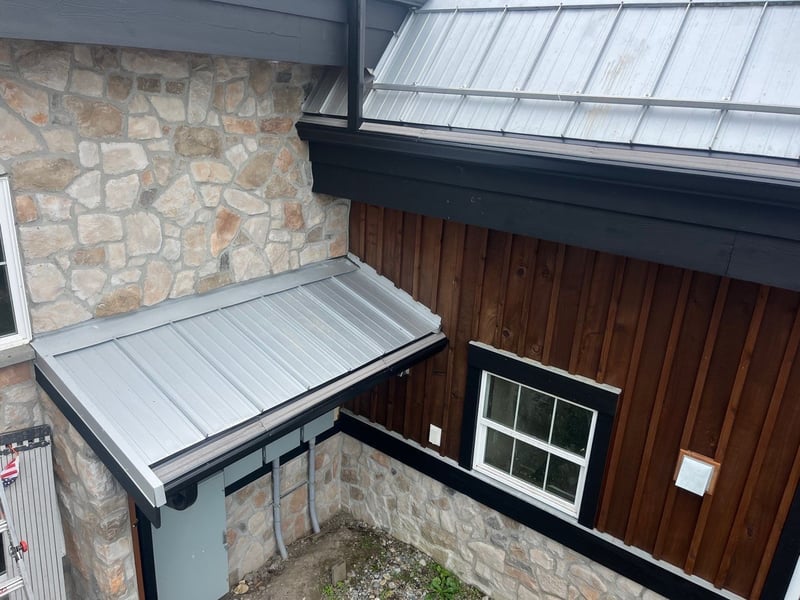
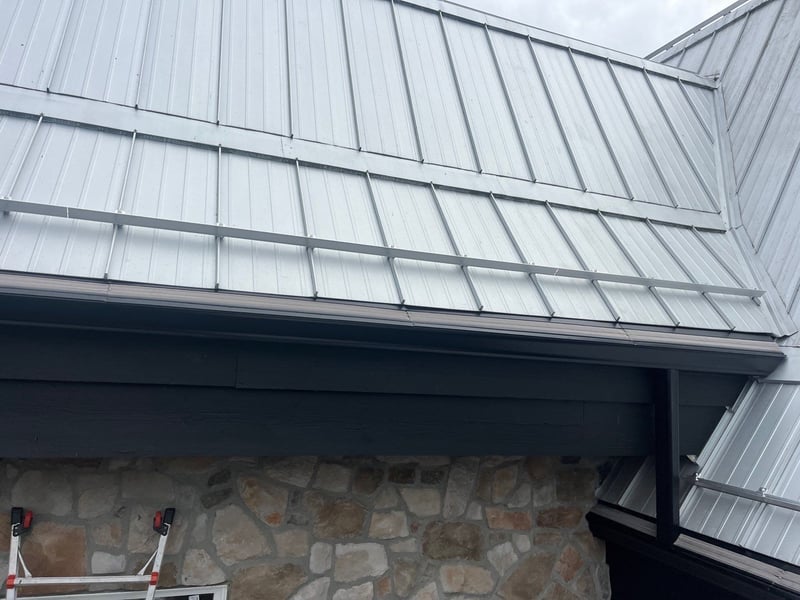
Another important factor to consider is that most gutter guards fail on steep slopes because they cannot handle large amounts of water hitting them all at once. We have seen MasterShield gutter guards be very successful on steep-slope roofs, though.
This is what MasterShield looks like installed on the roof:
How does roof pitch affect your Seattle roof replacement?
If your roof has a 12/12 pitch or steeper, choosing a roofing material isn’t just about appearance, price, or expected lifespan. The extreme angle can affect how certain shingles perform, how quickly water leaves the roof, which gutters and gutter guards will work, and how your roofing contractor needs to approach the installation.
As we’ve seen on steep Seattle-area roofs, material choice matters. Heavy designer shingles can put additional stress on their sealant and construction, while very thin shingles may lack the structural integrity you want at an extreme angle. Metal, premium cedar, and properly selected architectural asphalt shingles can be better suited to these roofs, but each still comes with its own installation requirements.
Your roof pitch can also affect the complexity and cost of the project. A steep roof may require scaffolding, additional safety precautions, hand sealing, and more labor, which is why these projects can take significantly longer than a standard roof replacement.
Read our article “What Is Roof Pitch and Why Does It Matter on My Seattle Home?” to learn how roof pitch is measured and how it can influence your roofing materials, installation, cost, and overall roof performance.
Frequently Asked Questions About Roofing on a Steep Slope
1. What is considered a steep-slope roof?
For the purposes of this article, RoofSmart considers a roof with a pitch of 12/12 or steeper to be a steep-slope roof. A 12/12 pitch means the roof rises 12 inches vertically for every 12 inches it runs horizontally.
Some roofing manufacturers use different definitions and may consider slopes such as 4/12 to be steep. That's why homeowners and roofers should distinguish between the general term “steep slope” and the requirements published for a specific roofing product.
2. What is the best roofing material for a very steep roof?
Metal, premium cedar shake, and properly selected architectural asphalt shingles are the top options discussed in this article.
Premium cedar performs particularly well because a steep roof sheds water quickly, helping the cedar stay dry. Metal is another strong option because it's lightweight and the panels are mechanically secured. If you prefer asphalt, RoofSmart recommends choosing a standard architectural shingle with enough structural integrity without becoming excessively heavy.
3. Can you install asphalt shingles on a 12/12 roof?
Yes, but choosing the right asphalt shingle and following the manufacturer's installation requirements are especially important.
RoofSmart recommends avoiding extremely heavy luxury shingles, very thin architectural shingles, and 3-tab shingles on very steep roofs. A standard, well-constructed architectural shingle provides a better balance between weight and strength.
4. Why can heavy asphalt shingles be a problem on steep roofs?
On an extremely steep roof, gravity places continuous downward force on the roofing material. According to RoofSmart's field experience, excessively heavy shingles can place additional stress on the sealant and potentially contribute to the shingle pulling apart or delaminating over time.
That's why the heaviest or most expensive asphalt shingle isn't automatically the best product for a very steep roof.
5. Why aren't 3-tab shingles recommended for very steep roofs?
Although 3-tab shingles are lighter than luxury asphalt shingles, RoofSmart doesn't recommend them for very steep applications because they don't provide the same structural integrity as a stronger architectural shingle.
The goal isn't simply to find the lightest possible asphalt product. You need a shingle that provides an appropriate balance of weight, construction, fastening, and strength for the extreme angle.
6. Is metal roofing good for a steep-slope roof?
Yes. Metal is one of the strongest options discussed in this article for a very steep roof because it's relatively lightweight while remaining strong and securely fastened.
Metal panels are mechanically secured, so you don't have the same concern about individual asphalt shingles pulling apart under their own weight. One tradeoff is that water can move off a steep metal roof very quickly, which may affect gutter requirements.
7. Is cedar shake good for a steep roof in Seattle?
Yes. Premium cedar shake can be particularly well suited to steep roofs because the extreme slope allows Seattle's frequent rain to drain quickly.
Cedar is more susceptible to problems when it remains wet for extended periods. On a steep roof, water runs off quickly, allowing the cedar to dry more effectively and reducing the conditions that contribute to rot.
8. Do shingles need to be hand-sealed on a steep roof?
They may. The exact requirements depend on the shingle manufacturer and product.
Some manufacturers require roofers to place nails precisely within the designated nail strip and hand-seal shingles on steep applications. As described in this article, hand-sealing can involve applying a quarter-sized amount of roofing cement at specified locations on the shingle. Your roofer should follow the installation instructions for the exact product being installed.
9. Why does a steep-slope roof cost more to install?
Steep roofs require more labor, safety equipment, and careful installation. According to RoofSmart's experience, these projects can take around twice as long as comparable roofs with less extreme slopes.
Instead of simply walking across the roof, crews may need scaffolding and other safety measures to access each section. Product-specific requirements, such as additional fastening or hand-sealing shingles, can further increase installation time.
10. Do I need larger gutters on a steep-slope roof?
Possibly. The roof's pitch and roofing material affect how quickly rainwater reaches the gutters. This becomes particularly important with a steep metal roof, where water can move off the smooth surface very quickly.
That faster runoff may require larger gutters capable of handling the volume of water arriving at once. Gutter guards also need to be selected carefully because many systems can struggle when large amounts of water rapidly flow down a steep roof.
Topics:
