

TL;DR: Summary
Dry rot is wood that has been damaged by fungal decay after repeated cycles of moisture and drying, and it can continue to weaken your roof long after the wood appears dry.
In Seattle's wet climate, dry rot commonly affects roof decking, siding, framing, fascia, and trim after leaks or condensation problems, eventually compromising your roof's structural integrity if left untreated.
The best way to prevent dry rot is to eliminate moisture at its source through proper roof installation, effective ventilation, prompt leak repairs, and durable, moisture-resistant building materials.
The key takeaway: dry rot is a symptom of an underlying moisture problem, not the root cause. Fixing the source of the moisture is just as important as replacing the damaged wood if you want your roof to last.
Have you noticed crumbling wood, peeling paint, or a musty smell around your roof and worried that a small moisture problem could actually be hidden structural damage? Are you wondering whether the "dry rot" someone mentioned is already spreading through your roof without you realizing it?
Dry rot isn't harmless just because the wood has dried out. Once fungal decay begins, it can continue weakening your roof decking, framing, fascia, and siding over time, especially in Seattle's cycle of wet winters and dry summers.
At RoofSmart, we thoroughly inspect your roof and the area around it. Although we can’t always see dry rot everywhere (like on your roof decking), this method helps us to catch problems like dry rot early. That way, we can include a plan for fixing it in your proposal.
In this article, we'll explain what dry rot is, how to recognize the warning signs before the damage becomes severe, where it commonly develops on Seattle homes, and the best ways to prevent moisture from creating the conditions that allow dry rot to spread.
Dry Rot vs. Healthy Roofing Materials
|
Area of the Roof |
Signs of Healthy Wood |
Signs of Dry Rot |
Why It Matters |
|
Roof Sheathing |
Solid, firm, light-colored wood |
Crumbling, cracked, or brittle wood with dark staining |
Rotten sheathing can no longer securely support roofing materials. |
|
Roof Framing |
Straight, solid rafters and trusses |
Soft, cracked, split, or weakened framing members |
Structural damage can require major repairs or reconstruction. |
|
Fascia Boards |
Smooth, solid boards with intact paint |
Peeling paint, cracking, soft spots, or decay |
Damaged fascia can lead to gutter failure and additional water intrusion. |
|
Siding |
Firm panels with no staining or swelling |
Bulging, warped, soft, or discolored siding |
Rot often spreads from siding into wall framing. |
|
Roof Deck Around Flashing |
Dry, solid wood |
Dark staining, fungal growth, or crumbling wood |
Flashing leaks commonly allow moisture to begin the rot process. |
|
Attic |
Dry framing with no odors |
Musty smell, mold, staining, or fungal growth |
Hidden moisture often signals condensation or roof leaks. |
|
Roof Surface |
Clean, intact roofing material |
Moss, algae, damaged shingles, or chronic debris buildup |
Surface problems can trap moisture and accelerate wood decay. |
|
Ventilation System |
Balanced airflow with dry attic conditions |
High humidity, condensation, or blocked vents |
Poor ventilation allows moisture to feed rot year after year. |
What is dry rot, and what kind of damage does it cause?
Rot is fungal decay primarily caused by excess moisture. It’s common for roofs in Seattle to begin rotting as a result of leaks or condensation. Dry rot is simply rot that has dried out, meaning that the fungus remains active and will continue decaying.
Once it dries, it’s still rotting, just without the water. In the Seattle area, it's not uncommon for your roof to have a leak or condensation issue where it's wet in the winter, and then it dries out, and it gets wet again and dries out over and over.
Basically, the roof is just going back and forth between wet and dry, but it’s rotting the whole time (even when it’s dry), and the moisture continues to feed it and keep it going.
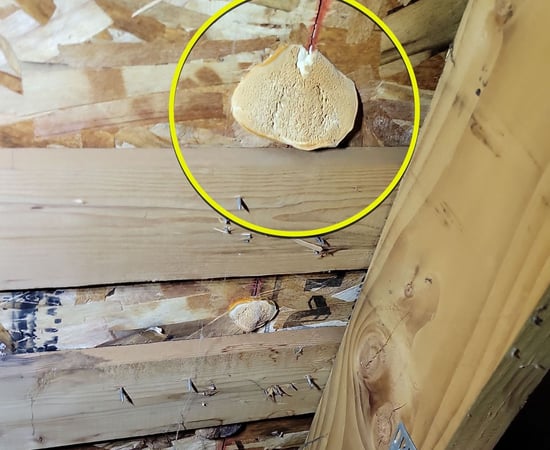
Eventually, your roof will get to the point where the fungus has eaten the structure of the timbers, and it's crumbling (aka going back to nature). Sometimes you can see mushrooms growing out of the wood, but other times it just looks like rotten wood.
For example, on this customer's home, we found extensive dry rot all over, including in the roof decking, siding, and framing of the roof.
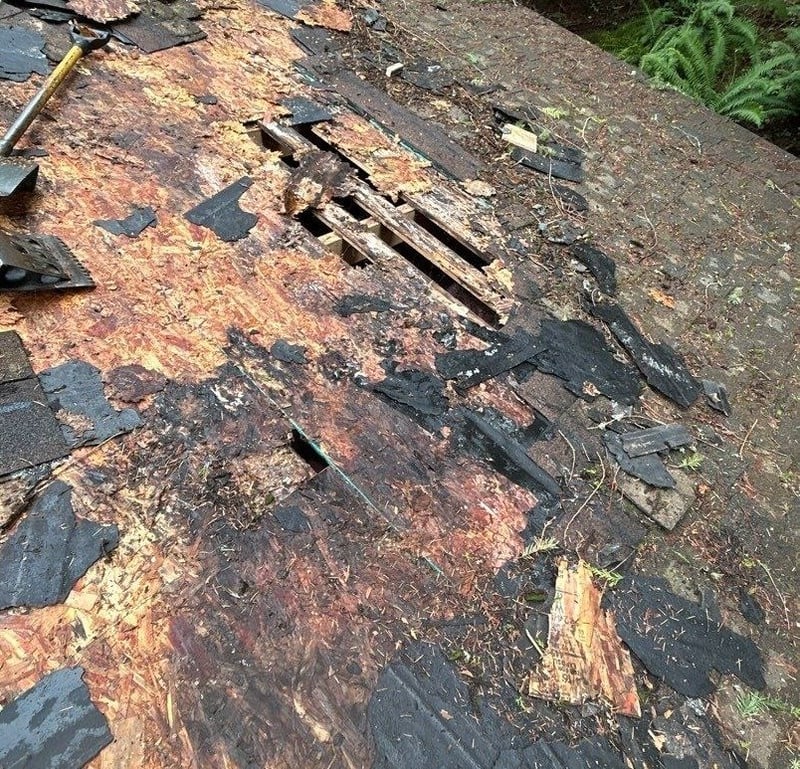
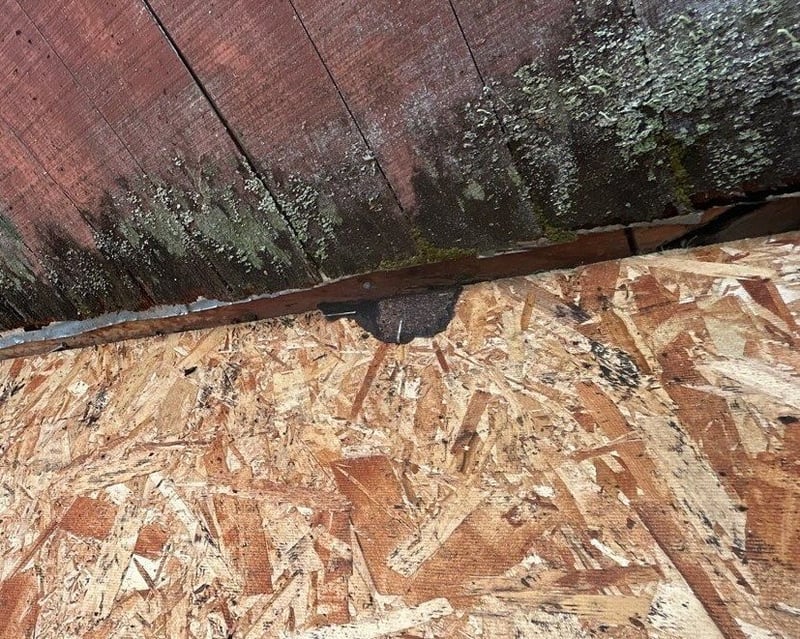
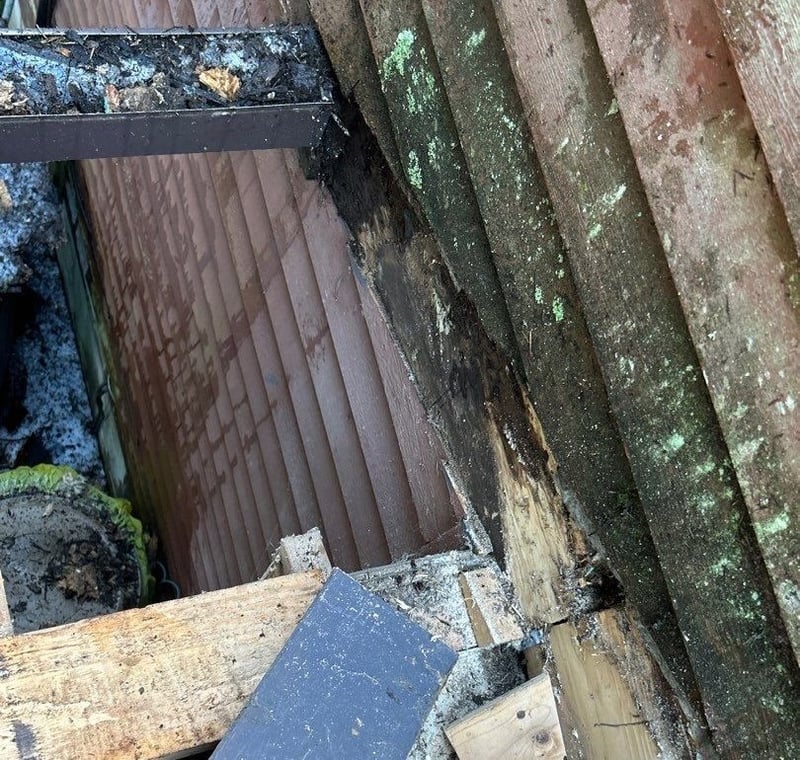
On this roof, we had to replace 52 pieces of rotten OSB roof decking, as well as many sections of the framing underneath, and all of the rotten siding.
What are the signs of dry rot in my Seattle roof?
You can clearly tell the difference between regular (wet) rot and dry rot. If the wood is damp, it’s wet, but if the wood is dry but still rotting or showing signs of fungus, then it’s dry rot.
These are some examples of common places where you can find dry rot on the roof:
- Roof Sheathing: This is a very common place for rot to occur. It’s an easy target if there is a leak or condensation. If your roof decking is made of OSB, then the rot is going to spread even faster because OSB does not handle water well and will continue to crumble with dry rot.
- Siding: If the siding is too low and it's at the point where it touches the roof, it can wick water into it. This is how rot spreads from one area to another. After that, even if it dries out, it can still rot.
- Framing: If your roof has dry rot, then it’s in danger of spreading to the framing. This is the most critical issue because rotting framing compromises the structural integrity of your entire roof.
- Trim Boards or fascia: Any other boards along the edge of your roof or on the siding can also be at risk from dry rot spreading through the roof.
Basically, dry rot can become a problem almost anywhere because so many different materials are made of wood and they are all susceptible to rot (some more than others).
How do I prevent dry rot in my roof?
In a rainy, damp area like Seattle, it is important to make sure that you are taking the right steps to protect your roof from dry rot. The best way to keep moisture out of your roof is to hire a qualified contractor who has plenty of roofing experience.
I know that’s probably not what you were expecting to hear, but it’s true. No matter what kind of roofing material you choose or how well you take care of your roof, it will still leak if it’s installed incorrectly.
Other tips for protecting your roof from dry rot (and regular rot) include:
- Choosing a water-resistant roofing material: If you want to be extra protective of your roof, choose a material that does not absorb water. Some good options include metal, Euroshield, or synthetic roofing (like Brava or DaVinci).
- Cleaning debris off asphalt shingles: When debris gets wet and sits on top of asphalt shingles, it helps retain moisture on the roof. This prevents the shingles from drying out and actually causes them to deteriorate faster.
- Choosing more durable wood options: OSB roof sheathing and trim boards made of pine are very susceptible to absorbing water and rotting. For more durable options, choose plywood roof sheathing and cedar for trim and other boards.
- Ensuring you don’t have condensation issues: Make sure that your roofer is knowledgeable about condensation and proper ventilation so that your roof is protected from damage.
These are all good steps to take, but in the end it all comes back to the quality of your roof and how well it was put together in the first place. This will help determine how durable it is and how long it lasts.
How do you choose a roofing contractor who can prevent dry rot?
Dry rot rarely appears overnight. In most cases, it's the result of moisture problems that have been quietly developing for years because of leaks and poor ventilation. By the time you notice soft wood or visible decay, the damage has often spread beyond the surface into the roof decking, framing, fascia, or siding.
While routine maintenance and choosing moisture-resistant materials can help, the best defense against dry rot is making sure your roof is designed and installed correctly from the very beginning.
A knowledgeable roofing contractor knows how to identify the underlying causes of moisture intrusion and fix them before they lead to costly structural damage.
Read our article “Is Your Seattle Roofer Actually Good? Here’s How to Tell Before It’s Too Late”
In this article, you'll learn what separates an experienced roofing contractor from the rest, the questions you should ask before hiring a roofer, and how to choose someone who can build a roof that protects your home from leaks, condensation, and the moisture problems that lead to dry rot.
Frequently Asked Questions About Dry Rot
1. What is dry rot?
Dry rot is wood decay caused by fungi that feed on damp wood. Despite the name, dry rot starts because of moisture from roof leaks or condensation. Once established, the fungus can continue damaging wood even after the surface appears dry.
2. Is dry rot different from wet rot?
Yes. Wet rot occurs while the wood is actively damp. Dry rot refers to fungal decay that continues after the wood has dried out. Both weaken the wood, but dry rot can continue spreading if moisture periodically returns.
3. Can dry rot spread throughout my roof?
Yes. Dry rot can spread from one wooden component to another as long as moisture is available periodically. A small leak can eventually affect roof decking, rafters, fascia boards, siding, and even wall framing if left unrepaired.
4. What causes dry rot on Seattle roofs?
The most common causes are roof leaks, poor flashing, condensation from inadequate attic ventilation, clogged gutters, and siding that allows water intrusion. Seattle's wet climate creates ideal conditions for fungal growth if moisture enters the roof system.
5. How can I tell if my roof has dry rot without removing the roof?
Some warning signs include sagging roof sections, soft or spongy wood around the roof edge, peeling paint, musty odors in the attic, water stains on ceilings, mold growth, or visible fungal growth. However, much of the damage often remains hidden until a professional inspection or roof replacement.
6. Is dry rot dangerous?
Yes. Dry rot weakens the structural strength of wood. If left untreated, it can compromise roof framing, roof decking, and exterior walls, leading to expensive repairs and potential structural safety concerns.
7. Can dry rot be repaired without replacing the wood?
It depends on how extensive the damage is. Minor surface damage may be treated after eliminating the moisture source, but wood that has lost its structural strength usually needs to be replaced. Simply treating the fungus without replacing severely damaged wood is rarely a permanent solution.
8. Which roofing materials help reduce the risk of dry rot?
Materials that absorb less moisture, such as standing seam metal roofing, synthetic roofing products, and rubber roofing systems, can reduce the likelihood of moisture-related problems. However, proper installation, flashing, ventilation, and waterproofing are even more important than the roofing material itself.
9. Does attic ventilation help prevent dry rot?
Absolutely. Proper attic ventilation removes excess moisture before it condenses on the roof decking. Balanced intake and exhaust ventilation help keep the roof structure dry and significantly reduce the risk of mold, condensation, and dry rot.
10. Can dry rot return after it's repaired?
Yes, if the underlying moisture problem isn't fixed. Replacing rotten wood without correcting leaks, poor ventilation, flashing defects, or condensation issues often leads to the same problem returning. A long-lasting repair addresses both the damaged wood and the source of the moisture.
Topics:
