

TL;DR: Summary
Downspouts are often the weakest point in your roof's drainage system because even a small amount of debris can block them, causing gutters to overflow and increasing the risk of water damage to your roof, siding, and foundation.
Proper drainage depends on more than just gutter size: you also need correctly sized downspouts, gutters that can handle your roof's runoff, and effective debris protection. Homes with standing seam metal roofs or large roof sections may require larger gutters and downspouts to manage the increased water flow. For flat roofs, routine scupper maintenance and secondary drains are essential to prevent dangerous ponding water.
The key takeaway: keeping water moving through your entire drainage system, not just your gutters, is the best way to prevent costly water damage. Properly sized downspouts, quality gutter guards, and regular maintenance are key to protecting Seattle homes from clogs and overflows.
Are your gutters overflowing during heavy Seattle rain even though there doesn’t seem to be enough debris inside them to cause a clog? Are you worried that a downspout you rarely think about could suddenly back up and send water over your gutters, potentially damaging your siding, foundation, or roof?
At RoofSmart, we’ve helped hundreds of Seattle-area homeowners troubleshoot gutter and drainage problems. One thing we’ve learned is that it doesn’t take a gutter that is already completely full of debris to cause a serious clog. Sometimes, one strategically placed leaf or a small clump of pine needles over the downspout opening is enough to restrict the entire drainage system.
In this article, we’ll explain why downspouts are often the choke point of your gutter system, how to determine whether yours are vulnerable to clogging, and what you can do to keep water moving off your roof, including the different precautions you’ll need if you have a flat roof.
Common Causes of Downspout Clogs and the Best Solutions
|
Downspout Problem |
Why It Happens |
Warning Signs |
Recommended Solution |
|
Downspout is too small |
Too much roof area drains into one downspout |
Gutter overflows during moderate or heavy rain |
Install a larger downspout or add another drainage point |
|
Leaves cover the opening |
A single leaf can flatten over the small downspout inlet |
Water backs up even though the gutter contains little debris |
Remove debris and install an effective gutter guard |
|
Pine needles collect at the outlet |
Thin needles form dense mats around the opening |
Slow drainage and recurring clogs |
Use a micromesh gutter guard designed to block pine needles |
|
Debris collects in the gutter |
Nearby trees continually drop leaves, needles, and small branches |
Standing water, visible debris, or overflowing gutters |
Clean the gutters regularly or install properly designed gutter guards |
|
Too much roof area drains to one location |
Multiple roof planes or valleys concentrate runoff |
One gutter section floods while the rest drains normally |
Add downspouts, increase outlet size, or redirect part of the runoff |
|
Gutter lacks sufficient slope |
Water cannot move laterally toward the downspout |
Standing water remains after rainfall |
Rehang the gutter with a slight slope toward the outlet |
|
Metal roof sheds water too quickly |
Smooth metal panels accelerate runoff |
Water overshoots or overwhelms the gutter |
Install larger gutters, additional downspouts, or flow-control components |
|
Downspout has tight bends |
Elbows trap debris and restrict water movement |
Water drains slowly or clogging occurs near bends |
Simplify the downspout route or use larger fittings |
|
Gutter guard clogs on top |
Flat or poorly designed guards allow debris to accumulate |
Water flows over the guard instead of entering the gutter |
Choose a sloped micromesh system that sheds debris |
|
Flat-roof scupper is blocked |
Leaves and pine needles collect around the drain opening |
Ponding water remains on the roof |
Clear the scupper and install adequate secondary drainage |
What makes downspouts vulnerable to clogging?
You want to think about how much surface area is going to a given drainage area. To break it down further, think about how much surface area the downspout is going to try to catch and drain.
People almost always focus on the size of the gutters for carrying capacity, but that's not the only important factor. The only way that the carrying capacity of the gutter makes a difference is if the water can make it laterally to the downspout. But the downspout is really the choke point.
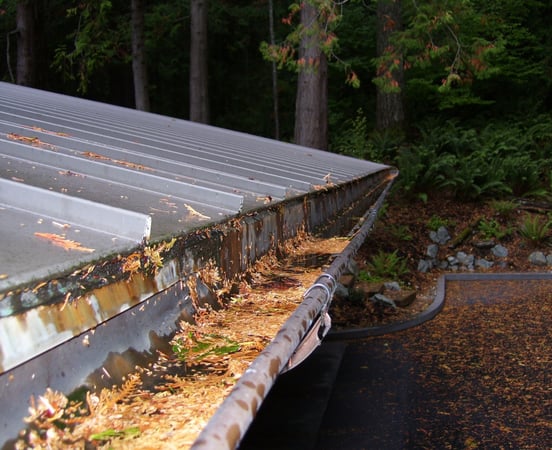
A single piece of debris can plug a downspout's 2" opening. This is a huge concern in Seattle and the surrounding areas because there are trees all over and many homes are surrounded by them.
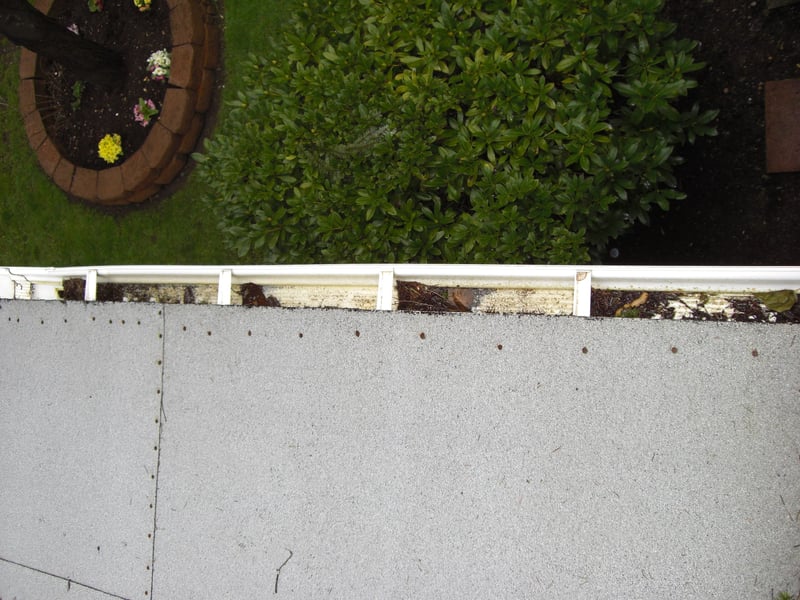
For example, this gutter doesn’t have very much debris in it, but the downspout on the far left is halfway covered with small debris.
A leaf can easily fall into the gutter and then get plastered over the top of a downspout. Or some pine needles can collect and clog the downspout. A lot of people are under the misapprehension that it takes a lot of debris to plug the gutter, but it just takes the right debris.
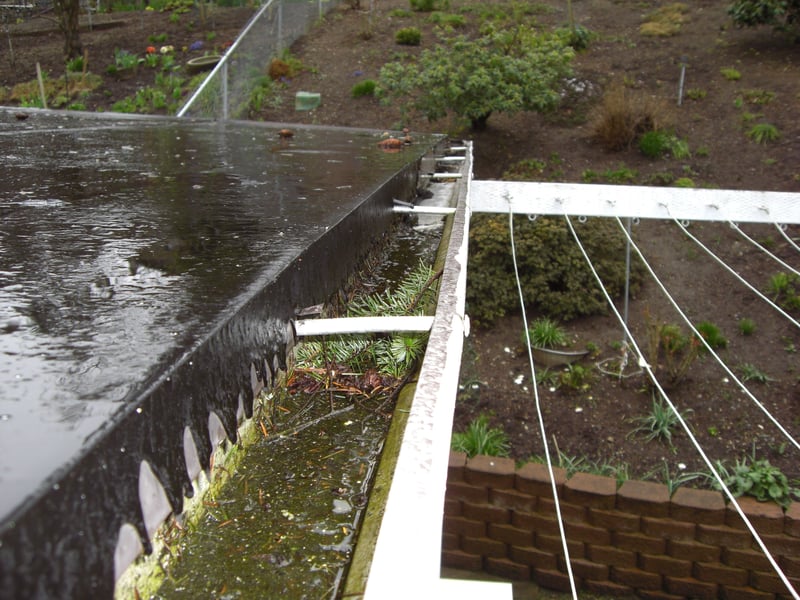
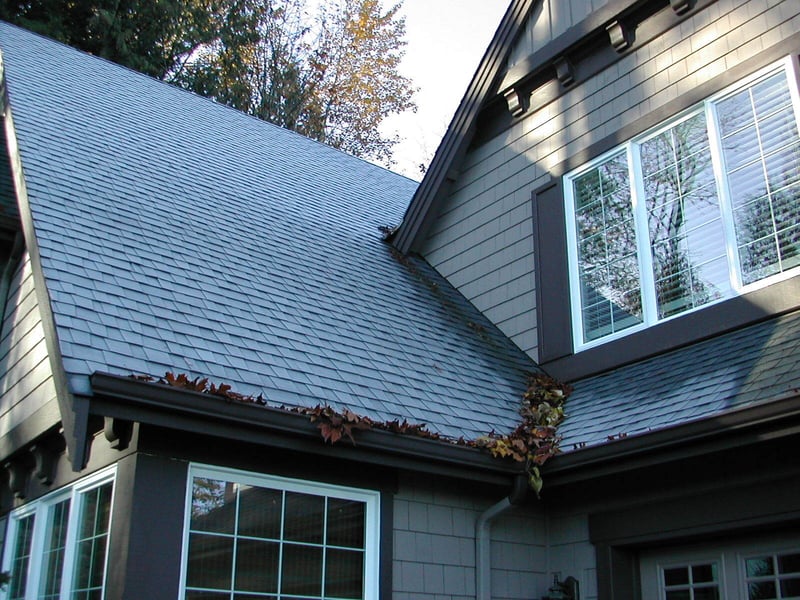
So around 500 square feet of roof area can be drained by one regular two-by-three downspout. About 450 square feet of roof area can be drained by a three-inch round downspout. And about 1,200 square feet can be drained by a three-by-four downspout.
The gutter system needs to catch it as it comes off the roof. The downspout, though, is what gets it out of there. And that's why when those clog, everything goes bad.
How can I prevent my downspouts from clogging?
To make sure that the gutter and downspout system on your roof works properly, these are the factors you need to keep in mind:
- The gutter needs to be able to catch water: Make sure that your gutters are the right size for the drainage area that you’re directing water from. You should also make sure that they are installed at the right angle with the roof to successfully catch water and are sloped downward slightly toward the downspout to help water naturally flow in that direction.
- Note that standing seam metal roofs require larger gutters to catch the water running off the roof because the water moves so much faster on the smooth, slippery surface.
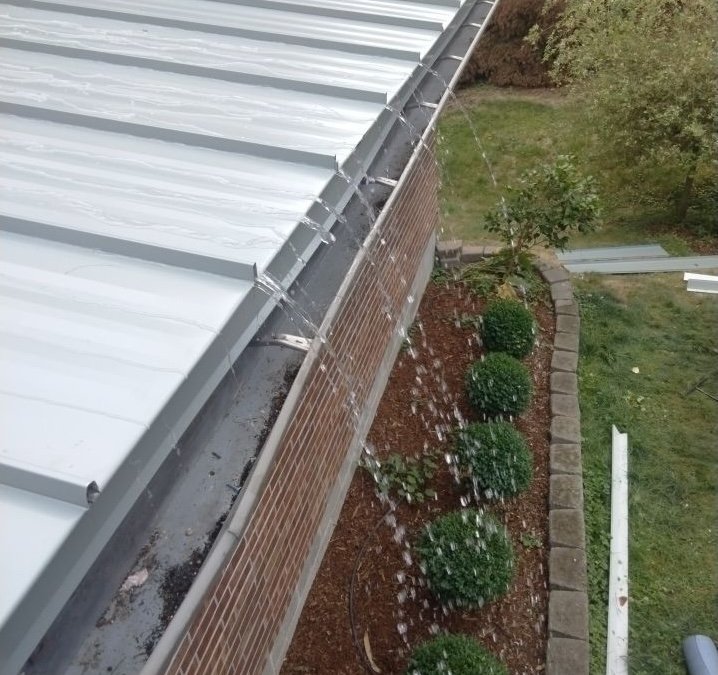
- Have the right size downspout for the roof area: If your downspout is too small or if it clogs easily, then your gutters and downspout are going to get blocked all of the time. This could easily result in overflowing gutters, which can damage your home’s foundation, or potentially cause your siding to rot.
- Make sure it doesn’t clog: A great way to protect your downspout from clogging is by installing gutter guards. Gutter guards are essential for maintaining flow because they prevent debris from entering the gutter or even touching the downspout. However, when choosing gutter guards, it’s important to do a lot of research to find the right gutter guard for you. A lot of gutter guards don’t work the way you think they will, resulting in debris clogs on the gutter guard. At RoofSmart, we have a guide to help you pick the best gutter guard for your Seattle home. Our personal favorite is MasterShield because it is sloped to shed debris and is designed to prevent algae growth. These two things protect it from clogging.
How do I avoid downspout clogs on my flat roof?
When it comes to flat roofs, drainage systems are a completely different story. There are no gutter guards or even extra gutters. Everything happens on the actual roof.
The best way to avoid (or deal with) clogged scuppers on a flat roof is to:
- Have plenty of secondary drains
- Get on the roof and unclog the scupper
There isn’t really a way to sugarcoat it when you have a flat roof. It’s easy for a lot of leaves, pine needles, and other debris to build up on the roof and clog the scupper. You have to be able to scoop this debris up so that water can flow down the scuppers instead of pooling up on your roof.
There are different types of scuppers, but through-wall scuppers are best if you want to make sure that scupper clogs don’t lead to internal leaks. And having plenty of secondary scuppers means that your roof isn’t at risk when just one scupper clogs because it has other options for draining the roof.
Preventing too much standing water from collecting is crucial when you have a flat roof or a rooftop deck.
Could your roof layout be causing your gutters to overflow in Seattle?
Keeping your downspouts clear is important because even a small amount of debris can create a clog that prevents your entire gutter system from draining properly. Choosing the right downspout size, installing effective gutter guards, and regularly clearing scuppers on flat roofs can all reduce your risk of clogs and water damage.
But a clogged downspout isn’t the only reason your gutters might overflow. If you’ve cleared your gutters and downspouts and water still pours over the edge during heavy rain, the problem could actually be the way your roof directs water.
Certain roof layouts can concentrate a large amount of runoff into one small section of gutter, overwhelming a drainage system that would otherwise be properly sized.
Read our article “Is the Layout of My Roof Causing My Gutters to Flood?” to learn which roof designs are most likely to overwhelm your gutters and what custom drainage solutions can help control the water before it causes damage.

Frequently Asked Questions About Clogged Downspouts
1. Why do downspouts clog even when there is very little debris in the gutter?
A downspout can clog when one leaf, a small group of pine needles, or another piece of debris covers its relatively small opening. The rest of the gutter may appear clean, but water cannot escape once the outlet is blocked.
This is why the downspout is often the choke point of the drainage system. The gutter may be large enough to catch the water, but that capacity does not help if the water cannot move through the outlet.
2. How much roof area can one downspout drain?
The approximate drainage capacity depends on the downspout’s shape and dimensions:
- A standard 2-by-3-inch downspout can serve about 500 square feet of roof area.
- A 3-inch round downspout can serve about 450 square feet.
- A 3-by-4-inch downspout can serve about 1,200 square feet.
These figures are general estimates. Roof slope, rainfall intensity, gutter size, drainage layout, and concentrated flow from valleys can all affect the amount of water the system must handle.
3. How can I tell whether my downspout is too small?
A downspout may be undersized if the gutter repeatedly overflows during heavy rain even though the gutter and outlet are clean.
Other warning signs include:
- Standing water in the gutter
- Water spilling over near the outlet
- One downspout handling several roof planes
- Water draining slowly after rainfall
- Frequent clogs in the same location
- Overflowing gutters despite regular cleaning
A contractor should evaluate how much roof area drains toward each downspout rather than judging the system only by total gutter length.
4. Why is the downspout more important than the size of the gutter?
The gutter catches water and carries it laterally, but the downspout is responsible for removing that water from the roofline.
A larger gutter can temporarily hold more water, but it will still overflow if the downspout is clogged or too small. The gutter, outlet, and downspout must all have enough capacity to work as one complete drainage system.
5. Can pine needles clog a downspout?
Yes. Pine needles are a major concern for Seattle-area homes because they can gather into dense mats around the downspout opening.
Even a relatively small amount can slow or completely block drainage. Once the outlet is obstructed, rainwater backs up inside the gutter and may overflow onto the siding, fascia, foundation, or landscaping.
6. Do gutter guards prevent downspout clogs?
A well-designed gutter guard can significantly reduce downspout clogs by preventing leaves, pine needles, and other debris from entering the gutter.
However, not every gutter guard works equally well. Some systems allow debris to collect on top, restricting water before it even reaches the gutter. A sloped micromesh guard is often better suited to Seattle because it blocks small debris while encouraging leaves and needles to slide off.
7. Why do standing seam metal roofs need larger drainage systems?
Standing seam metal is smooth and sheds water more quickly than asphalt shingles. During heavy rain, runoff can reach the gutter with greater speed and volume.
If the gutter or downspout is too small, the water may overshoot the gutter or overwhelm the outlet. Metal roofs may therefore need larger gutters, additional downspouts, or custom components that slow and redirect concentrated runoff.
8. What damage can a clogged downspout cause?
A clogged downspout can force water to overflow behind or in front of the gutter.
That uncontrolled water can cause:
- Rotten fascia boards
- Damaged rafter tails
- Siding leaks and rot
- Foundation moisture problems
- Basement or crawl-space leaks
- Soil erosion
- Mold growth
- Ice buildup during freezing weather
Addressing the clog early is far less expensive than repairing long-term water damage.
9. How often should Seattle homeowners clean their downspouts?
The right schedule depends on the number and type of trees near the home. Properties surrounded by evergreen trees may need more frequent attention because pine needles fall throughout the year.
At minimum, homeowners should inspect and clean their gutters and downspouts during the fall and after major storms. If the system repeatedly clogs between cleanings, larger downspouts or gutter guards may be necessary.
10. How do I prevent drainage clogs on a flat roof?
Flat roofs usually rely on scuppers or internal drains rather than traditional gutters. The best protection is to keep the roof surface and drain openings clear of leaves, pine needles, and other debris.
A flat roof should also have:
- Proper slope or tapering toward the drains
- Enough primary drains for the roof area
- Secondary overflow drains or scuppers
- Accessible drainage openings that can be cleaned
- Through-wall scuppers where appropriate
- Regular inspections during rainy seasons
Secondary drainage is especially important because it gives water another path off the roof if the primary scupper becomes clogged.
Topics:
