

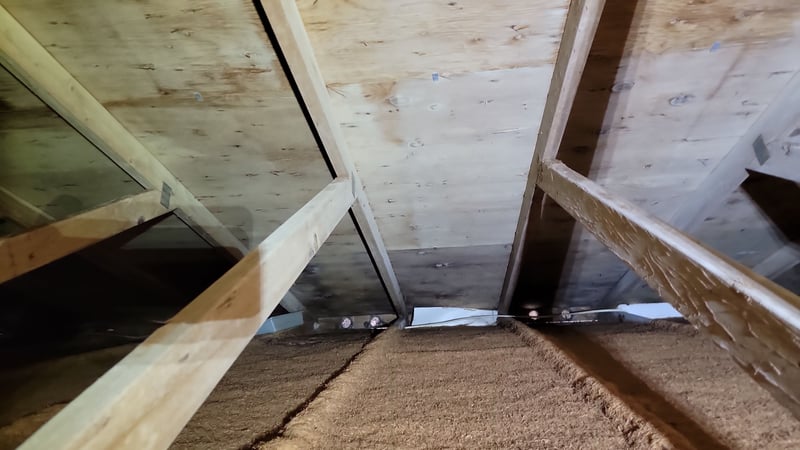
TL;DR: Summary
Air sealing helps prevent warm, moist air from leaking into your attic, where it can condense on cold surfaces and cause mold, rot, and other moisture-related damage. It is especially important to do so if your attic already has condensation problems or inadequate ventilation.
Air leaks typically occur around recessed lights, plumbing and electrical penetrations, bathroom fans, and attic hatches. Sealing these gaps with the appropriate materials (such as weatherstripping, caulk, foam covers, or spray foam where appropriate) can significantly reduce moisture entering the attic.
Air sealing works best when combined with proper attic ventilation, since the two systems work together to control heat and moisture. Improving ventilation alone may not solve condensation issues if conditioned air is still escaping into the attic.
The key takeaway: if your Seattle attic has mold, condensation, or moisture problems, air sealing is often a critical part of the solution. Identifying and sealing air leaks can help protect your roof structure, improve energy efficiency, and extend the life of your home.
Have you discovered mold, condensation, or damp wood in your attic and wondered if poor ventilation is the only problem? Are you worried that warm air leaking from your living space could be quietly causing expensive damage to your roof without you even realizing it?
At RoofSmart, we've inspected thousands of attics across the Greater Seattle area, and we've found that many homeowners focus on adding more vents or more insulation when the real issue is uncontrolled air leakage. During our inspections, we regularly find recessed lights, attic hatches, and other openings that leak warm, moist air into cold attics.
In this article, you'll learn when attic air sealing is necessary, how to recognize the most common sources of air leaks, the best ways to seal them without creating future maintenance problems, and how air sealing works alongside proper attic ventilation to protect your roof.
Does every attic need air sealing?
If you're having condensation and airflow problems in your attic, then you need to air seal it. But if your attic ventilation seems to be working fine, then you don’t need to mess with it.
If you're having condensation issues or mold, sometimes just increasing the ventilation is enough, but often it's not enough all by itself because having air leaks can still let moisture in.
If you have an air leak, that is the same as cracking your window open. For example, if it's air-conditioned inside at 72 degrees and outside it's 90 degrees and 100% humidity, when you crack a window, you'll notice a stream of moist air coming in.
The opposite of that happens in the winter when your house is heated. You’re under the impression that you've got your ceiling all sealed up to keep the heat in and be comfortable.
But let’s say that you added 10 can lights to your ceiling recently. Well, I bet money that whoever added those made some pretty sloppy cuts, moved all the insulation away from the work area, and didn't put anything back, and now they all leak air (I see it a lot).
It’s basically like cracking little holes in your ceiling without realizing it. And now you've got warm, moist air going up into this 40-degree attic space.
Warm, moist indoor air rises into the cold attic, condenses on surfaces, and causes mold and rot. If you have enough ventilation, it'll be fine, but if you don’t, then you’re going to notice mold and rot in your attic.
How can I tell if my attic is leaking air?
If your attic is experiencing condensation issues in the winter, then that’s a big sign that your roof might be experiencing air sealing issues. It can be tough to diagnose because it’s similar to having poor ventilation (and likely that both are happening together).
Signs of condensation include:
- Large patches of dark, damp wood
- Large patches of rotting wood
- Widespread mold in the attic
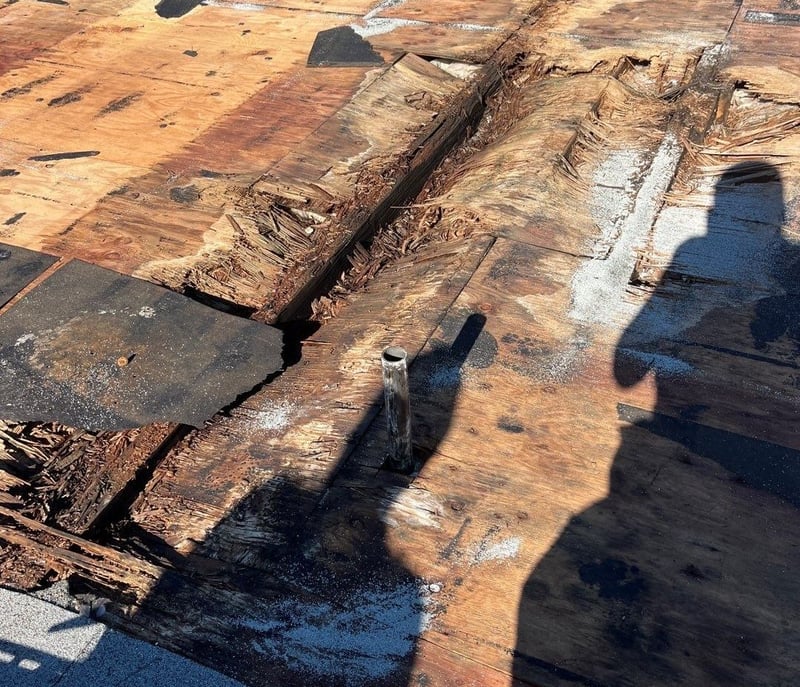
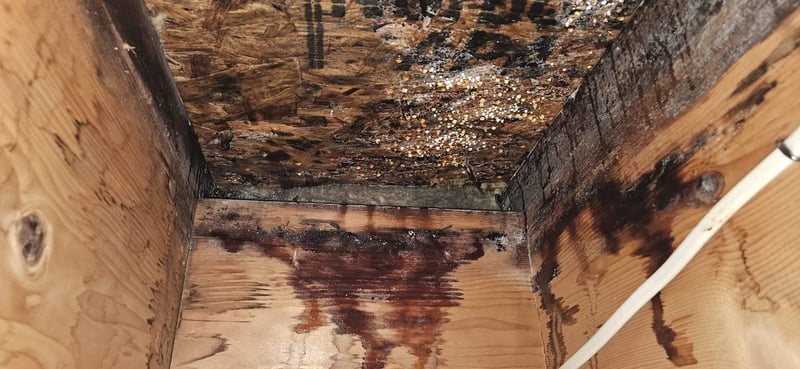
But where do these air leaks come from? There are many places where your attic might have gaps that are letting air in. Some common air leak sources include:
- Recessed Lights: Sloppy cuts and displaced insulation create large pathways. This is the most common culprit that I see.
- Other penetrations: Your attic might have unsealed holes for wiring, plumbing, and vents. There could be any number of these gaps that are letting air in.
- Attic Hatch: Poorly sealed or uninsulated hatches are another problem area. This is especially true if you have a pull-down ladder hatch because those leak like crazy. They’re meant for an uninsulated space (like a garage), but a fair number of people choose to put them in their house.
- Bathroom Fans: It’s pretty common for there to be unsealed gaps around the fan.
What are the steps to air seal my attic?
Some homeowners just go up to the attic and put spray foam on everything. While it does a good job of sealing the air out, it also makes things inaccessible, so you want to be careful and decisive about what you use the spray foam on.
Here are some DIY air sealing solutions that you can try in your attic:
- Recessed Lights: For these lights, they make little insulated foam "hats" that you can install on top of them to create a sealed, removable dome. You just seal around it, and you’re good to go. If you use spray foam over the lights, then you can’t access them to remove or change them.
- Small Gaps: For small gaps around the attic (like a hole that you’re running wire through, or the area around a bath vent), caulk or tape is a good option.
- Large Gaps: For larger gaps that you don’t need to access, you can use spray foam. Remember that this should only be used for permanent, non-electrical penetrations.
- Attic Hatch: To seal around your attic hatch (if you have one), add weatherstripping and insulation. This should be good enough for most hatches. But if you have a pull-down ladder hatch and you want to be super proactive, they do make little, like, foam foil chambers with a zipper that you go up, and then you can unzip it to access the attic hatch.
If you're comfortable climbing around the attic, you can easily do this air sealing work on your own. All this stuff is available from Home Depot. It’s a tedious and time-consuming process, but it’s doable.
The other option is to hire a roofing contractor or another professional to do it for you.
Common Attic Air Leaks and How to Seal Them
|
Air-Leak Location |
Why It Causes Problems |
Recommended Air-Sealing Method |
Important Considerations |
|
Recessed lights |
Gaps around the fixtures allow warm, moist indoor air to enter the attic |
Install approved insulated covers and seal around the covers |
Confirm the covers and fixtures are rated for safe contact with insulation |
|
Attic hatch |
An uninsulated or poorly sealed hatch acts like an open window between the home and attic |
Add weatherstripping around the opening and insulation above the hatch |
The hatch should remain accessible after sealing |
|
Pull-down attic stairs |
Folding stair assemblies have multiple joints and gaps that leak air |
Install a sealed, insulated attic-stair cover |
Choose a removable or zippered cover that preserves access |
|
Plumbing penetrations |
Openings around pipes allow conditioned indoor air to escape |
Seal small gaps with caulk and larger gaps with appropriate foam |
Use approved materials around hot pipes and combustion equipment |
|
Electrical wiring holes |
Drilled openings often remain unsealed after electrical work |
Seal around wiring penetrations with caulk or approved foam |
Do not bury electrical boxes or connections that must remain accessible |
|
Bathroom exhaust fans |
Gaps around the fan housing can leak humid bathroom air into the attic |
Seal around the housing with caulk, tape, or approved foam |
The fan duct should also vent outdoors rather than into the attic |
|
Duct penetrations |
Gaps around ductwork create large airflow pathways |
Seal the surrounding opening with sheet material, caulk, or foam |
Do not rely on insulation alone to stop airflow |
|
Interior wall top plates |
Gaps where walls meet the attic floor can leak air along long sections of the ceiling |
Seal seams and penetrations along the top plates |
These areas may be hidden beneath existing insulation |
|
Chimneys and flues |
Large gaps can allow significant air movement into the attic |
Install code-approved metal flashing and fire-resistant sealant |
Standard spray foam should not be used next to hot flues |
|
Ceiling penetrations |
Speakers, fans, fixtures, and other openings interrupt the ceiling air barrier |
Seal each opening with a material appropriate for its size and use |
Maintain access to serviceable fixtures and equipment |
What are the benefits of air sealing my attic?
If your attic doesn’t have proper ventilation, then the last thing you want is for your attic to have easy access to a constant stream of moist air that can come in and cause condensation. Air sealing your attic saves your roof from expensive damage caused by mold and rot.
Why is attic air sealing so important for preventing condensation and mold in Seattle?
Air sealing is one of the most effective ways to reduce the moisture that causes condensation, mold, and wood rot in your attic, but it's only one piece of the puzzle. Even a well-sealed attic can develop moisture problems if the ventilation system isn't working properly, and simply adding more vents won't solve the issue if warm, humid indoor air continues leaking into the attic.
The key is understanding how air sealing, insulation, and ventilation all work together to control moisture inside your roof assembly. When one part of that system isn’t working properly, the others often can't make up for it.
Read our article "Are Seattle Roofs More Likely to Have Condensation and Mold Issues?" to learn why the Seattle climate creates unique challenges for attics, how to recognize the warning signs of moisture problems, and what it takes to keep your roof dry for the long term.

Frequently Asked Questions About Air Sealing Your Attic
1. Does every Seattle attic need to be air sealed?
Not every attic needs extensive air-sealing work. If the attic is dry, properly ventilated, well insulated, and showing no signs of unwanted airflow, condensation, mold, or rot, major changes may not be necessary.
Air sealing becomes more important when warm indoor air is escaping through gaps in the ceiling and entering the cold attic. In Seattle’s cool, damp winters, that air can condense on the roof decking and framing, creating conditions that lead to mold and wood decay.
2. What is attic air sealing?
Attic air sealing is the process of closing gaps between the conditioned living space and the attic. These gaps are commonly found around recessed lights, wiring, plumbing pipes, bathroom fans, attic hatches, ducts, and wall top plates.
The goal is not to eliminate attic ventilation. Air sealing controls air moving from the home into the attic, while ventilation allows outdoor air to enter and exit the attic through a planned system.
3. What is the difference between attic air sealing and ventilation?
Air sealing and attic ventilation address two different sources of moisture.
Air sealing limits warm, humid household air from leaking into the attic. Ventilation moves outdoor air through the attic to help remove heat and moisture that does enter the space.
A home can have plenty of roof vents and still experience condensation if major ceiling air leaks continually supply the attic with warm, moist air. In many cases, both the air leaks and the ventilation system need to be evaluated.
4. How do air leaks cause condensation in an attic?
Warm indoor air can hold more moisture than cold air. When that warm, humid air rises through ceiling gaps and reaches cold roof decking, the air cools and releases moisture as condensation.
Repeated condensation can leave the roof sheathing damp throughout the winter. If the wood cannot dry, mold may grow and the roof deck or framing may eventually begin to rot.
5. What are the signs that my attic needs air sealing?
Common warning signs include:
- Widespread condensation on nails or roof decking
- Dark or damp areas on the roof sheathing
- Mold on framing or insulation
- Musty odors
- Rotting or crumbling roof decking
- Frost inside the attic during cold weather
- Uneven indoor temperatures
- Higher-than-expected heating or cooling costs
- Drafts around attic access points or ceiling fixtures
These symptoms can also be caused by poor ventilation, roof leaks, or bathroom ducts that terminate in the attic. A complete inspection should identify the actual moisture source before repairs begin.
6. Are recessed lights a common source of attic air leaks?
Yes. Recessed lights are one of the most common attic air-leak locations because installing them requires cutting openings through the ceiling. Oversized or uneven cuts can leave gaps around each fixture, and insulation is often moved aside during installation without being properly replaced.
Approved insulated covers can be placed over compatible recessed lights and sealed around their bases. This creates a more continuous air barrier while keeping the fixture accessible for future maintenance.
7. Can I use spray foam to seal everything in my attic?
Spray foam is useful for some large, permanent gaps, but it should not be applied indiscriminately. Covering lights, electrical connections, removable equipment, or areas that need future service can create access and safety problems.
Spray foam should also be kept away from chimneys, flues, and other hot surfaces unless the product and installation method are specifically approved for that use. Caulk, rigid materials, fire-resistant sealants, tapes, and removable covers may be better choices in many areas.
8. How should I air seal an attic hatch or pull-down ladder?
A standard attic hatch can usually be improved by adding weatherstripping around the opening and attaching insulation to the back of the hatch panel. The hatch should close tightly without visible gaps.
Pull-down attic ladders are more difficult because the folding assembly has many joints and rarely creates a tight seal. An insulated attic-stair enclosure can be installed above the opening to reduce airflow while still allowing access through a removable or zippered cover.
9. Can attic air sealing help prevent mold and roof rot?
Yes. Air sealing can reduce the amount of warm, humid indoor air reaching cold attic surfaces. This lowers the risk of condensation feeding mold and fungal decay.
However, air sealing will not repair an active roof leak, replace damaged ventilation, or remove existing rot. The moisture source must be diagnosed, damaged materials may need to be replaced, and the attic must be able to dry properly.
10. Can I air seal my attic myself, or should I hire a professional?
Homeowners who can move safely through an attic may be able to seal accessible gaps around wiring, plumbing penetrations, attic hatches, and approved light covers. The work can be tedious because existing insulation often needs to be moved and replaced as each opening is sealed.
Professional help is recommended when the attic contains extensive mold, damaged framing, unsafe electrical conditions, difficult access, combustion equipment, or widespread condensation. A roofing, insulation, or building-performance professional can also determine whether the problem involves air leakage, ventilation, insulation, an active roof leak, or a combination of issues.
Topics:
