

TL;DR: Summary
The size of your gutters and downspouts matters because your drainage system needs to handle both the amount of water coming off your roof and the debris common around Seattle homes.
A standard 2x3 downspout can drain roughly 600 square feet of roof area, while a larger 3x4 downspout can handle around 1,200 square feet. However, even a properly sized downspout can fail when leaves, pine needles, or other debris partially block the opening.
If your gutters regularly overflow even when the downspouts are clean, you may need larger downspouts. Another option is installing gutter guards to keep debris out of the drainage system altogether.
Before upgrading, consider where your downspouts drain. If they connect to an older sewer system, sending more leaves and debris through larger downspouts could cause an expensive clog. The right gutter and downspout setup depends on your roof's drainage area, surrounding trees, and where the water and debris ultimately drain.
Are your gutters overflowing during Seattle downpours even though they don't look completely clogged? Are you worried that a contractor recommending a larger system is trying to sell you an upgrade you don't actually need, and wondering if there’s a better solution?
At RoofSmart, we help hundreds of Seattle-area homeowners every year improve their gutter systems. We've found that choosing the right size isn't just about how much rain falls on your home. Your roof's drainage area, how quickly it sheds water, the number of trees around your property, and even where your downspouts discharge can determine whether a smaller system works or repeatedly backs up and overflows.
In this article, we'll explain how gutter and downspout sizing affects drainage, when upgrading to a larger downspout makes sense, and why Seattle homeowners also need to consider tree debris, gutter guards, and sewer connections before deciding which setup is right for their home.
What size downspouts work best for Seattle homes?
There are different sizes of gutters and downspouts to choose from. The size you get depends on the layout of your roof. You need to get the right size gutters and downspouts for the amount of space on your roof that you’re trying to drain.
For example, here are two downspout sizes you can choose based on the area you’re draining:
- 2x3 downspout → ~600 sq ft roof drainage
- 3x4 downspout → ~1,200 sq ft roof drainage
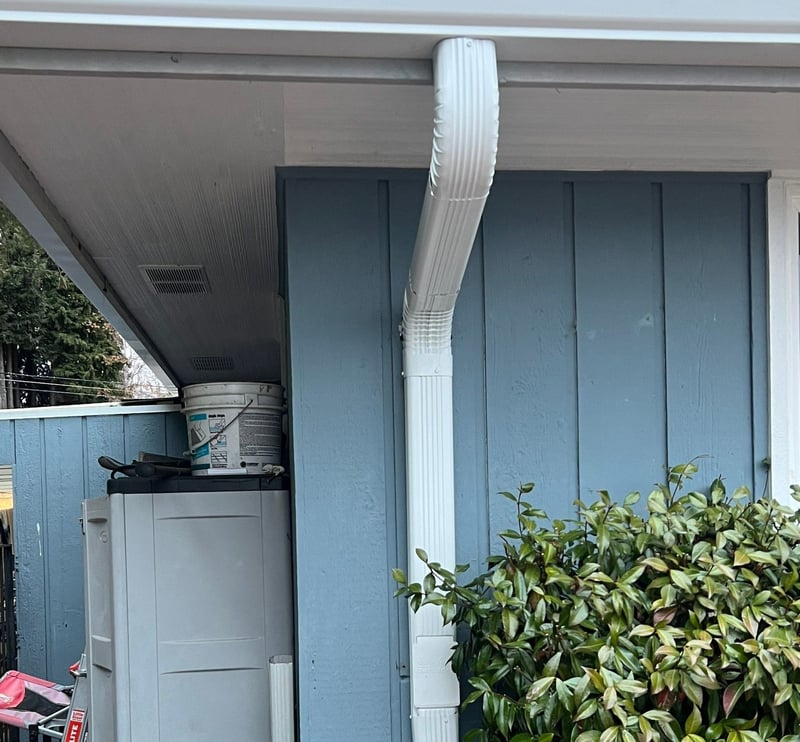
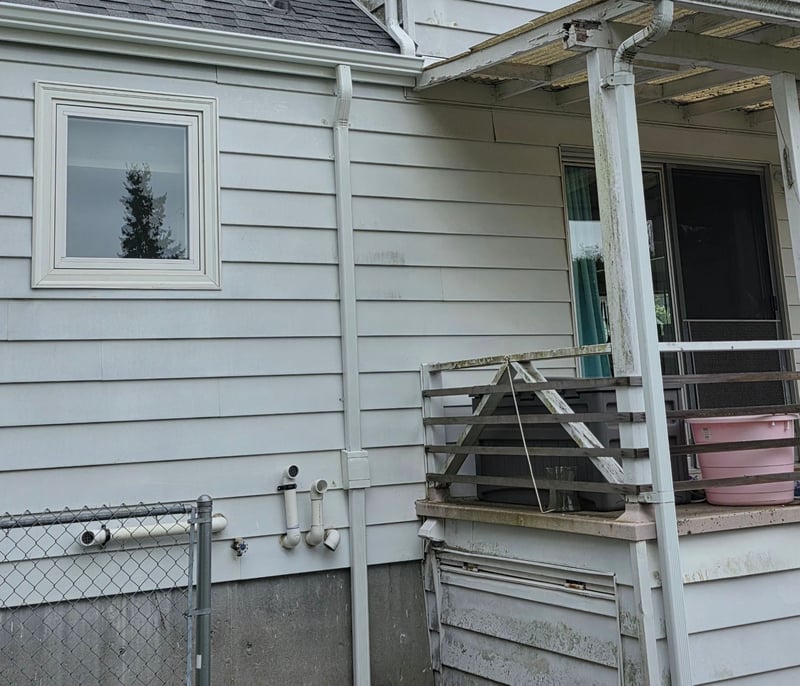
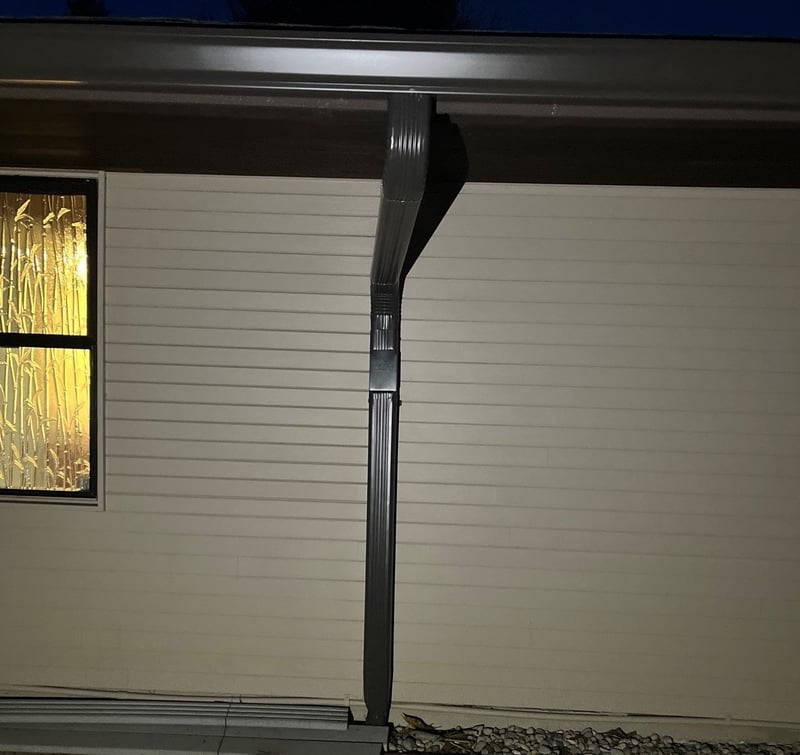
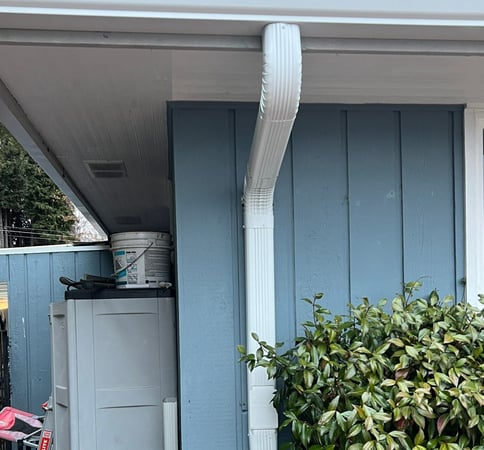
This measurement is based on the amount of water your downspouts are set to handle. But downspouts concentrate debris, so even a small obstruction at the top of the downspout can cause failure.
Maybe your downspout works when there’s only water running through it, but in the Seattle area with all the trees around, that’s not a realistic possibility. If any of the debris gets caught at the top and it chokes off the flow of the water by half (or more), now all of a sudden the downspout that works when it's clear isn't totally clear, and now it fails.
This leaves you with a decision: do I need to upgrade to a bigger downspout? Is that the only solution?
Choosing the Right Gutter and Downspout Size for a Seattle Home
|
Situation |
Smaller Downspout |
Larger Downspout |
Why It Matters |
|
Small roof drainage area |
May be sufficient |
Usually not necessary |
Size should match the amount of roof area feeding the outlet |
|
Large roof drainage area |
Can become overwhelmed |
Better choice |
More water needs a larger outlet |
|
Home surrounded by trees |
More likely to clog |
Handles more debris |
Seattle roofs often collect leaves and pine needles |
|
Frequent gutter overflow |
May indicate insufficient capacity |
Can improve drainage |
Overflow may be caused by the downspout, not the gutter |
|
Downspout drains onto ground |
Larger outlet can flush debris through |
Often beneficial |
Debris can exit without entering a sewer line |
|
Downspout connects to sewer |
Larger outlet may send more debris underground |
Requires caution |
Leaves and decomposed debris can clog the buried drainage system |
|
Gutter guards installed |
Helps keep debris away from outlet |
Downspout size still matters |
Guards reduce clogging but do not fix an undersized system |
|
Standing seam metal roof |
Standard system may struggle |
Larger drainage system often helpful |
Metal sheds water faster than asphalt shingles |
How do I know if I need to upgrade to a bigger downspout?
If your roofer has suggested that you need to get larger gutters and downspouts but you aren’t sure if it’s necessary or just an upsell, check if your downspout has constant clogging issues that cause the gutter to overflow.
There are two reasons that you would need a bigger downspout:
- It just doesn't handle the water coming off that area of the roof, even when it's clean.
- It's rarely clean because I have trees.
If you have a smaller roof area, but your house is surrounded by trees, you should get the bigger downspout because it will need to be able to handle a lot of debris.
It could take as little as one leaf lying across the opening of the downspout to clog it. That's an argument for getting gutter guards, but it's also the argument for a bigger downspout. Those are your two options.
So, if you don't trust gutter guards or don't want to pay for them, then the easier and more affordable option is to get bigger downspouts because you want it all to flush down the downspout.
The bigger the downspout opening, the more debris it will fit, and of course, the more overall water volume it can handle.
This is an important factor to consider because the Seattle area gets a lot of rain, and heavy downpour can start at any time. You want your downspout to be able to handle the amount of water it’s getting, even if there is debris in the gutter.
And if there are trees near or on your property, then you can safely assume that there will be debris in your gutter. If your house is surrounded by multiple trees, then the downspout is at a much higher risk of clogging than normal.
Should I still get a bigger downspout if my gutter guard flushes into the sewer?
Now, the downside of getting bigger downspouts and sending all the debris down it is if it's plugged into your sewer. If you're flushing a bunch of tree debris down it, then it’s probably going to cause a really expensive backup later. But if your downspout just floods out onto the ground, that’s fine.
If you’re worried about overwhelming the sewer system with a bunch of debris from your downspout, then you should choose gutter guards instead of just getting a bigger downspout.
If you’re in an older home in an older neighborhood, then your downspouts may be directed into the sewer because it used to have a sewer system before it was connected to other systems.
Basically, you need to decide where and how you want to deal with this debris. Do you want it to collect up there on the gutter guards, where you could reach it with a ladder, or do you want to risk the possibility of having to pay to clear out the sewer?
Plus, it’s not just regular debris like leaves or pine needles that can clog your gutters: when this debris sits in the wet gutter and decomposes, it turns into a muck substance. It can look something like this:
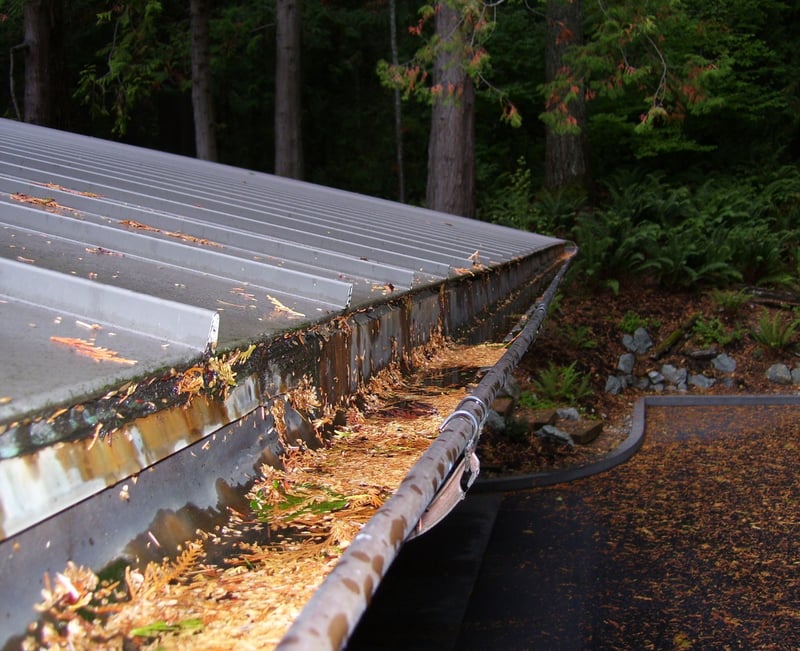
This is a worse issue than just having debris because now the debris is getting sticky and not flowing through the downspout or sewer properly.
Is my roof layout causing my gutters to overflow in Seattle?
Choosing the right gutter and downspout size can make a major difference in how well your home handles Seattle's heavy rainfall and constant tree debris. If a smaller downspout can't keep up, or keeps getting clogged by leaves and pine needles, moving to a larger size or adding gutter guards may help.
But bigger gutters and downspouts aren't always the solution. If several sections of your roof send water into one valley, you have a long roof slope that accelerates runoff, or your roofing material sheds water particularly quickly, your roof may be concentrating more water into one section of gutter than even a properly sized system can handle.
Read our article “Is the Layout of My Roof Causing My Gutters to Flood?” to learn how certain roof layouts can overwhelm your gutters, how to recognize when concentrated runoff is the real problem, and what custom drainage solutions can redirect the water before it floods your gutters.

Frequently Asked Questions About Downspout Size and Drainage
1. Does gutter and downspout size really matter?
Yes. Your gutter and downspout system must be large enough to handle the amount of water coming from the roof.
A gutter can catch a large amount of water, but the downspout is the choke point. If the outlet is too small or partially blocked, the gutter will overflow even if the gutter itself is technically large enough.
2. What size downspout is best for a Seattle home?
It depends on how much roof area drains toward that particular downspout.
As a general guideline:
- A 2x3 downspout can handle roughly 600 square feet of roof drainage.
- A 3x4 downspout can handle roughly 1,200 square feet.
Homes surrounded by trees may benefit from larger downspouts even when the roof area does not technically require one, because the larger opening is less likely to become completely blocked by debris.
3. How do I know if my downspout is too small?
Your downspout may be undersized if:
- The gutter overflows during heavy rain
- Water backs up even when the gutter is clean
- One outlet drains a very large section of roof
- The same downspout clogs repeatedly
- Water remains in the gutter after rainfall
If the system fails even when completely clean, capacity is probably part of the problem.
4. Can one leaf really clog a downspout?
Yes.
The opening at the top of a downspout is relatively small. A single broad leaf can flatten across it and dramatically reduce water flow.
Pine needles can create the same problem by collecting into a dense mat. This is especially relevant in the Seattle area, where many homes are surrounded by trees.
5. Should I install a larger downspout if my house is surrounded by trees?
It can be a good idea.
A larger downspout provides more room for both water and debris to pass through. Even if a smaller downspout technically has enough capacity for your roof area, it may not perform reliably when leaves or pine needles partially block the opening.
The alternative is to prevent the debris from entering the gutter in the first place with a quality gutter guard.
6. Is a larger downspout better than gutter guards?
It depends on where the debris will go.
A larger downspout allows more debris to flush through the drainage system. That can work well if the downspout empties safely onto the ground.
If the downspout connects to a buried sewer or drainage line, sending leaves, pine needles, and decomposed organic material underground can eventually create an expensive clog. In that situation, gutter guards may be the better solution.
7. Can gutter guards eliminate the need for larger downspouts?
Not always.
Gutter guards primarily control debris. They do not increase the amount of water the downspout can physically carry.
If your downspout is undersized for the roof area, it can still overflow during heavy rain even with perfectly clean gutter guards. The gutter guard and downspout need to be sized and designed as parts of the same system.
8. Why do standing seam metal roofs sometimes need larger gutters and downspouts?
Standing seam metal sheds water very quickly because its surface is smooth.
Instead of water slowly moving down textured asphalt shingles, rain can rush toward the roof edge during a heavy storm. That faster runoff can overwhelm a drainage system that would work fine on a slower-draining roof.
Metal roofs may therefore require larger gutters, larger downspouts, or additional drainage points.
9. What happens if my downspout is connected to an old sewer system?
If the downspout sends roof drainage into a buried sewer or older combined drainage system, debris becomes more of a concern.
Leaves and pine needles can enter the downspout, decompose into a thick organic muck, and eventually clog the underground line. Because those pipes are difficult to access, clearing the blockage can be much more expensive than cleaning a gutter.
If your home has this setup, preventing debris from entering the system may be more important than simply increasing the downspout size.
10. How can I tell whether I need bigger gutters, bigger downspouts, or gutter guards?
Start by identifying what is actually causing the failure.
If water overshoots or overwhelms the gutter itself, you may need a larger gutter or a different gutter position. If the gutter fills because water cannot exit quickly enough, you may need a larger or additional downspout. If debris repeatedly blocks the outlet, gutter guards may solve the problem.
For Seattle homes, the best drainage system usually accounts for roof area, roof material, rainfall, tree coverage, gutter size, downspout capacity, and where the downspout ultimately drains.
Topics:
