

TL;DR: Summary
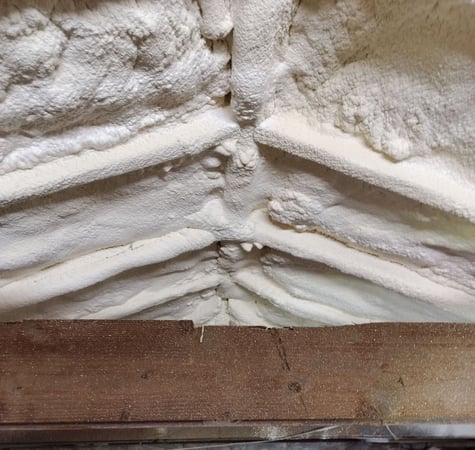
Spray foam insulation can be an effective air barrier, but it is not a good solution for controlling moisture in most Seattle attics. When used as the primary vapor or condensation control layer, it can trap moisture against the roof structure, leading to mold, rot, difficult repairs, and even insurance complications.
Spray foam works best in specific situations, such as crawl spaces, hybrid insulation systems, or areas where limited space requires a high R-value. For most sloped attics, traditional insulation paired with proper ventilation is a better solution, while flat roofs typically require rigid foam insulation above the roof deck to control condensation.
The key takeaway: the best insulation depends on your roof design and moisture management strategy. In Seattle's damp climate, choosing the right insulation system is essential.
Are you thinking about insulating your attic with spray foam because you've heard it's the best way to improve energy efficiency? Are you worried about making an expensive mistake that could actually trap moisture, cause hidden mold and rot, or create problems that are difficult and costly to fix later?
At RoofSmart, we've inspected thousands of attics throughout the Seattle area, and we've seen firsthand what happens when spray foam is used in the wrong place. While it has legitimate uses in certain roof assemblies, we've also had to tear out spray foam to repair severe condensation damage hidden beneath it. That's why we believe homeowners deserve to understand both the benefits and the risks before making a decision.
In this article, we'll explain when spray foam insulation makes sense, when it can create serious moisture problems in Seattle attics, how it compares to other insulation options, and which insulation systems we recommend for different types of roofs.
Spray Foam Insulation Risks, Uses, and Better Alternatives for Seattle Attics
|
Situation |
Is Spray Foam a Good Fit? |
Main Benefit |
Main Risk or Limitation |
Better Approach |
|
Standard vented attic |
Usually no |
High R-value and strong air sealing |
Can trap moisture against roof decking and hide rot |
Fiberglass, cellulose, or rockwool with proper ventilation |
|
Spray foam used as the only condensation-control layer |
No |
Limits some vapor movement |
Moisture may still reach cold decking and become trapped |
Use a roof assembly designed specifically for condensation control |
|
Vaulted ceiling with limited space |
Sometimes |
Provides high insulation value per inch |
Cannot be relied on as the only vapor or condensation barrier |
Use a hybrid system with rigid foam above the roof deck |
|
Flat roof or rooftop deck |
Not by itself |
Can add insulation below the deck |
Moisture may condense at the cold roof deck |
Install rigid foam insulation above the roof deck |
|
Attic air sealing |
Sometimes |
Seals larger gaps and reduces air leakage |
Makes future access and repairs difficult if overused |
Use targeted foam, caulk, tape, and removable covers |
|
Crawl space walls or floors |
Often |
Creates an effective air and vapor barrier |
Off-gassing and installation quality still matter |
Professionally installed spray foam may be appropriate |
|
Hybrid insulation system |
Yes, when properly designed |
Combines air sealing with high R-value |
Requires careful moisture-control planning |
Pair spray foam below with rigid foam above |
|
Roof with existing moisture |
No |
Covers irregular surfaces |
Can trap existing moisture and accelerate hidden decay |
Dry and repair the roof before installing insulation |
|
Roof likely to need future repairs |
Usually no |
Creates a continuous insulated surface |
Extremely difficult and expensive to remove |
Choose removable insulation systems |
|
Home with insurance restrictions |
Potentially no |
Energy-efficiency benefits |
Some insurers may limit or deny coverage |
Confirm insurance requirements before installation |
What happens if I use spray foam insulation in my Seattle attic?
Spray foam is often misunderstood as a great vapor barrier for your attic because it is considered a Class II vapor barrier (Class I is the highest). However, using spray foam in your attic can lead to catastrophic failure.
Here are the risks of using spray foam in your Seattle attic:
- Trapped Moisture: Wood is porous and wicks moisture. Spray foam completely covers the wood in your attic, trapping any moisture that might’ve already been there. So, even though it might keep new moisture away from the roof, the wood underneath isn't guaranteed to be dry.
- Condensation: The trapped moisture can condense against the cold roof decking and cause severe rot or mold.
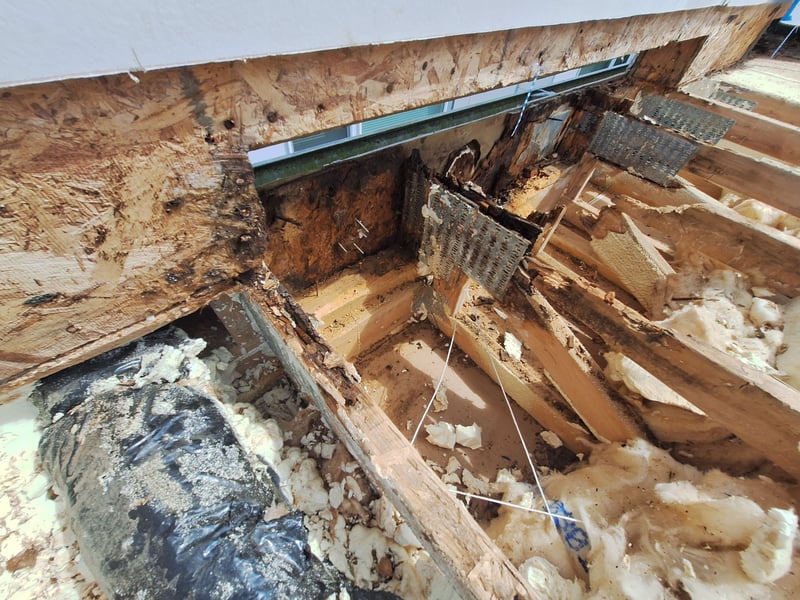
- Mess & Off-Gassing: So often, I don't recommend it because you will spend more money to get the spray foam machine in the attic. But it can make a huge mess, and you have to deal with all the off-gassing. Chemicals will release in the attic. Some homeowners are bothered by this, but others aren’t.
- Difficult removal: Spray foam is extremely difficult to remove for repairs, often requiring carving out rotten wood. Our crew has had to do this before. We had a customer who bought a house with spray foam insulation but no condensation barrier, so the wood in the attic was rotting. But the crew had to carve out the spray foam just to access the rotting wood underneath. In this picture, you can see the remnants of spray foam. But those empty spaces were all filled with spray foam:
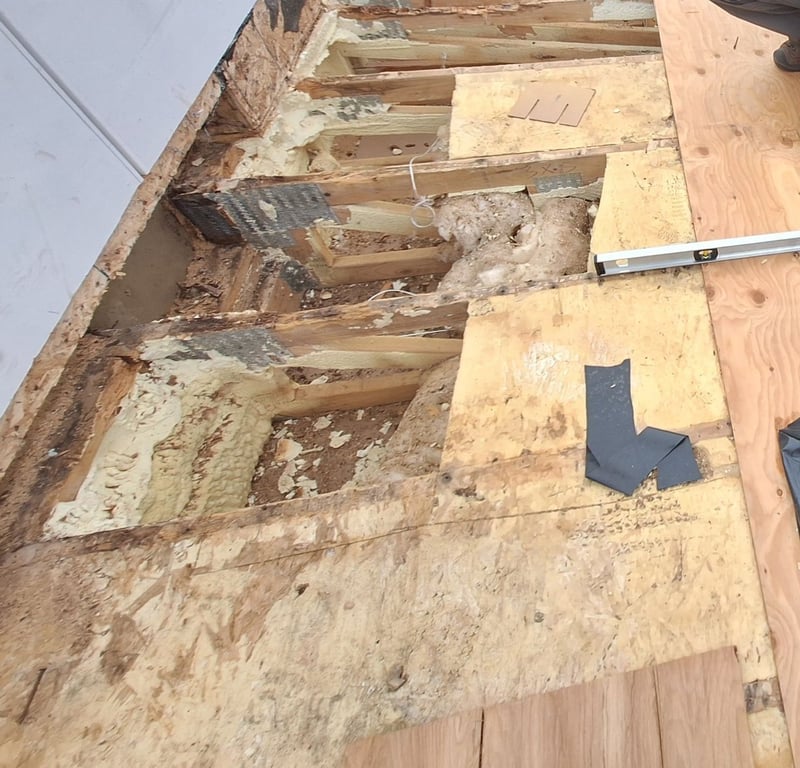
Spray foam removal
- Insurance issues: Some insurance companies are denying coverage for people with spray foam because there have been problems with it getting glued to everything and being hard to get off.
Moisture and condensation are a huge concern for Seattle attics, so it is crucial that you understand which types of insulation will protect your roof from water damage. Unfortunately, many homeowners don’t know that spray foam will fail at keeping moisture out.
When is spray foam a good fit?
The best way to use spray foam in a roof assembly in Seattle is if the spray foam is not being used as the vapor barrier. If you're relying on it to keep moisture out of the assembly, it will fail. It’s much better as an air barrier.
Here are some examples of situations where spray foam is an effective and ideal solution:
- In Crawl Spaces: It will be effective as a vapor barrier on walls and floors of your crawl space because even if moisture somehow makes it through the floor, it's just getting into the house. It doesn't hurt anything. It's okay to have a little humidity in your house.
- In Hybrid Systems: If you're using it as part of a hybrid approach where you're going to spray foam the bottom of maybe a rooftop deck, and then you're going to put rigid foam on top of it, that'll work.
- When There Is Limited Space: It is the highest r-value per inch, so spray foam is useful where high R-value per inch is required. For example, when you only have 3 inches to work with. However, it can't be your condensation control layer, so you need to account for that as well.
- When You Need an Air Barrier: It works really well as an air barrier, but it's expensive. The cost is probably going to be around $1–2 per inch per sq ft. So, if you wanted 6 inches of spray foam as an air barrier, you’d be spending around $10/sq ft.
Since spray foam encases whatever it’s touching as it dries, it is good at keeping air out (which is why I sometimes recommend it for air sealing your attic). However, there’s always the risk of moisture being trapped in and getting through to the roof decking, which is the last thing that you want.
So, when you’re deciding whether spray foam is a good fit for your attic, it’s important to consider what you’re trying to accomplish. It won’t cut it as a vapor barrier, but it still has its uses.
How do you know which type of insulation is right for your roof?
There are many different types of insulation that you can choose from for your attic. Many Seattle homeowners gravitate towards spray foam because it’s an easy and relatively cheap option.
But choosing the right type of insulation for your attic depends on the type of attic you have.
If you have a flat roof or a roof with a complex layout, you’ll want foam board insulation that sits on top of the roof deck to protect it from condensation.
If you have a standard sloped roof, then fiberglass insulation in the attic is a classic go-to that works well. If needed, your roofer might suggest other options like cellulose or rockwool.
What is the best roof insulation for your Seattle home?
Spray foam isn't a bad product; it just isn't the right solution for every attic. In Seattle's cool, damp climate, preventing condensation requires more than simply choosing insulation with a high R-value.
Before investing in any insulation upgrade, make sure you're choosing a system that's appropriate for your specific roof. A vented attic, flat roof, vaulted ceiling, and rooftop deck all have different insulation requirements, and using the wrong approach can lead to expensive repairs down the road.
Read our article "Which Type of Roof Insulation Is Best for My Seattle Home?" to learn where each insulation type performs best, where it falls short, and how to choose the right solution to improve energy efficiency while protecting your roof from moisture damage.

Frequently Asked Questions About Spray Foam Insulation
1. Is spray foam insulation a good choice for a Seattle attic?
Not usually as a stand-alone insulation or moisture-control solution.
Seattle attics face a high risk of condensation because warm, moist indoor air rises toward cold roof decking during the winter. Spray foam can seal air gaps and provide a high R-value, but it may also trap moisture against the wood and hide developing rot.
For a standard sloped attic, traditional insulation paired with properly designed intake and exhaust ventilation is often a safer and easier-to-maintain option.
2. Can spray foam cause roof decking to rot?
Yes, especially if moisture is already present or the roof assembly was not designed correctly.
Spray foam adheres directly to the roof decking and surrounding framing. If water enters through a leak or condensation forms against the wood, the foam can prevent the area from drying and make the damage difficult to see.
The decking may continue rotting behind the insulation until the damage becomes severe enough to affect the roof structure.
3. Is spray foam a vapor barrier?
Some spray foam products can qualify as Class II vapor retarders at certain thicknesses, but that does not mean they will prevent every condensation problem.
A vapor retarder slows moisture movement. It does not guarantee that the roof decking was dry before installation, stop all moisture from entering the assembly, or keep the roof deck warm enough to prevent condensation.
Spray foam should not be treated as a substitute for a properly designed condensation-control system.
4. Why is spray foam difficult to remove during roof repairs?
Spray foam expands and bonds tightly to roof decking, rafters, wiring, and other nearby materials.
If the decking begins to rot or a roof leak needs repair, contractors may have to carve or scrape the foam away piece by piece before they can inspect or replace the damaged wood. This increases labor time and can make an otherwise straightforward roof repair much more expensive.
It can also conceal how far the moisture damage has spread.
5. Can spray foam create mold problems?
Spray foam itself does not automatically create mold, but it can contribute to conditions that allow mold to grow.
If moisture becomes trapped between the foam and the roof decking, the wood may remain damp for long periods. That creates an environment where mold and fungal decay can develop.
Mold prevention depends on controlling roof leaks, indoor air leakage, condensation, and drying potential, not simply adding more insulation.
6. When does spray foam work well in a roof assembly?
Spray foam can work well when it is used as part of a carefully designed hybrid system rather than as the only moisture-control layer.
For example, spray foam may be installed beneath a rooftop deck for air sealing and additional insulation while rigid foam is installed above the roof deck to keep the wood warm and reduce condensation risk.
This approach gives the assembly both an effective air barrier and a more reliable thermal break.
7. Is spray foam useful when an attic has very little space?
Yes, limited space is one of the situations where spray foam may be useful.
Spray foam provides a relatively high R-value per inch, making it helpful in shallow rafter bays or vaulted ceilings where there is not enough room for thick layers of fiberglass or other insulation.
However, the roof still needs a separate strategy for condensation control. High R-value alone does not guarantee that moisture will stay away from the roof decking.
8. Can spray foam be used for attic air sealing?
Yes, but it should be used selectively.
Spray foam can seal large, permanent gaps around plumbing, wiring penetrations, wall top plates, and other openings that allow warm household air to enter the attic. However, it should not cover electrical boxes, recessed lights, removable equipment, or areas that need future access.
For smaller gaps, caulk or air-sealing tape may provide a cleaner and more serviceable solution.
9. What insulation is usually best for a standard sloped roof?
For a standard sloped roof with an accessible attic, fiberglass, cellulose, or rockwool insulation can all work well when paired with proper ventilation and air sealing.
The attic should have:
- Clear intake ventilation near the eaves
- Adequate exhaust ventilation near the top of the roof
- Insulation that does not block soffit vents
- Sealed ceiling penetrations
- No active roof leaks or condensation problems
The complete attic system matters more than choosing one insulation product by itself.
10. What insulation is best for a flat roof or rooftop deck?
Flat roofs and rooftop decks usually benefit from rigid foam insulation installed above the roof deck.
Products such as polyiso, XPS, or EPS create a thermal break that keeps the decking warmer and helps prevent indoor moisture from condensing against it. A solid cover board and waterproof membrane are then installed above the insulation.
Spray foam below the deck may be included in a hybrid assembly, but it should not replace the rigid insulation layer that provides the primary condensation protection.
Topics:
