

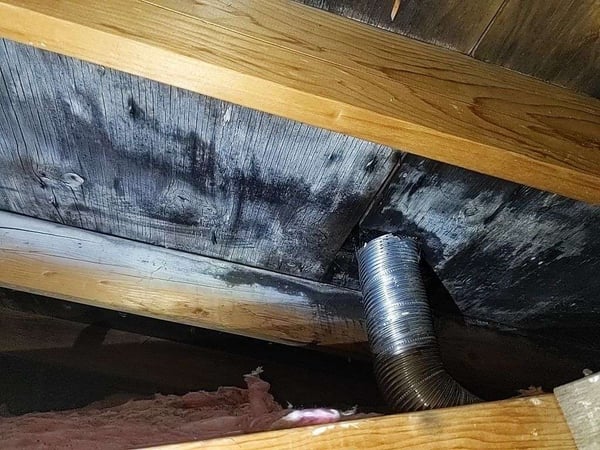
Are you wondering if your roof or attic has mold but not sure how to tell? Do you know what signs to look for before it becomes a major issue?
RoofSmart inspects roofs and attics across the Seattle area. When we find mold, we remove or treat the growth and fix the moisture source behind it as one job. See how our attic mold treatment works.
In a wet climate like Greater Seattle, we find mold in attics often.
This article will show you how to spot mold early, understand what causes it, and learn what happens if you ignore it.
We’ll walk you through the tell-tale signs, what leads to mold, and what to do next if you suspect a problem, especially if you're a Seattle homeowner dealing with constant rain and humidity.

How Can I Tell If I Have Roof Mold in Seattle?
Several signs and symptoms pop up when your roof has a mold problem.
If you notice any of the following problems, it’s time to call a professional before you have a major issue to deal with:
A Distinctive Odor

A musty smell near the attic hatch is a common sign of attic mold, and it's worth having the attic checked.
But often you don’t notice bad smells in your own home, because they “creep up on you” slowly over time. It’s usually most potent in the attic itself, but use caution if you plan on investigating yourself.
Frost or Drips on Nails
Frost on nail tips or sheathing in cold weather, or water dripping from nails when it warms up, means warm, moist house air is condensing in the attic.
For health questions about mold, talk to your doctor or read the Washington State Department of Health's mold guidance.
Ghosting (Not a Mold Sign)
Ghosting is dust and soot settling on colder strips of ceiling, usually along the framing. It isn't mold. It's still worth noting, because it shows where heat is escaping and air is moving, and that same air movement carries moisture into the attic.
A Hot, Stuffy Attic
A well-ventilated attic should feel close to the outdoor temperature, not like the house below it.
A hot, humid attic can mean air isn't moving through it. That's worth checking, because trapped moisture is what mold needs.
What Causes Mold in the Attic?
Attic mold needs a dark, damp area that is poorly ventilated to thrive. There are a lot of factors that contribute to growing mold.
If you have mold in your attic, one or more of these is usually behind it.
Warm, Moist Air Leaking Up From the House
In Greater Seattle attics, condensation is often the cause: warm, moist house air leaks up through gaps in the ceiling and turns to water on the cold roof deck. Air leaks around light fixtures, the attic hatch, bath fans, and plumbing and wiring holes carry that air up. Air sealing those gaps is usually the strongest prevention step.
Roof Leaks
Mold enjoys growing in a very moist and dark environment, so a damp roof is the perfect breeding ground. Roof leaks happen all the time in Seattle’s damp, rainy environment. Whether your roof eventually wears out over time or has a hole due to poor installation, your roof will probably leak at some point if you’re a Seattle area homeowner.
Roof leaks are a common cause of mold in the attic because they cause excess moisture to build up in the attic.
This is a problem because roof leaks can be extremely difficult to notice. Often, a lot of water has to pool up before water stains appear on your ceiling. By then, the attic may already have been wet for a while.
If you do not get a leaky roof fixed as soon as possible, you will have (at least) two problems to deal with instead of just one.
Water Damage and Roof Rot
If you see signs of water damage like dark spots on the walls or ceiling, there’s a good chance you have a mold problem or that you are about to have one.
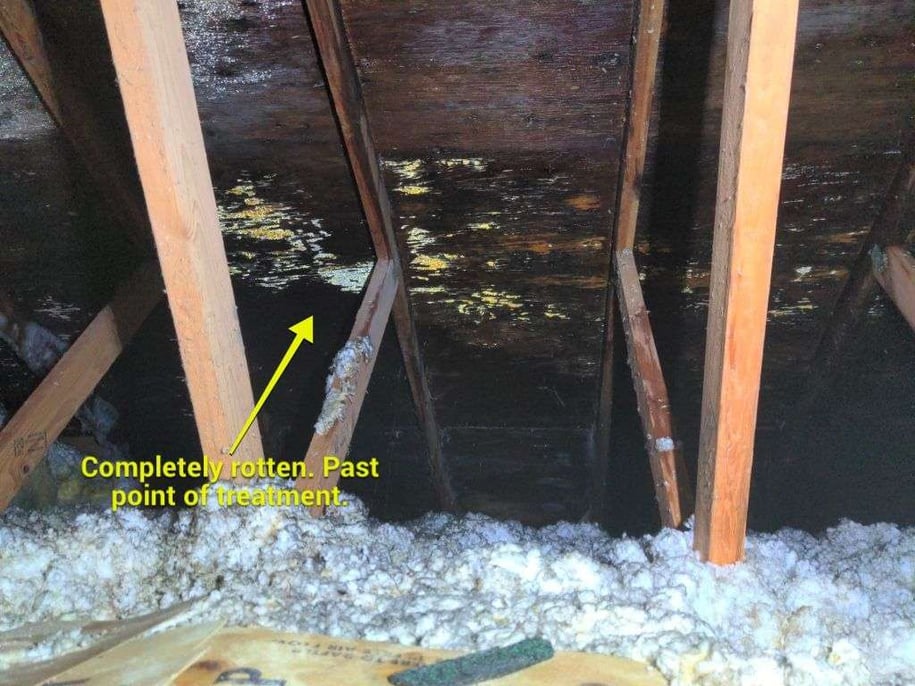
When you experience roof rot, it’s another good indication that you have a mold problem because the two often go hand in hand. Check the paint around your dormer windows for peeling and your walls and ceiling for blisters and cracks.
Remember, mold doesn’t always come in white. You should be looking for a variety of colors, including black, green, and blue.
Poor Ventilation
Proper airflow in your attic is what is supposed to prevent mold from growing in the first place. So, if something has gone wrong with your attic ventilation, moisture can linger long enough for mold to grow.
Attic ventilation can go wrong for many reasons:
- It is not up to code: Codes are updated every few years, so it is easy for older homes to fall behind. Seattle has a lot of homes that are 50+ years old, meaning that their ventilation is super outdated and probably hasn’t been checked in a while. Seattle follows the national building code requirements for proper ventilation.
- It is not balanced: For example, you might have way more exhaust ventilation than intake ventilation. This is a problem because not enough air will get in. Or, air will enter at the top of the roof and not flow through the entire attic. The fix is balanced, correct ventilation with the ceiling below air sealed first. Ventilating harder without sealing can pull more damp house air into the attic.
- The intake ventilation might be blocked
What Happens When You Leave Mold in the Attic Untreated?
If you do not treat mold in your attic, the issues that you already have will continue to worsen.
- Wood that stays wet long enough can soften and rot, and soft or delaminated sheathing has to be replaced.
- A roof leak keeps wetting the wood, so the growth keeps getting what it needs.
Why Does Fixing the Moisture Early Matter?
Now you know the signs of attic mold, and that leaving the moisture problem alone can turn minor damage into bigger repairs.
Now that you know the signs of mold and its potential consequences, you’re probably wondering what to do next and who can help you get rid of mold in your attic.
Check out our article “What Should I Do If I Have Mold In My Attic?” to learn how to spot and solve mold problems before they cause expensive repairs.

Topics:
